Internal DHS Email Raises Concerns About Voter Fraud Investigations
An internal email from the Department of Homeland Security (DHS) has sparked concerns about the agency’s efforts to investigate non-U.S. citizens who may be on state voter rolls or have cast ballots in the past. The email, obtained by NPR, contains a 78-page document listing counties and states that provide election materials and ballots in languages other than English, along with a Department of Justice criminal checklist for voter-related charges.
DNC Lawsuit Reveals DHS Focus on Noncitizen Voting
The release of this email comes after the Democratic National Committee (DNC) filed a lawsuit over a public records request, shedding light on the Trump administration’s intensified focus on noncitizen voting. Despite previous audits showing such fraud to be rare, DHS has allocated additional resources to investigate these claims, raising concerns about potential voter intimidation and reduced turnout in the upcoming midterms.
Concerns Over Potential Voter Intimidation
The email, although heavily redacted, does not indicate enforcement actions at the mentioned locations, leading to speculation about the intent behind sharing the list of non-English jurisdictions. Civil rights coalitions have filed lawsuits to prevent federal officers from being deployed to polling places, citing legal restrictions on federal interference in elections.
Administration’s Response and Reassurances
In response to inquiries, DHS stated that individuals voting illegally should not evade prosecution by claiming a lack of English proficiency. While the agency denied planning operations at polling locations, previous statements by administration officials have raised concerns about the potential presence of federal agents during elections.
Overall, the internal DHS email has sparked debates about voter integrity, language access, and the role of federal authorities in safeguarding elections.
In light of recent developments, concerns have arisen regarding the possible presence of ICE agents at polling locations during upcoming elections. A leaked document, shared in an email dated Dec. 19 from a DHS border policy acting director to government officials, highlighted multilingual voting jurisdictions where more than 5% of voting-age citizens primarily speak a language other than English. This information is crucial as the Voting Rights Act mandates election officials to provide materials in those languages to ensure fair access to voting.
Although much of the released document is redacted, it has already sparked fear and uncertainty among voters. A recent survey from the University of California San Diego revealed that around 40% of voters believe it is likely for ICE agents to be present at voting locations in their area. This perception is consistent across party lines, with Democrats, Republicans, and independents expressing concerns. Moreover, voters of color are disproportionately worried about being questioned by immigration authorities despite being U.S. citizens.
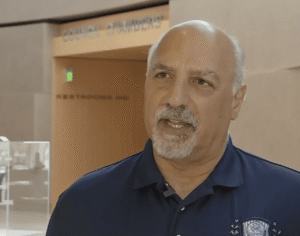
The potential impact of this rhetoric on voter turnout is a significant concern for voting officials. There is a fear that the mere suggestion of enforcement efforts could discourage individuals from participating in the democratic process. Paul López, Denver’s top voting official, emphasized that it is illegal to target individuals based on their language and urged voters not to be intimidated or bullied.
Denver, a city with a significant Hispanic and Latino population, is among the jurisdictions mentioned in the leaked document for offering multilingual election materials. Despite being included in the list, López remains confident in upholding federal law and ensuring that voters are not deterred from exercising their democratic rights. As uncertainty looms over the upcoming elections, the message from voting officials remains clear: democracy will prevail.