Michigan’s 10th Congressional District Midterm Race Heats Up
The battle for Michigan’s 10th Congressional District is intensifying as the midterm elections draw near. With the seat currently held by Republican John James up for grabs, both parties are vying for control of this key district that could sway the balance of power in Congress.
Is the Race Really a Toss-Up?
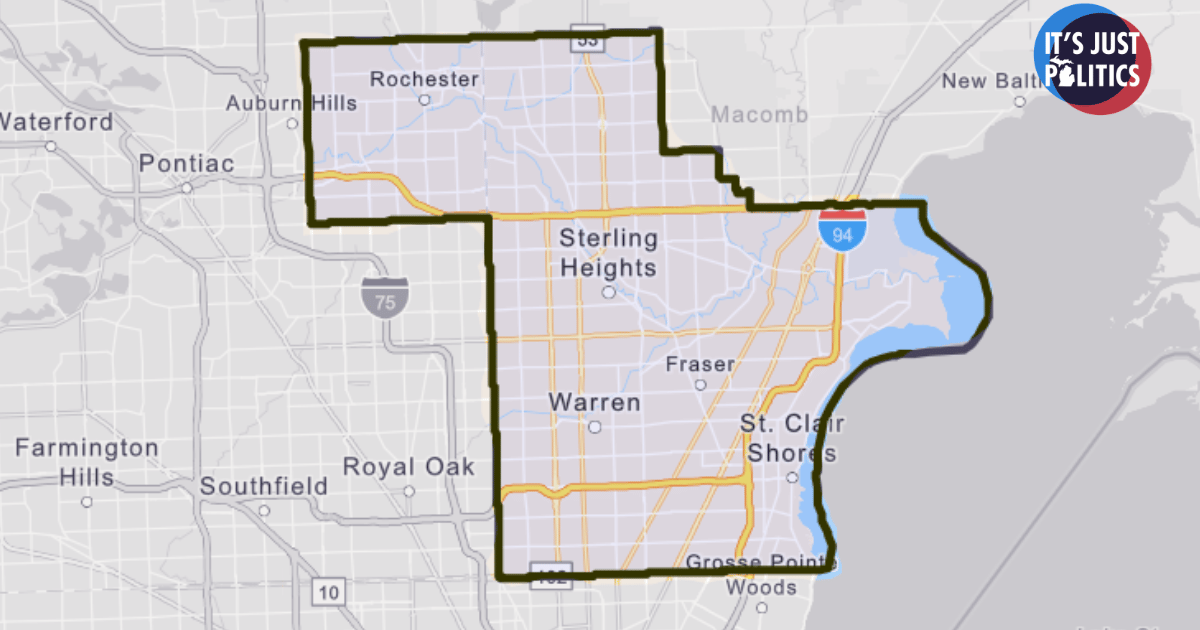
The 10th Congressional District, encompassing the southern half of Macomb County and parts of Oakland County, has historically leaned Republican. However, with James stepping down and no incumbent to defend the seat, the race is now considered a toss-up, according to Cook Political Report. This uncertainty has both Republicans and Democrats mobilizing their supporters for a fierce electoral battle.
The Trump-Era Shift in District Politics
Analysts point to the changing demographics and political landscape of Macomb County, a crucial part of the 10th District. Once a stronghold of Democratic voters known as Reagan Democrats, the county has shifted towards supporting Republican candidates in recent years, particularly in presidential elections. However, the upcoming midterms will test whether this trend holds without former President Donald Trump on the ballot.
Candidate Profiles and Strategies
Both major candidates, Republican Michael Bouchard Jr. and Democrat Christina Hines, bring unique strengths to the race. Bouchard, a military veteran and son of a prominent sheriff, leverages his name recognition and ties to the defense industry. On the other hand, Hines, with previous experience in countywide campaigns, aims to capitalize on her understanding of local politics and fundraising.
The Trump Factor and Electoral Dynamics
As the election approaches, the overarching question remains whether Republicans can rally their base and overcome historical trends that often favor the party out of power during midterms. Factors such as presidential approval ratings and voter turnout patterns will play a crucial role in determining the outcome of the race, with control of Congress potentially hanging in the balance.
With so much at stake in Michigan’s 10th Congressional District, political analysts and voters alike are closely monitoring the developments leading up to the midterm elections. The battle for this pivotal seat underscores the broader struggle for control of Congress and the direction of national politics.
The upcoming midterm elections in Michigan are a topic of great interest and speculation. With key races on the horizon, voters are eager to understand the implications of various political developments. One such development is the proposed bill known as House Bill 123, which has stirred controversy and debate among lawmakers and citizens alike. This bill, if passed, could have a significant impact on the state’s healthcare system, particularly in relation to Medicaid coverage.
According to a recent news article, House Bill 123 aims to restrict Medicaid coverage for certain medical procedures deemed non-essential. Proponents of the bill argue that this measure is necessary to reduce healthcare costs and ensure that taxpayer dollars are used efficiently. However, critics worry that such restrictions could disproportionately affect low-income individuals and limit access to vital healthcare services.
One key argument in support of House Bill 123 is the need to prioritize essential medical services and prevent unnecessary expenses. Lawmakers backing the bill emphasize the importance of fiscal responsibility and the need to streamline Medicaid coverage to focus on core healthcare needs. They believe that by targeting non-essential procedures, the state can allocate resources more effectively and improve overall healthcare outcomes.
On the other hand, opponents of the bill raise concerns about the potential consequences of restricting Medicaid coverage. They argue that limiting access to certain medical procedures could harm vulnerable populations and exacerbate existing health disparities. Critics also point out that defining what qualifies as “non-essential” can be subjective and may lead to arbitrary exclusions of important healthcare services.
In light of these contrasting views, the fate of House Bill 123 remains uncertain. As the debate continues to unfold, stakeholders on both sides are closely monitoring the situation and advocating for their respective positions. Ultimately, the decision on whether to pass the bill will have far-reaching implications for Michigan’s healthcare landscape and the well-being of its residents. Stay tuned for further updates on this evolving legislative issue.