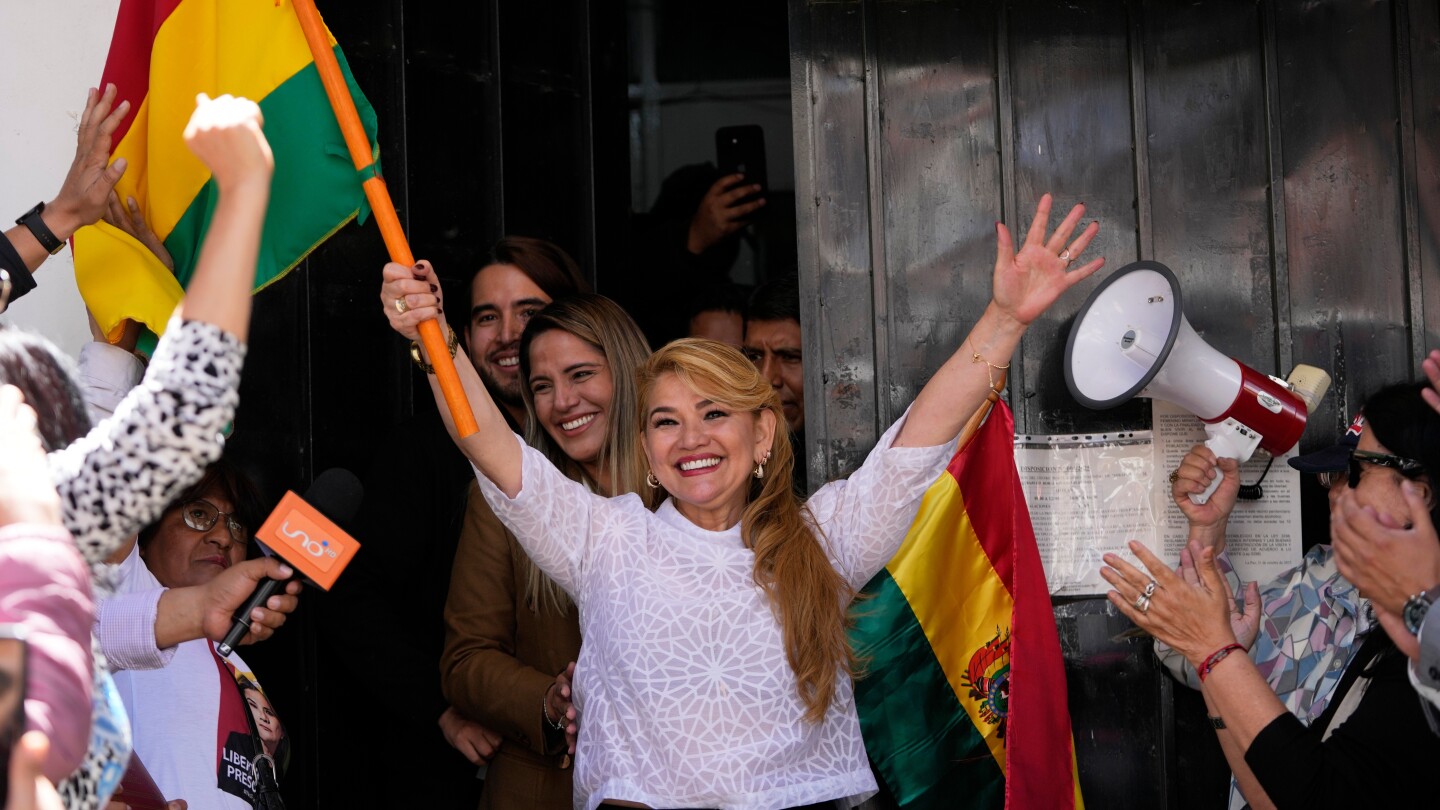
LA PAZ, Bolivia (AP) — In a dramatic turn of events, Bolivia’s former interim leader, Jeanine Áñez, walked out of prison on Thursday. This followed a pivotal ruling by the Supreme Court of Justice, which overturned her decade-long sentence.
Upon her release from the Miraflores women’s prison situated in central La Paz, Áñez expressed her relief, stating, “It’s like coming back to life.” Her emotional statement was accompanied by her waving a Bolivian flag as supporters cheered with chants of “Yes, we could.”
Reflecting on her time in custody, she shared, “I gave my country everything I had to give. It has been very painful… they treated me like a real criminal,” with her voice showing signs of strain.
Áñez’s journey from political power to imprisonment began over four years ago. She was detained in March 2021 and later sentenced in June 2022 due to her inauguration as president during a contentious National Assembly meeting after the tumultuous 2019 protests that resulted in the resignation of then-president Evo Morales.
The protests, which claimed 37 lives, emerged from a crisis following presidential elections where Morales secured another term. This victory was overshadowed by allegations of fraud from the Organization of American States.
Bolivia’s Supreme Court of Justice nullified Áñez’s conviction on Wednesday and called for a political trial as her defense requested. The court justified its decision by stating, “Her actions were protected by a state of constitutional necessity aimed at preserving the institutional continuity of the Bolivian state,” effectively ending debates about an alleged coup against Morales.
This decision arrives just days before the inauguration of President-elect Rodrigo Paz, whose recent victory marked a significant shift from nearly two decades of Morales’ party rule. Paz has invited Áñez to attend the inauguration, and her daughter, Carolina Rivera, indicated that Áñez might be present.
Commenting on her release, Áñez stated, “The monster had to go for it to be acknowledged that there was not a coup in this country, but rather an electoral fraud… I will never regret having served my country when my country needed it.”
Despite facing multiple accusations, Áñez currently has no pending cases in ordinary courts. In August, two other convictions related to the deaths of 20 protesters during the 2019 crisis were annulled. Following the latest elections, a court mandated an immediate review of her pretrial detention, along with two other opposition figures, who have since been released to house arrest.
____
For comprehensive coverage of Latin America and the Caribbean, visit https://apnews.com/hub/latin-america