Amid growing concerns about water scarcity, the Colorado River basin is facing alarmingly low snow levels, setting the stage for a potentially harsh summer and possible political disputes over dwindling reservoirs.
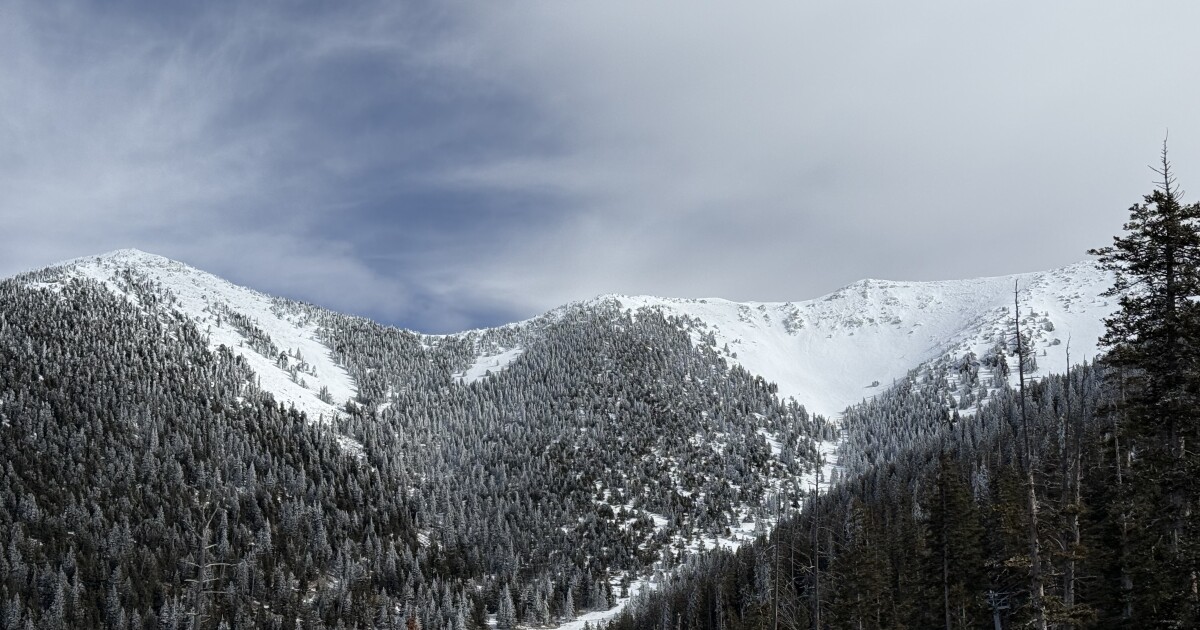
The February water supply forecast is the bleakest in 35 years. A glance at snow maps reveals a predominantly red landscape, indicating significantly below-average snowpack across all monitored regions. Most areas report snow totals at half or less of the norm.
Mountain snow contributes over two-thirds of the Colorado River’s water, yet current figures show only 58% of the typical snowpack. Graph data for 2026 places it at the lowest point since records started in 1986.
Natural Resources Conservation Service
/
Handout
Water managers are increasingly worried about the impact of these low snow levels. Vineetha Kartha, Colorado River programs manager at the Central Arizona Project (CAP), has been closely monitoring the snow data. The CAP is responsible for transporting water from the Colorado River to areas like Phoenix and Tucson through its canal systems.
During a recent CAP board meeting, Kartha highlighted the severity of the situation. “December was dry,” she noted. “November was dry, October was dry, January was dry, and this trend seems to be continuing.”
She described the figures as “abysmal” and pointed to several mountain rivers where snow shortages are expected to further deplete the region’s reservoirs, including Lake Powell. This could potentially halt hydropower generation at Glen Canyon Dam.
Kartha warned that if present conditions persist, the “devastating impacts” could manifest by summer. The current scenario aligns closely with the most pessimistic forecasts predicted earlier.
The ongoing 26-year megadrought affecting the Colorado River has challenged the water supply for nearly 40 million people, highlighting the inadequacy of current water management strategies in the face of climate change.

Natural Resources Conservation Service
/
Handout
To mitigate issues at Lake Powell and Glen Canyon Dam, federal authorities have the option to release water from upstream reservoirs in Wyoming, Utah, and Colorado. This strategy is part of the Drought Response Operations Agreement (DROA). During a dry spell in 2022, water was released from Wyoming’s Flaming Gorge Reservoir, but the process was paused after a wet winter.
Kartha mentioned that federal officials are considering similar actions this winter but have not specified which reservoirs would be used or the volume of water to be released. However, she cautioned that even with a DROA release, reductions in Lake Powell releases might still be necessary.
Such reductions could lead to significant legal challenges among the states sharing the Colorado River. The upstream states—Colorado, Utah, Wyoming, and New Mexico—are mandated to supply a specific volume of water downstream. Failure to meet this requirement due to reduced releases from Lake Powell could breach a long-standing legal agreement with downstream states Arizona, California, and Nevada.