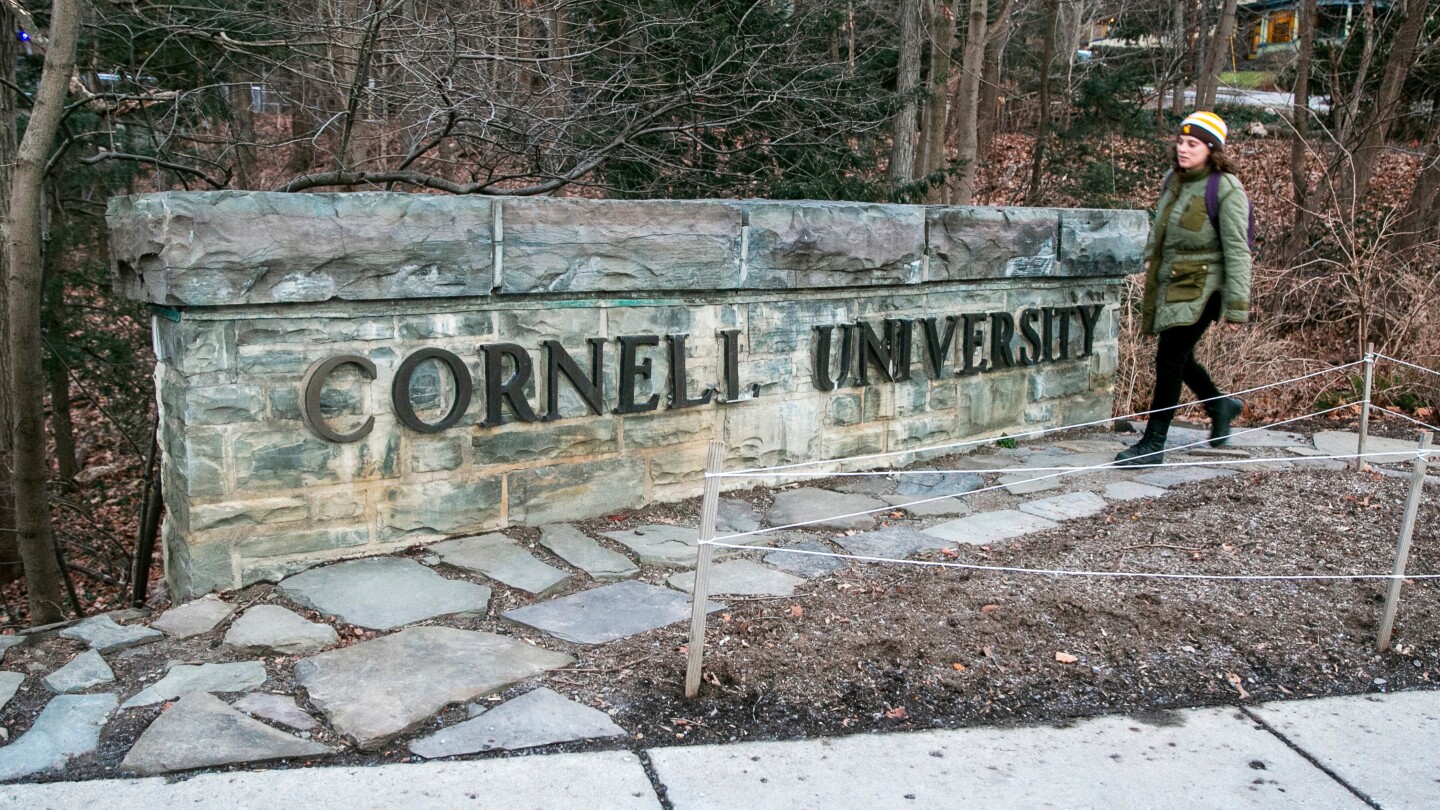
Cornell University has reached a $60 million settlement to resume federal funding, accepting the Trump administration’s stance on civil rights regulations. This agreement ends the federal probe into the Ivy League institution, which had been accused of civil rights violations.
Announcing the agreement, Cornell President Michael Kotlikoff emphasized the restoration of over $250 million in previously frozen research funds, essential for ongoing academic projects. The freeze had disrupted research activities and threatened academic programs, according to Kotlikoff.
The settlement involves a $30 million payment to the U.S. government and an additional $30 million investment in agricultural research benefiting U.S. farmers.
This recent development follows President Donald Trump’s broader initiative involving elite universities, which he claims have fostered antisemitism and leftist ideologies. Trump’s administration continues to negotiate with other institutions like Harvard, while offering preferential federal funding to universities aligning with its agenda. More details can be found here.
Kotlikoff assured that the agreement sustains Cornell’s values of academic freedom and independence. He noted, “It recognizes our rights, as a private university, to define the conditions on our campuses that advance learning and produce new knowledge.”
This six-page agreement follows a similar pattern as one recently signed by the University of Virginia, but is less detailed compared to agreements with Columbia University and Brown University.
However, Cornell’s chapter of the American Association of University Professors expressed concerns, stating that while the agreement avoids some of the harshest terms seen in other deals, it still threatens academic freedom and stretches beyond legal necessities. David Bateman, the chapter president, warned, “If you make a deal with somebody when they’re just extorting you, well, that only encourages future extortion.”
The agreement mandates that Cornell align with federal interpretations of civil rights laws, specifically concerning antisemitism, racial discrimination, and transgender issues. Additionally, a Justice Department memo advising colleges to abandon diversity, equity, and inclusion initiatives will serve as a training tool for Cornell staff.
Education Secretary Linda McMahon hailed the agreement as a “transformative commitment” focusing on “merit, rigor, and truth-seeking,” emphasizing its role in restoring excellence in American higher education.
Attorney General Pam Bondi highlighted the importance of federal compliance, stating that colleges benefiting from federal funding must adhere to civil rights laws and avoid discriminatory DEI policies.
Cornell’s president will ensure quarterly compliance certification, with the agreement in effect until 2028. The settlement also includes a contentious aspect of financial restitution, a point of negotiation in similar cases with other universities.
The agricultural investment will support programs utilizing AI and robotics to aid American farmers, aligning with Cornell’s heritage as a land-grant institution.
Kotlikoff, among numerous university leaders, had previously criticized the Trump administration’s approach as “unprecedented government overreach and political interference.”