As the Democratic Party gears up for the 2028 presidential race, potential candidates are intensifying their outreach to African American activists. This week, the spotlight is on New York, where Rev. Al Sharpton’s annual conference is drawing some of the party’s most ambitious figures, eager to secure support from one of its most crucial voting groups.
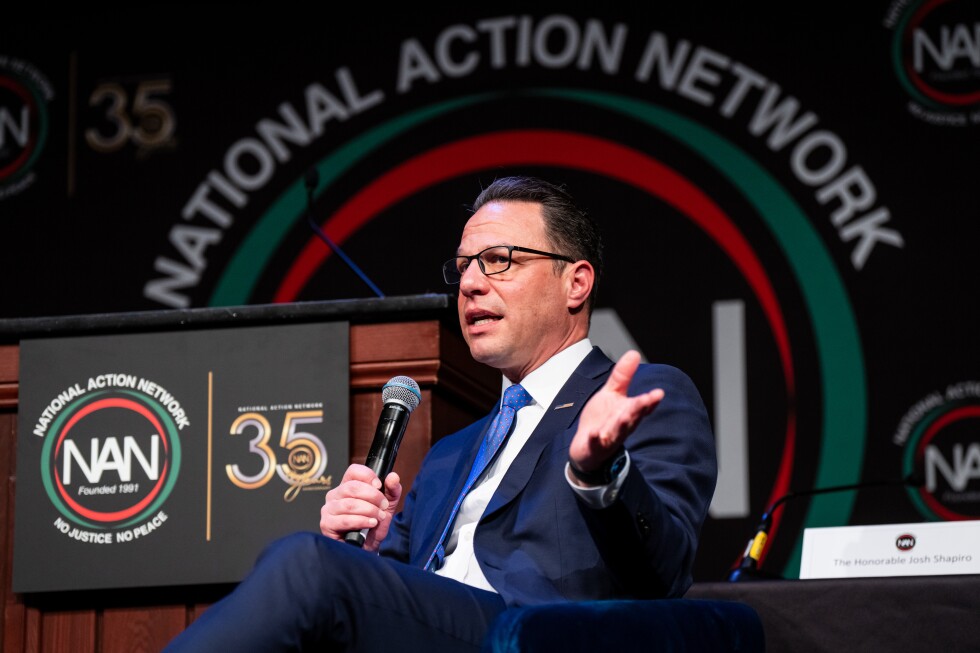
Pennsylvania Governor Josh Shapiro took the stage first, delivering a sharp critique of President Donald Trump’s administration. He attributed a rise in antisemitism, Islamophobia, racism, and bigotry across the nation to Trump’s leadership, stating, “Everyone is less safe because of President Donald Trump.” Shapiro emphasized the need for an honorable president, regardless of differing views on policies like healthcare or taxes, as he criticized the current administration’s approach to governance.
As a notable contender for the Democratic nomination in 2028, Shapiro aims to fortify his standing with African American leaders at the National Action Network’s conference. His participation marks the beginning of a four-day event where over half a dozen potential candidates are expected to connect with influential Black leaders.
The Race for the Democratic Nomination Intensifies
Though the official primary season is still months away, the conference provides a platform for Democrats to position themselves for what is anticipated to be a competitive primary contest. Rev. Al Sharpton, the event’s founder, remarked, “Everybody’s talking about who may run for president. I want to first know what their vision is now, and what they’re doing now.”
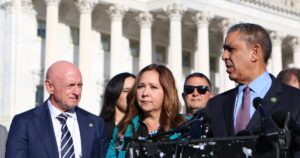
Among the speakers are Maryland Gov. Wes Moore, Illinois Gov. JB Pritzker, former Transportation Secretary Pete Buttigieg, Kentucky Gov. Andy Beshear, Rep. Ro Khanna of California, and Arizona Senators Mark Kelly and Ruben Gallego. Former Vice President Kamala Harris is also scheduled to speak, though California Gov. Gavin Newsom will be absent due to a family commitment.
Influence of Black Voters in Democratic Primaries
The importance of Black voters in Democratic nominations is well-documented. In 2020, Joe Biden’s success in South Carolina, fueled by strong support from African American voters, helped him secure the Democratic nomination, overcoming early setbacks in predominantly white states like Iowa and New Hampshire.
Potential candidates for 2028 are keenly aware of this dynamic, with many criticizing Trump while also focusing on articulating their own visions for the future. Ro Khanna, addressing the conference, emphasized the need for contenders to offer a moral vision rooted in Black history, drawing inspiration from figures like Frederick Douglass and Martin Luther King Jr.
Josh Shapiro, who was considered as Kamala Harris’ running mate in 2024, underscored his commitment to African American priorities, advocating for diversity programs and accountability in policing. He urged that the upcoming midterm elections be seen as a referendum on Trump and his administration’s policies.
Ashley Sharpton, Rev. Sharpton’s daughter, noted the enthusiastic response from the audience during Shapiro and Khanna’s speeches, expressing anticipation for the upcoming addresses by Moore, Harris, and Buttigieg. “That’s why people come,” she said. “They want to get some of that energy, that consistency, that base.”