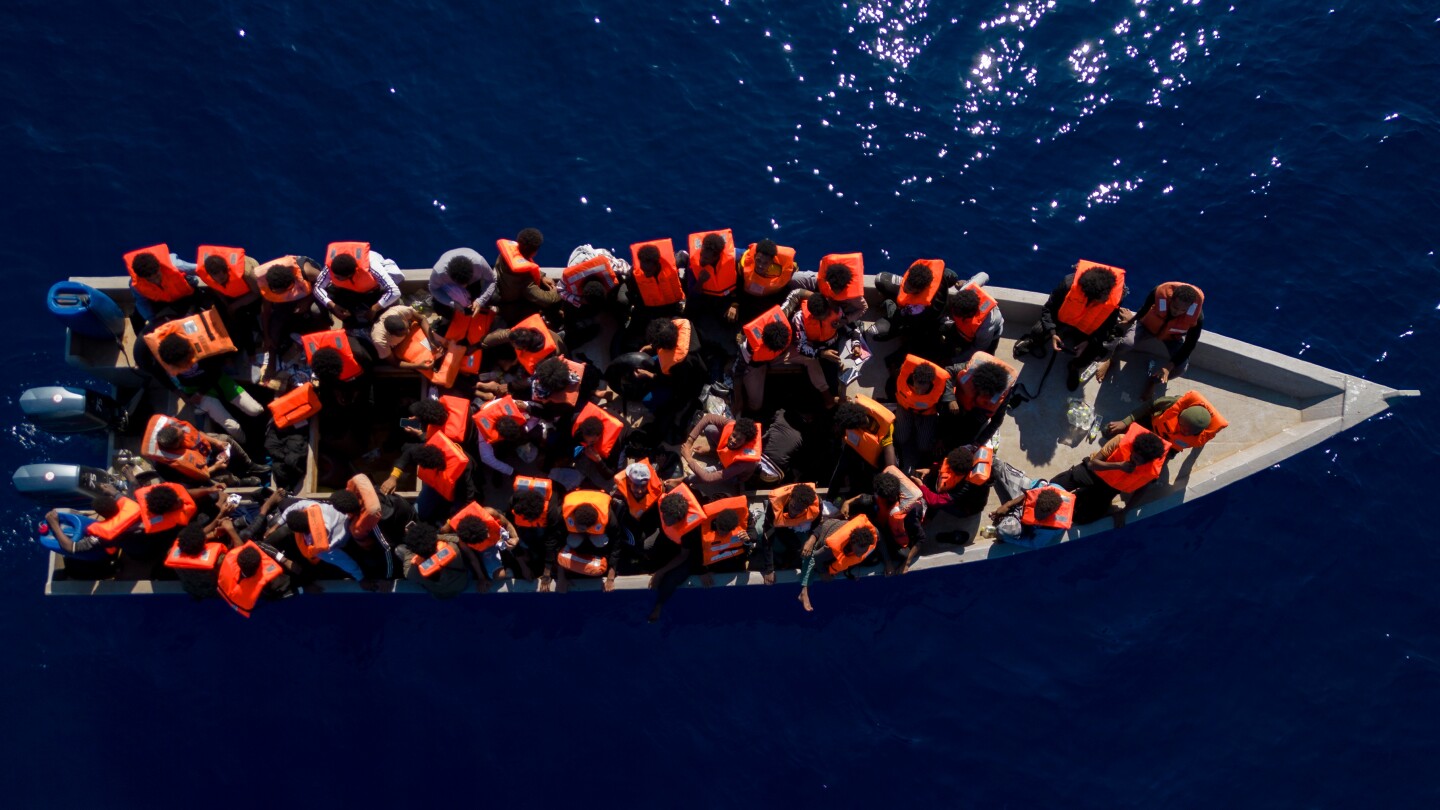
Trial Begins for Alleged Leader of Migrant Smuggling Network
On Monday, a trial commenced in Zwolle, Netherlands, to address serious allegations against an Eritrean man accused of orchestrating a cruel migrant smuggling operation. The prosecution claims that Tewelde Goitom, also known by the alias Amanuel Walid, operated a network that transported East African migrants to Europe, often subjecting them to appalling conditions and coercing their families into paying large ransoms to secure their release from Libyan camps.
During the court proceedings, Goitom, attired in jeans and a blue puffer jacket, asserted that he is a victim of mistaken identity. He was extradited to the Netherlands in 2022 from Ethiopia, where he faced similar charges. Through an interpreter, he maintained, “I am still the one I said I was earlier.”
This case is deemed one of the most significant human smuggling prosecutions in Dutch history and is expected to continue over three weeks. The trial has experienced delays due to the extradition process of another suspect, Kidane Zekarias Habtemariam, who previously escaped custody during a 2020 trial in Ethiopia. Known as one of the “world’s most wanted” human traffickers, Habtemariam is currently detained in the United Arab Emirates and will be transferred to the Netherlands.
Prosecutors aim to consolidate the cases of Goitom and Habtemariam, while Goitom’s defense team hopes that Habtemariam’s testimony will exonerate him. Dutch authorities assert jurisdiction over the case, arguing that some of the alleged offenses occurred within the Netherlands, involving extortion of relatives of East African migrants on perilous journeys through Libya and across the Mediterranean Sea.
However, defense lawyer Simcha Plas challenges this jurisdiction, stating, “There is no clear connection to the Netherlands,” and arguing that payments were made either in Eritrea or via the UAE.
VluchtelingenWerk, a refugee aid organization, notes an increase in young Eritrean migrants seeking refuge in the Netherlands, escaping a repressive regime. Eritrea mandates national service, which, according to a U.N. investigation, is marked by torture, sexual violence, and forced labor.
The Dutch statistics office reports approximately 28,000 individuals of Eritrean descent residing in the Netherlands. Eritrea, a nation in the Horn of Africa, has been under the rule of President Isaias Afwerki without elections since gaining independence from Ethiopia three decades ago.
For more on global migration, visit AP’s migration coverage.