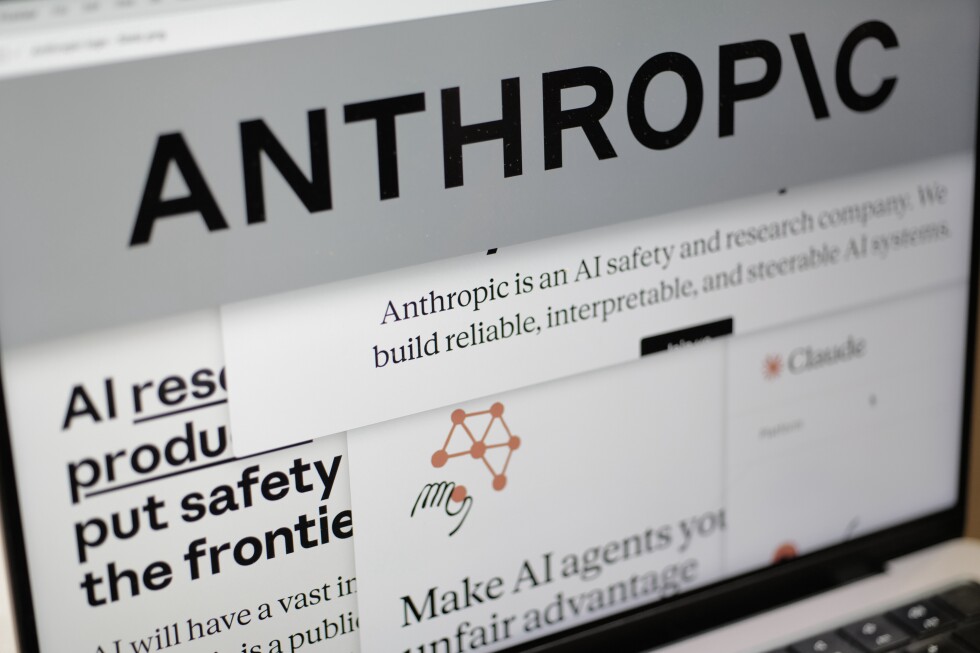
In a significant development involving artificial intelligence and national security, the U.S. Court of Appeals in Washington, D.C., has denied Anthropic’s plea to prevent the Pentagon from categorizing the AI lab as a potential risk. This decision contrasts with a different outcome reached in a similar case by a San Francisco federal court.
The Washington appeals court’s decision came as a response to Anthropic’s efforts to shield itself from the repercussions of a dispute concerning the Pentagon’s potential use of its Claude chatbot in fully autonomous weapons and the possibility of surveillance on American citizens, even as the case continues to gather evidence.
In contrast, Anthropic successfully argued against the Trump administration’s actions in a separate legal battle in San Francisco. A federal judge there mandated the removal of labels that identified the company as a national security threat, a move that led to the lifting of restrictions preventing Anthropic from engaging with military contractors.
Anthropic initiated dual legal challenges in both San Francisco and Washington last month, claiming that the Trump administration had engaged in an “unlawful campaign of retaliation” by imposing restrictions on its AI technology’s deployment. The administration criticized Anthropic, describing it as a liberal-leaning company attempting to influence U.S. military policy.
Judge Rita Lin of the San Francisco court concluded that the Trump administration had exceeded its authority by designating Anthropic as a supply chain risk and issuing directives that could hinder its competitive standing against rivals like OpenAI and Google. This resulted in the removal of the negative labels and allowed government entities to continue using Anthropic’s AI products, according to recent court documents.
Despite acknowledging that Anthropic might “likely suffer some degree of irreparable harm,” the Washington appeals court found the evidence of financial harm insufficient to warrant overturning the Trump administration’s actions. The court highlighted that the “precise amount of Anthropic’s financial harm is not fully clear.”
The ongoing case will see further evidence presented in a hearing scheduled for May 19. Anthropic expressed gratitude for the court’s acknowledgment of the urgency and remains hopeful for a favorable resolution, stating, “We’re grateful the court recognized these issues need to be resolved quickly and remain confident the courts will ultimately agree that these supply chain designations were unlawful.”
The CEO of the Computer & Communications Industry Association, Matt Schruers, voiced concerns about the uncertainty created by the differing court decisions. He remarked, “The Pentagon’s actions and the DC Circuit’s ruling create substantial business uncertainty at a time when U.S. companies are competing with global counterparts to lead in AI.”