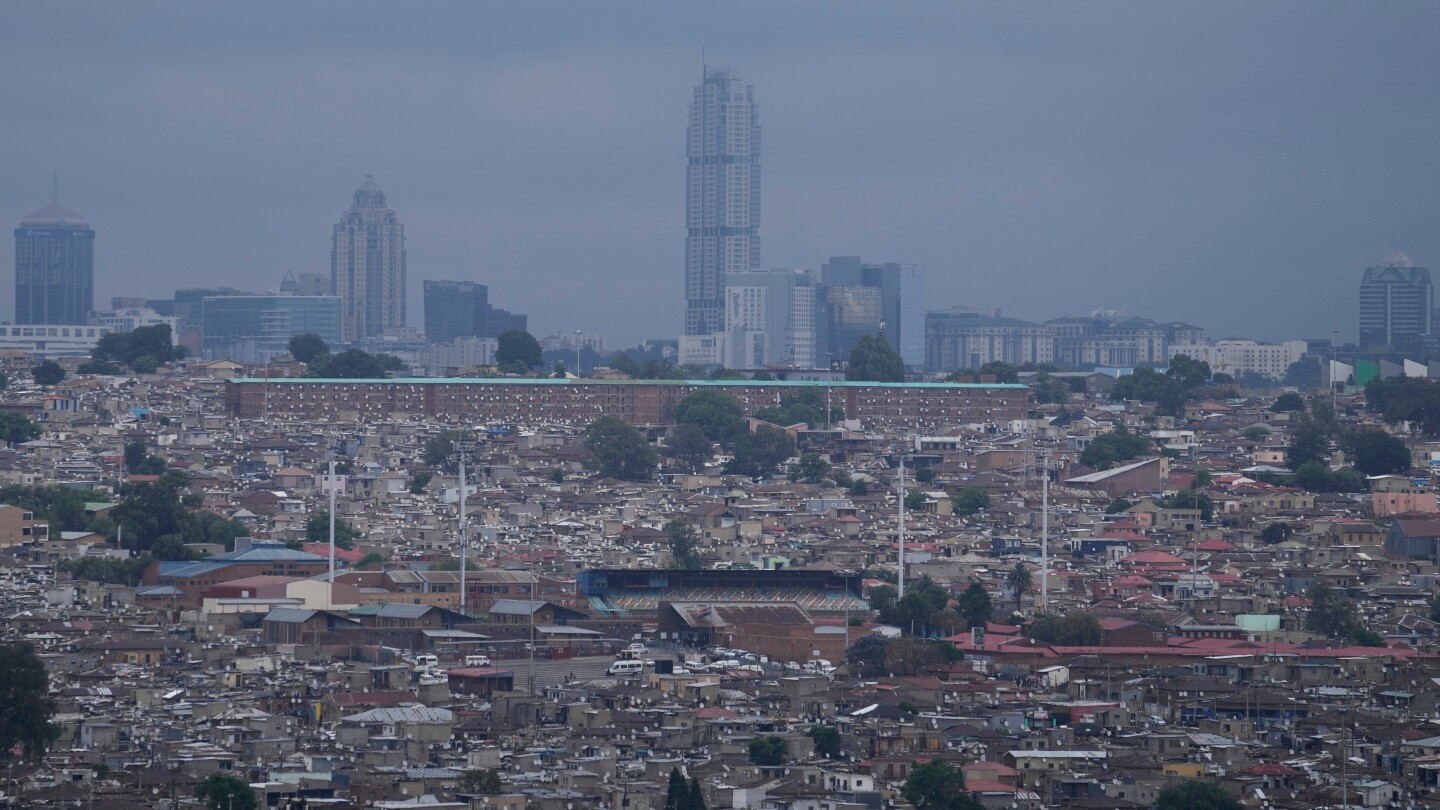
As the world’s wealthiest nations and leading developing countries converge in South Africa for the Group of 20 summit, the absence of the United States looms large over the proceedings. This historic event marks the first time Africa has hosted a G20 summit, yet it is overshadowed by the U.S. boycott led by President Donald Trump.
Trump has openly criticized South Africa’s presidency of the G20, citing alleged discrimination against white farmers as a reason for skipping the summit. South Africa’s President Cyril Ramaphosa has countered these claims, stating they are “completely false.” The U.S. decision to boycott has been a major topic, eclipsing discussions on climate resilience, debt relief for impoverished nations, and rising inequality.
In the lead-up to the summit, U.S. Secretary of State Marco Rubio and Treasury Secretary Scott Bessent have both opted out of attending prior G20 meetings, aligning with the administration’s call to not endorse a “Leaders Declaration” that would indicate multilateral agreement.
Absences and Global Messages
Despite concerns over the absence of the U.S., South Africa’s Foreign Minister, Ronald Lamola, views this as a chance to demonstrate that global progress can continue without U.S. participation. “It will not be a walk in the park, but when there is global consensus, we can be able to find persuasive means to enable the world to function,” said Lamola, who also noted that complete attendance by heads of state is rare.
Chinese President Xi Jinping and Russian President Vladimir Putin are among other notable leaders not attending. Xi has sent Premier Li Qiang in his place, while Putin faces an arrest warrant from the International Criminal Court, compelling South Africa to arrest him if he enters the country.
Focus on Global Challenges
Under its G20 presidency, South Africa is advocating for measures to support poorer nations, including financing to combat climate change, which experts estimate will cost around $1 trillion annually by 2030. An expert panel has urged the International Monetary Fund and G20 countries to implement broad strategies for refinancing poor nations’ debts.
The African Union aims to represent African nations’ interests at the summit, addressing climate and financial challenges. Brian Kagoro of Open Society Foundations remarked on the U.S. absence, saying, “If anything, the situation underscores the need to accelerate global governance reform, ensuring that all regions, including Africa, have a meaningful voice in setting global priorities.”
International Support
Despite the boycott, other influential countries like France, Germany, and the United Kingdom are backing the summit, with their leaders expected to attend and engage in bilateral discussions. U.N. Secretary-General António Guterres has also confirmed his participation, expressing his commitment to advancing key reforms within the G20.
“I will be there and I am totally committed to work within the G20, to move all the key reforms that are essential in the international financial system and to create the conditions for the development agenda, particularly in Africa, to be sustainable,” Guterres stated.
For more on the G20 summit in South Africa, visit https://apnews.com/hub/g20-summit.