In an unexpected turn of events, the global automotive industry is facing significant disruptions due to a power struggle over a relatively obscure semiconductor manufacturer. This conflict underscores the fragility of the technology supply chain and highlights the geopolitical tensions between major global players.
The focus of this turmoil is Nexperia, a Dutch semiconductor company owned by a Chinese firm, Wingtech Technology. The situation has particularly impacted Honda, which had to halt production at its Mexican facility, affecting the supply of its HR-V crossover to North American markets. This situation also places Europe in a challenging position amidst the broader geopolitical tensions between the U.S. and China.
The Unexpected Intervention
The situation became public in mid-October following the Dutch government’s announcement of its decision to invoke a World War II-era law, effectively taking control of Nexperia. This move, driven by national security concerns, aimed to address “serious governance shortcomings” and prevent the loss of critical technology that could compromise Europe’s economic security.
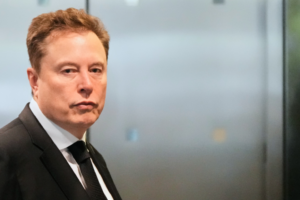
The Dutch court’s decision to remove Nexperia’s Chinese CEO, Zhang Xuezheng, was influenced by the U.S. government, which indicated trade restrictions unless a leadership change was made.
Understanding Nexperia
Nexperia specializes in producing basic semiconductors like switches and logic chips essential for various automotive functions, including electric vehicle battery management and anti-lock braking systems. Originally part of Philips Semiconductors, Nexperia became independent and was acquired by Wingtech Technology in 2018 for $3.6 billion.
The company operates manufacturing facilities in the UK and Germany and has an assembly and testing center in Guangdong, China, which accounts for a significant portion of its production capacity.
The Geopolitical Dimension
This dispute is part of a larger global battle over technological dominance between the U.S. and China. Wingtech’s inclusion on the U.S. “entity list” last year, due to national security concerns, has led to export controls, with the U.S. urging allies to follow suit.
Following the Dutch government’s intervention, China retaliated by halting exports of Nexperia chips from its Dongguan plant, criticizing the Netherlands for creating “turmoil and chaos” in the semiconductor supply chain.
However, after a meeting between U.S. President Donald Trump and Chinese President Xi Jinping, there were indications that China might ease its export ban as part of trade negotiations.
Despite these developments, Nexperia’s Chinese unit reported that shipments of wafers to its Chinese factory were suspended, affecting production capabilities. Nexperia’s headquarters accused the Chinese unit of non-compliance with global management directives.
Impact on the Automotive Sector
The automotive industry heavily relies on discrete chips from companies like Nexperia, which are integral to many vehicle systems. With Nexperia contributing significantly to the supply of these chips, carmakers face challenges in finding alternatives quickly.
Ford CEO Jim Farley emphasized the urgency of resolving this issue to prevent production losses. General Motors and Nissan are also taking measures to mitigate potential disruptions, while Mercedes-Benz is actively seeking alternatives worldwide.
European car manufacturers, including BMW, Renault, and Volkswagen, are tapping into their chip reserves, with a warning of potential production halts if the situation persists.
Signs of Resolution
There have been some positive developments, with the European Union’s trade commissioner noting progress in simplifying export procedures for Nexperia chips. China’s Commerce Ministry has agreed to consultations with the Netherlands, although concrete measures to restore the semiconductor supply chain have yet to be implemented.
Honda has reported that shipments from China have resumed, and production at its Celaya, Mexico plant is expected to restart soon, alleviating some concerns in the automotive sector.
For more information, follow our updates on WhatsApp.