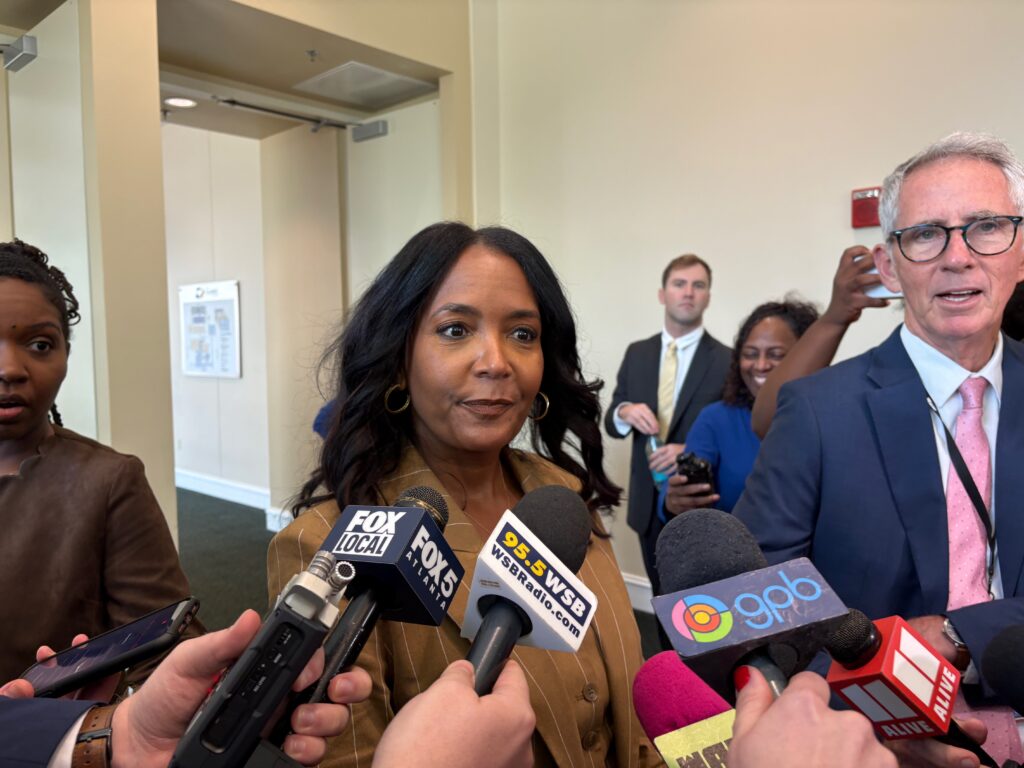
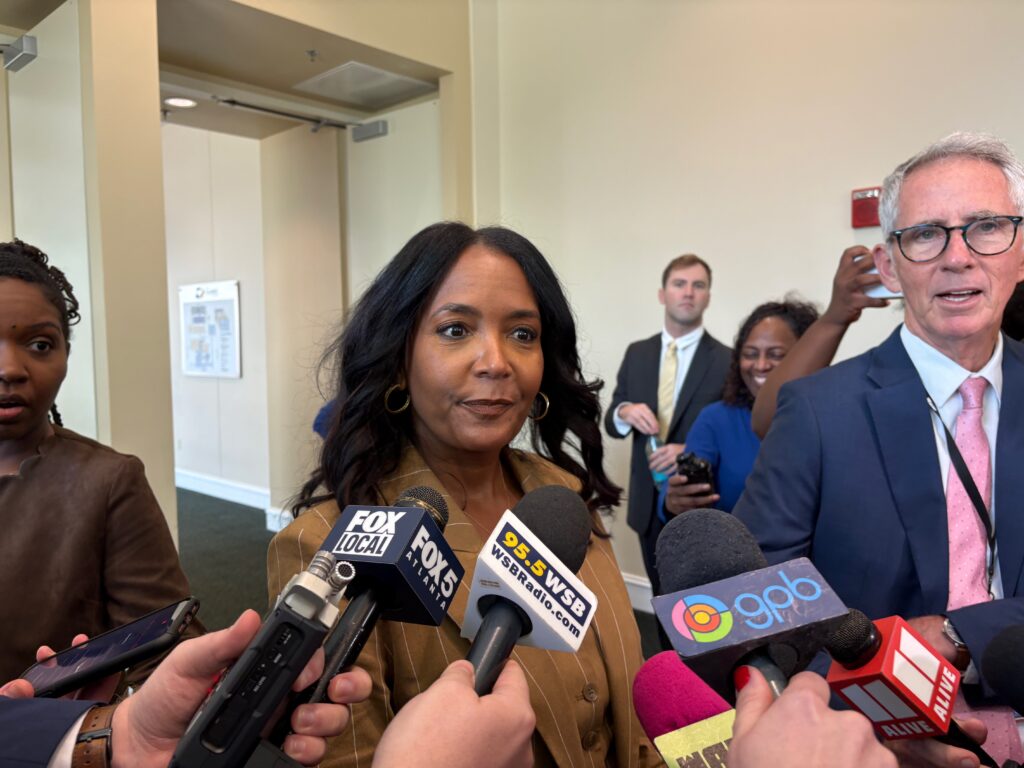
In Athens, Georgia’s gubernatorial candidates presented divergent strategies on key issues like healthcare and economic growth during a business-oriented event on Wednesday.
Governor Brian Kemp openly endorsed Republican Rick Jackson, citing Jackson’s alignment with his business-friendly philosophies.
The Democratic contender, former Atlanta Mayor Keisha Lance Bottoms, focused on governmental solutions for challenges such as affordable housing and healthcare accessibility.
Despite not engaging directly, both candidates articulated their visions from the stage and in interactions with the press.
The Georgia Chamber of Commerce hosted this gathering at The Classic Center in Athens, marking a rare instance where both candidates addressed similar topics in the same venue.
Bottoms highlighted agreements forged for affordable housing during her mayoral tenure and advocated for Medicaid expansion to tackle rural hospital closures and the rise of uninsured Georgians.
Kemp, alongside Jackson, praised Jackson’s resilience and business achievements despite a challenging upbringing in foster care.
Jackson expressed his commitment to extending Kemp’s economic policies, emphasizing tax reductions and bringing businesses to Georgia, particularly in rural areas.
He pledged support for small enterprises and agricultural sectors.
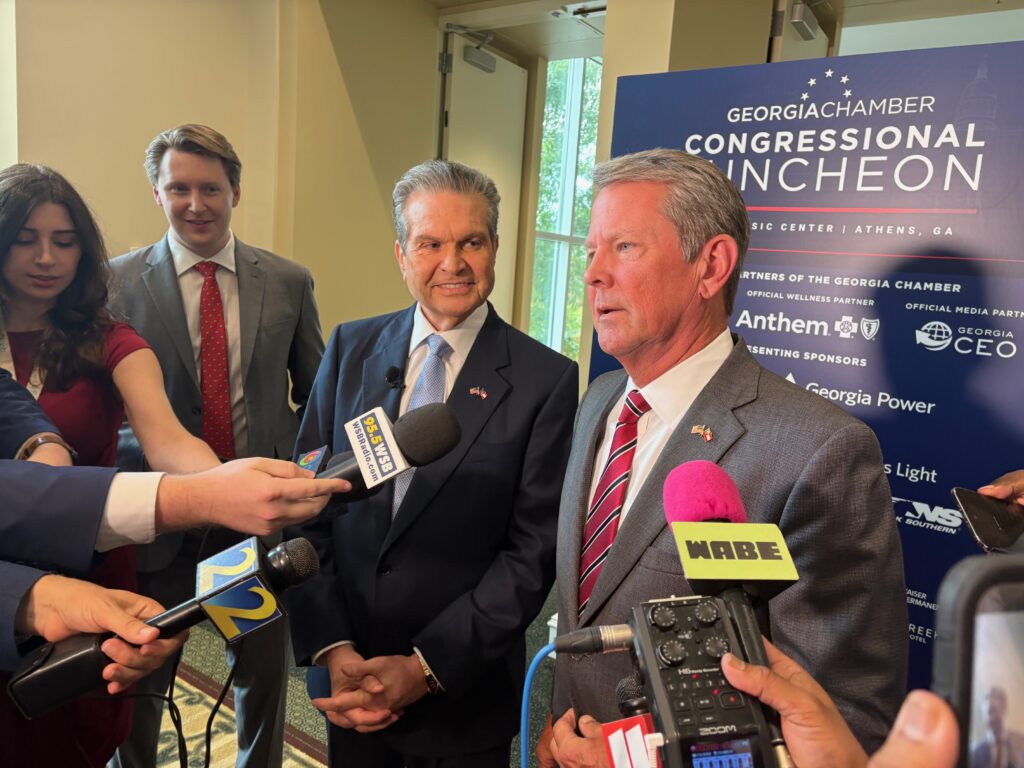
Addressing the audience, Jackson advocated for substantial investment in Georgia-based venture capital and early-stage development.
Bottoms proposed a state agency for small businesses and suggested revising service contracts to enable smaller firms to compete.
“I’d like to break up some of these mega-contracts in our state … to give small businesses an opportunity to compete for those contracts,” she stated.
Bottoms criticized Georgia’s Pathways to Coverage program, advocating for its termination due to inefficiency. A federal review last year indicated excessive administrative overhead. Although the program was set to end last September, it received a one-year extension from the Trump administration.
Jackson supported a “smart” Medicaid expansion through federal block grants with minimal restrictions, aiming to transition recipients to employment and private insurance. Pathways already incorporates a work requirement.
On data centers, Bottoms pushed for a pause in approvals, whereas Jackson favored community discretion due to potential local tax benefits.