Hong Kong Court Upholds Ruling Against Cardinal and Activists
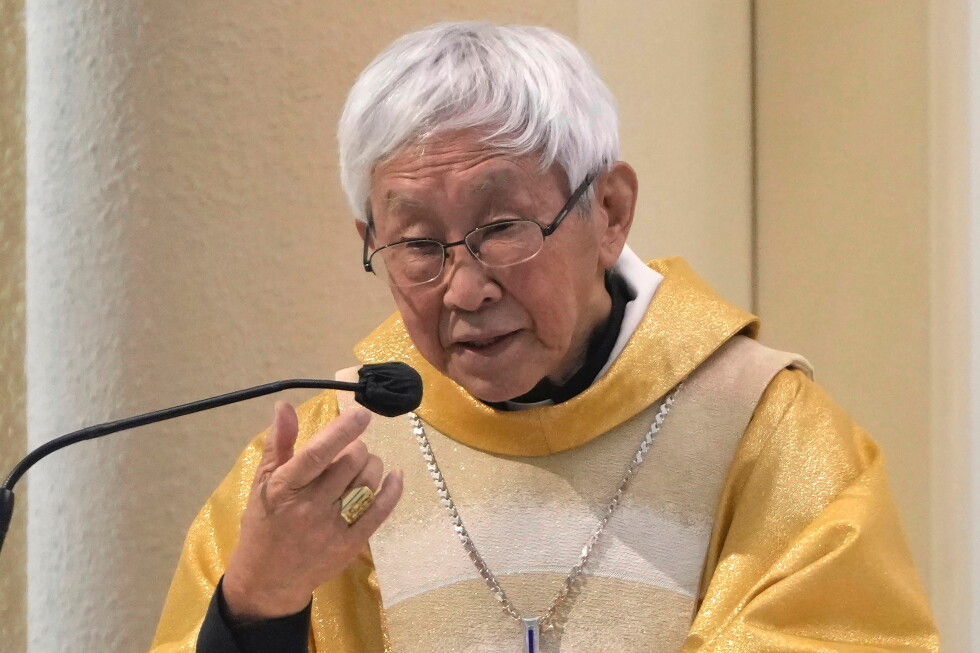
An aging Roman Catholic cardinal and four other prominent figures faced a legal setback in Hong Kong when their appeals were rejected by the court on Thursday. At the heart of the case was their role as trustees of a fund designed to assist individuals arrested during the city’s widespread protests against the government.
Cardinal Joseph Zen, who is 94, stood alongside singer Denise Ho, academic Hui Po Keung, and ex-legislators Margaret Ng and Cyd Ho. They were involved with the 612 Humanitarian Relief Fund, which provided financial support for protesters’ legal and medical expenses until it was disbanded in October 2021. The court found them guilty last year for violating the Societies Ordinance, a law mandating registration or exemption application for organizations within a month of their inception. Each was fined 4,000 Hong Kong dollars ($512).
The verdict has drawn attention due to its implications for Hong Kong’s freedom of association, especially against a backdrop of significant political shifts since the 2019 protests. The judges, Jeremy Poon, Aarif Barma, and Derek Pang, emphasized that the fund was not merely a collection of donations, but a deliberate effort to support the 2019 demonstrations.
In their ruling, the judges noted, “Nothing in the evidence suggests that any individual including the appellants would be subject to an unacceptably harsh burden by the restrictions imposed by the registration scheme on their exercise of the right to freedom of association.”
Following the court’s decision, Margaret Ng announced plans to escalate the matter to Hong Kong’s highest court. She highlighted the broader implications, asking for clarity on what constitutes a “society” and the necessity of registering activities involving group participation. “It has a great impact on Hong Kong’s civil society,” Ng stated.
Zen, who attended the court proceedings with the assistance of a walking stick, was originally taken into custody in 2022 under suspicions related to a national security law imposed by Beijing. Although not charged under this legislation, his arrest was a notable incident for the Catholic community worldwide.
After his conviction, Zen made it clear that he did not view his legal troubles as a reflection of religious freedoms in Hong Kong. The 2019 protests, which were initially triggered by a proposed law allowing extraditions to mainland China, eventually escalated into a broader movement characterized by considerable unrest.
The national security law, which came into force in 2020, has severely weakened the pro-democracy movement in Hong Kong, leading to numerous imprisonments and diminishing the confidence in the freedoms that were promised when the city was handed back to China from British rule in 1997. Nonetheless, Beijing and local officials maintain that the law is essential for maintaining stability in Hong Kong.