An Iowa ammunition plant is at the center of a heated debate over public health, military necessity, and legal authority — and now, a presidential decision has put the controversy on pause. The standoff involves more than 9,000 pounds of degraded explosive material and a community deeply worried about what detonating it could mean for the air they breathe.
President Donald Trump announced Monday that he is halting the U.S. Army’s controversial plan to detonate a large stockpile of unstable ammunition at the Iowa Army Ammunition Plant. The move follows a wave of pushback from residents, local officials, and lawmakers who raised serious concerns about the potential health risks tied to releasing lead particles into the surrounding environment.
Trump said he personally supports completing the controlled detonation but is placing the final decision in the hands of two outside parties: the U.S. Court of Appeals for the Eighth Circuit and Iowa Governor-elect Rob Sand. In a post announced on social media, Trump made his position clear:
“I feel the proper course is to get rid of this longterm problem but, at the same time, have ordered the Military not to do so until such time as the Eighth Circuit agrees that we can go forward, and am further making this decision fully subject to the incoming Governor Elect, Rob Sand, agreeing to the operation.”
Trump also issued a warning: if the ammunition becomes unstable enough to spontaneously detonate while the pause is in place, he said he
“would be forced to hold the incoming Governor responsible for any and all death or destruction.”
What’s at Stake at the Iowa Plant
The Iowa Army Ammunition Plant, located near Middletown, produces medium- and large-caliber ammunition for the Department of Defense. The Army revealed last week that more than 9,000 pounds of degraded lead azide — a highly sensitive chemical compound used in military blasting caps and detonators — requires destruction. Military officials warned that colder winter temperatures make the volatile material increasingly prone to accidental detonation.
The Army’s own public safety notice acknowledged that a controlled detonation would result in elevated levels of lead particles in the air, with projected release maps showing those particles could travel dozens of miles from the blast site.
Why Communities Are Alarmed
Lead is a well-documented toxic substance. According to the National Institute of Environmental Health Sciences, there is no safe level of lead exposure in a person’s bloodstream. It can enter the body through inhalation or ingestion, and the risks are especially severe for pregnant individuals and young children, whose developing brains are particularly vulnerable to permanent damage.
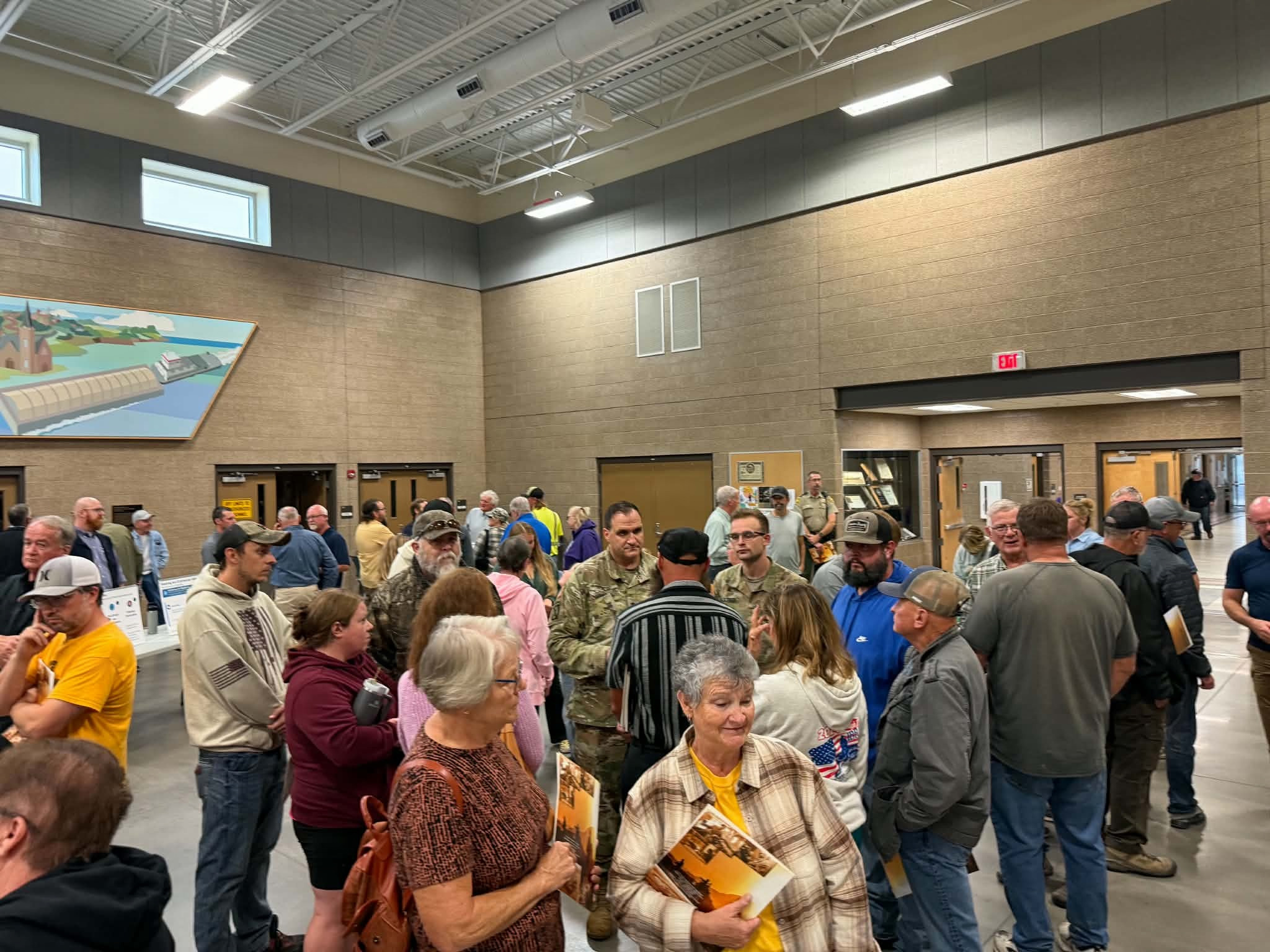
That information fueled community protests after the Army issued its detonation notice. Residents and lawmakers pushed back forcefully, calling for a delay while alternative solutions could be evaluated. The detonation had already been postponed multiple times before Trump’s latest announcement extended the hold further.
Trump also blamed the Obama administration for the improper storage of lead azide at the facility that led to the current situation, though reporting by Army Times was unable to independently verify that claim.