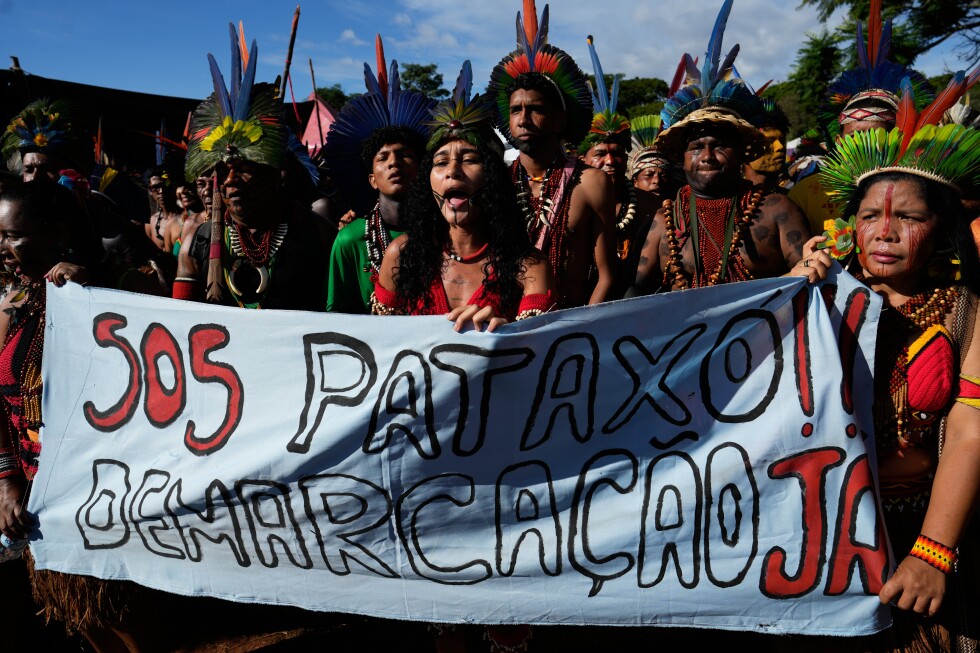
In the heart of Brazil’s capital, a vibrant display of cultural pride and political activism unfolded as thousands of Indigenous people marched to protest against perceived encroachments on their ancestral lands by major companies. These corporations are pursuing expansive farming, logging, and mining projects, igniting concerns over Indigenous land violations.
Indigenous leaders are leveraging this massive gathering to urge President Luiz Inácio Lula da Silva to align his policies more closely with his commitments to protect Indigenous rights and the environment. Although Lula has championed these causes, his endorsement of certain oil and industrial projects appears contradictory.
As part of the annual Free Land Encampment, now in its 22nd year, the protest saw participants traversing the Esplanade of the Ministries towards Three Powers Square, where governmental powerhouses like the presidential palace, Congress, and the Supreme Court reside. This mobilization draws an impressive assembly of around 7,000 Indigenous individuals from 200 diverse groups nationwide, uniting under common goals.
This year’s event coincides with an uptick in reports of violence against the Pataxo community in Bahia state amidst a land dispute, as well as notable protests in the Amazon region. The Free Land Encampment remains Brazil’s largest Indigenous mobilization, emphasizing the intersection of land rights and environmental conservation.
Protecting Indigenous territories is recognized as crucial in mitigating deforestation in the Amazon. The Amazon is not only the world’s largest rainforest but also a vital climate regulator. Research indicates that Indigenous lands in Brazil have lost a mere 1% of native vegetation over three decades, compared to a 20% loss on private lands.
Encampment follows recent protests across the Amazon
February marked the beginning of a series of protests by Indigenous women in Altamira, Para state, opposed to a large-scale gold mining project by Canadian company Belo Sun. The project has faced criticism for alleged irregularities in its licensing process.
A significant triumph for the Indigenous movement occurred in February when President Lula rescinded a decree allowing private concessions for waterways. This decision was a response to 33 days of protests at a Cargill facility in Santarem, featuring thousands of demonstrators, including Indigenous leader Alessandra Korap.
As participants continued to arrive in Brasilia, the atmosphere was charged with anticipation. Indigenous leaders organized assemblies, engaging the crowd with questions about government actions concerning land demarcation and legislative satisfaction, to which the crowd responded with resounding discontent.
On Tuesday, the capital saw a colorful procession of Indigenous peoples, adorned in traditional attire, chanting to assert their presence and demands. “Brazil’s current political environment is forcing us to remain increasingly mobilized, unified and visible,” remarked Dinamam Tuxá, leader of the Articulation of Indigenous Peoples of Brazil, to the Associated Press.
Contested projects advance in Congress and courts
Tuxá acknowledged progress under Lula’s leadership but indicated that Indigenous rights are still threatened by legislative actions and economic interests pushing for resource extraction. Bills reducing constitutional protections and advocating for reinterpretations of Indigenous land rights are advancing.
In a significant legal development, Brazilian Supreme Court Justice Flávio Dino mandated Congress to create guidelines for mining on Indigenous lands within two years. Currently, any mining activities on such territories necessitate congressional approval and community consultations.
The intense debate over utilizing Indigenous lands for mining persists, amid reports of illegal operations flouting environmental laws. Renata Vieira, an attorney with Instituto Socioambiental, cautioned that potential legislation on this matter poses severe risks to Indigenous rights.
As Brazil approaches an election year, Tuxá emphasized the urgency of the Indigenous movement’s theme: “Our future is not for sale, and the answer is us.” While President Lula was invited to the encampment, his participation remained unconfirmed. Meanwhile, officials from his administration, including Minister of Indigenous Peoples Eloy Terena, pledged to engage with Indigenous leaders during the event.