Recent tensions between the United States and Iran have escalated as Iran criticized the latest U.S. military actions as a demonstration of “bad faith and unreliability.” This comes amidst ongoing negotiations to reach a potential agreement to cease the conflict.
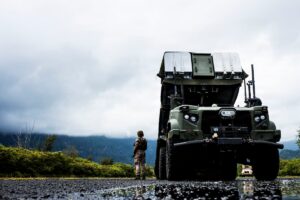
The U.S. described its strikes in southern Iran as defensive measures, targeting missile launch sites and minelaying boats. These actions were conducted with “restraint” considering the ceasefire that has been in place for weeks.
Iran’s foreign ministry labeled the strikes as a ceasefire violation, warning that the U.S. would be responsible for any repercussions. The ministry’s statement asserted, “The Islamic Republic of Iran will leave no act of aggression unanswered.”
According to Iran’s official Mizan news agency, the Revolutionary Guard reported shooting down a drone and deterring another drone and a fighter jet violating its airspace, though the timing of these incidents was not specified.
Negotiation Challenges Amid Military Actions
During a statement on the annual Hajj pilgrimage, Iran’s supreme leader, Mojtaba Khamenei, criticized the presence of U.S. military bases in the Middle East, stating that other nations will no longer act as shields for these facilities.
As negotiations continue, it remains uncertain how these developments will impact the talks. Iranian state TV noted that key figures, Parliament Speaker Mohammad Bagher Qalibaf and Foreign Minister Abbas Araghchi, had left Qatar after talks with no clear next steps.
U.S. Secretary of State Marco Rubio mentioned that discussions on extending the ceasefire and reopening the Strait of Hormuz could take “a few days.”
Internet Restoration and Economic Impact
After months of a comprehensive internet shutdown, Iranian authorities have begun restoring connectivity, which they initially justified as a wartime measure. The shutdown had resulted in significant economic losses, estimated at $30 million to $40 million daily. Fixed broadband services are reportedly returning, though mobile internet remains limited.
The internet blockade, imposed during large-scale demonstrations and intensified after U.S. and Israeli attacks, had severely impacted communication and the country’s online businesses, exacerbating economic strains.
Espionage and Security Crackdown
In other news, Iran executed Gholamreza Khani Shakarab, accused of espionage for Israel and linked to Mossad operations. This marks a continuation of the crackdown on dissent, with numerous similar executions reported since the conflict escalated.
Human rights organizations criticize Iran for conducting closed-door trials that often lack transparency and fairness.
Strategic Strait of Hormuz in Focus
The U.S. strikes have raised concerns over the fragile ceasefire, primarily centered around the strategic Strait of Hormuz. This vital channel, previously facilitating a significant portion of global oil and gas transport, has been effectively closed since the conflict began, impacting global markets.
Iran’s Revolutionary Guard has allowed limited passage of commercial vessels in recent days. However, maritime operations remain a critical point in ongoing negotiations, along with the discussion of Iran’s nuclear program.
An explosion on a tanker in the Gulf of Oman was reported, but details regarding the incident remain sparse.