The ongoing controversy surrounding the deportation of Venezuelan migrants has taken a new turn as a federal judge gears up to investigate potential contempt charges against the Trump administration. Allegations have emerged that the administration defied a court order to return planes carrying migrants accused of gang affiliation to the United States, opting instead to land in El Salvador.
U.S. District Judge James Boasberg, based in Washington, announced his intentions to expedite the investigation following a recent decision by the U.S. Court of Appeals for the District of Columbia Circuit. This decision empowers him to determine if there is enough evidence to pursue prosecution. Boasberg has asked lawyers to present witness lists and procedural plans by Monday, with a goal to commence hearings on December 1.
Previously, Boasberg signaled the possibility of prosecuting administration officials. On March 15, he instructed that aircraft carrying alleged gang members return to the U.S., but instead, the planes landed in El Salvador, with the migrants detained at a facility known for its harsh conditions.
“I am authorized to proceed just as I intended to do in April seven months ago,” Boasberg stated during a recent hearing. He emphasized his commitment to uncovering the events of that day.
The judge proposed that witness testimonies under oath would be the most effective method for conducting the contempt investigation. Alternatively, he suggested the government could submit written statements detailing the decision-making process behind ignoring the court’s directive. A possible witness is a former U.S. Justice Department attorney who filed a whistleblower complaint, alleging that a senior department official implied the administration might disregard court orders while preparing to deport Venezuelan migrants.
The Trump administration has refuted claims of wrongdoing, arguing that Boasberg’s order to return the planes was verbally issued and not part of a written mandate. Justice Department attorney Tiberius Davis expressed the administration’s opposition to the continuation of contempt proceedings.
Previously, Boasberg found probable cause for holding the administration in criminal contempt of court. However, this finding was later overturned by a divided panel of the appeals court, with two judges appointed by Donald Trump siding with the administration. Nonetheless, a larger panel of judges on the D.C. Circuit affirmed Boasberg’s authority to continue his investigation, describing his contempt finding as a “measured and essential response.” They stressed the crucial nature of judicial order compliance, stating, “Judicial orders are not suggestions; they are binding commands that the Executive Branch, no less than any other party, must obey.”
The administration utilized an 18th-century wartime statute to justify sending the migrants, accused of being part of a Venezuelan gang, to El Salvador’s notorious Terrorism Confinement Center (CECOT), asserting that U.S. courts lacked jurisdiction to mandate their release.
In June, Boasberg ruled that the administration must allow some migrants to contest their deportations, acknowledging that many had not been given a fair chance to dispute the claims of gang involvement. He noted “significant evidence” suggesting that numerous migrants were wrongfully detained on weak allegations.
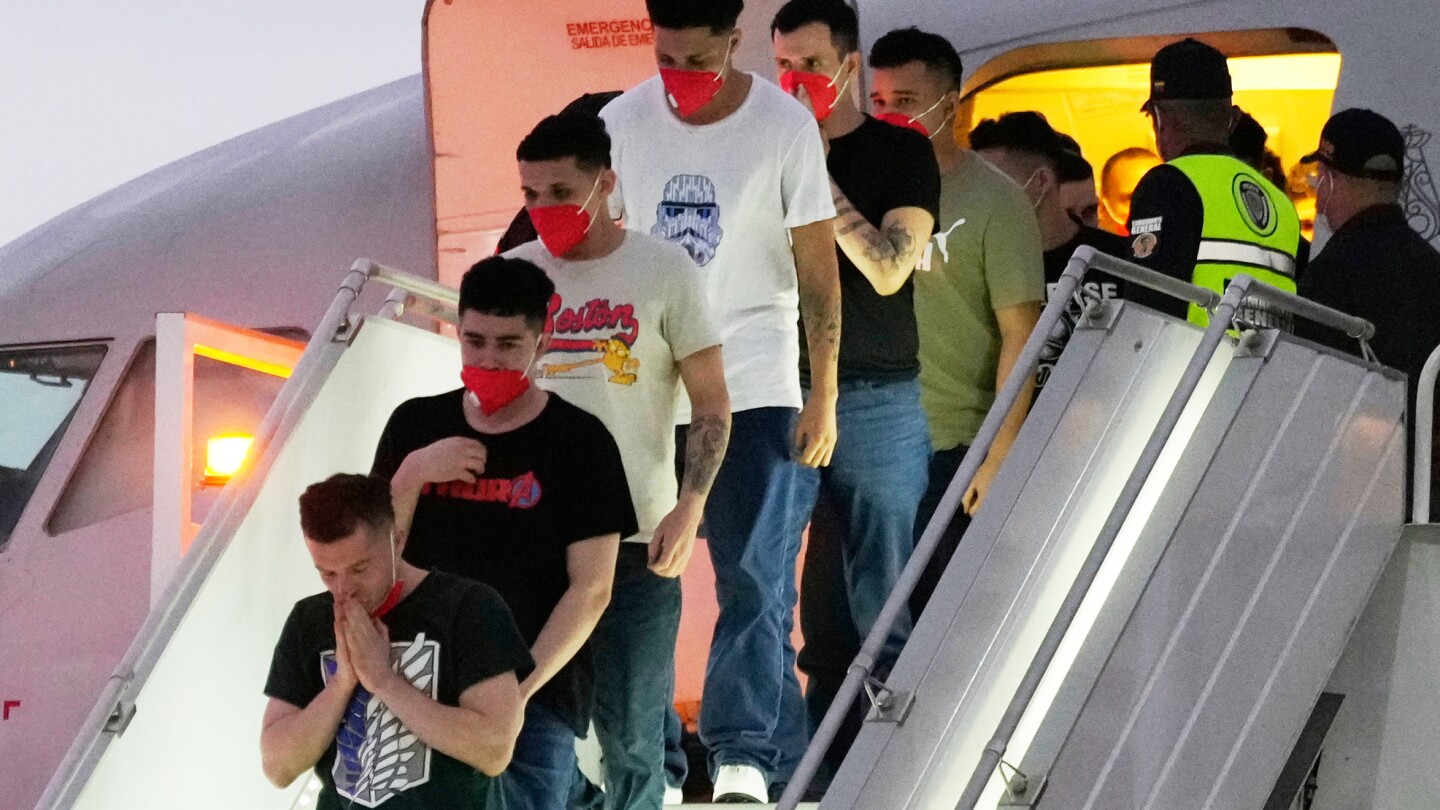
Over 200 migrants were eventually returned to Venezuela as part of a prisoner exchange with the U.S. Attorneys for the migrants are advocating for another order from Boasberg, compelling the administration to outline how at least 137 men can challenge their gang affiliation under the Alien Enemies Act.
According to Lee Gelernt of the American Civil Liberties Union, the men face peril in Venezuela and are hesitant to communicate with legal representatives, although around 30 have been contacted and wish to proceed with their cases. Due to strained U.S.-Venezuela relations, Davis indicated that re-detaining these individuals could prove challenging. Boasberg has yet to decide on the issue.