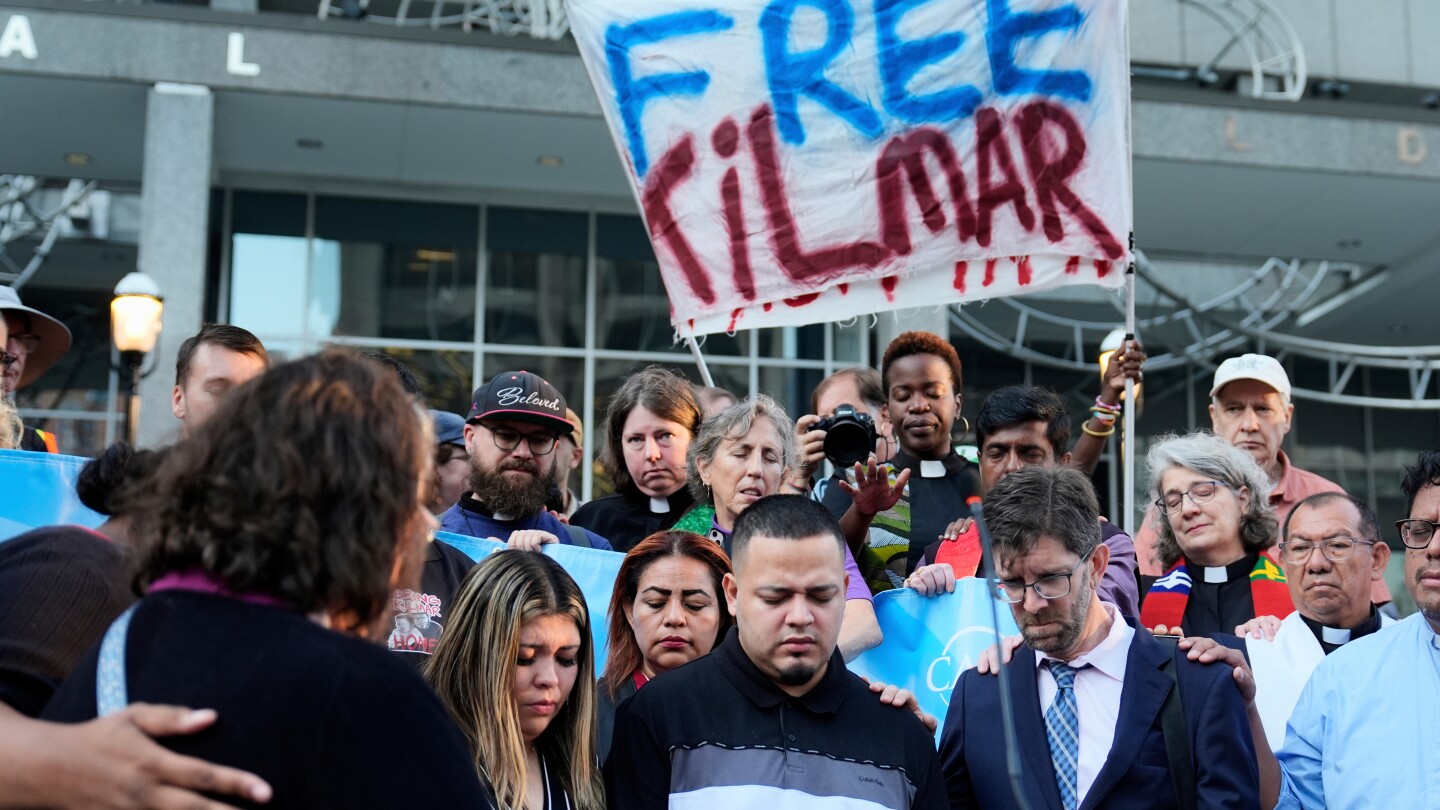
In a Maryland courtroom, the fate of Kilmar Abrego Garcia hangs in the balance as a federal judge deliberates on his release from immigration detention. The case has sparked discussions surrounding the broader implications of U.S. immigration policy, particularly in light of a past deportation error.
Abrego Garcia, who was mistakenly deported to El Salvador in March despite a court settlement that should have protected him, has become a central figure in the debate over former President Donald Trump’s immigration strategies. Following his return to the U.S. in June, the authorities have attempted to send him to various African nations. His legal team contends that these actions are retaliatory.
U.S. District Judge Paula Xinis previously issued an injunction to halt his deportation, pending further review. During the latest court session, John Cantu from Immigration and Customs Enforcement supported a proposal from Homeland Security to deport Abrego Garcia to Liberia.
Despite having an American spouse and child and residing in Maryland for years, Abrego Garcia originally entered the U.S. unlawfully from El Salvador as a teenager. In 2019, a judge had granted him protection from deportation to his home country due to safety concerns. Now, with El Salvador off the table, the government seeks to find a third country for deportation.
Abrego Garcia has expressed willingness to relocate to Costa Rica, which had previously assured the U.S. of his safe residency. Yet, despite this option, the government has shown a preference for countries like Uganda, Eswatini, Ghana, and now Liberia. Cantu, however, mentioned that deportation to Costa Rica is currently “not an option,” without providing further explanation.
Legal representatives for Abrego Garcia argue that his indefinite detention lacks a lawful basis, highlighting the absence of a definitive removal order. Judge Xinis appeared to acknowledge this point, stating, “You can’t fake it ’till you make it. You’ve got to have it.” She pledged to make a decision regarding his release promptly, acknowledging the complexity of the issues involved.
Even if released, the government is expected to persist in its deportation efforts. Meanwhile, Abrego Garcia has sought to reopen his case to apply for asylum in the United States, though success is uncertain. Post-hearing, his attorney Simon Sandoval-Moshenberg criticized the government’s stance, noting the lack of justification for not pursuing the Costa Rica option. “I can’t think of any reason why we’re still fighting out this case, and why he’s still behind bars in a detention center in Pennsylvania, when the government could have sent him to Costa Rica months ago,” he remarked.