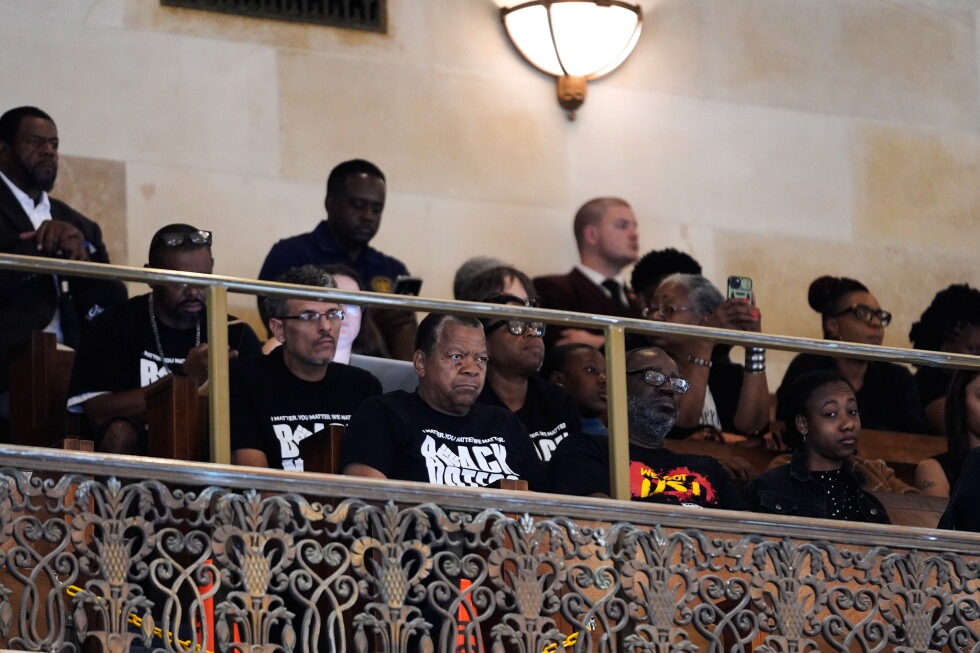
In a significant move, Louisiana’s Republican lawmakers are set to dismantle a Democratic-leaning, majority-Black congressional district following a recent U.S. Supreme Court decision deeming the existing map a racial gerrymander.
The proposed redistricting plan, currently being reviewed by the state House, aims to increase Republican seats in the upcoming midterms and secure U.S. House Speaker Mike Johnson’s reelection prospects. “We drew this map in an effort to safely maximize Republican strength,” stated state Rep. Beau Beaullieu, the Republican head of the redistricting committee.
Should the House approve this plan, it will require only a Senate vote before reaching Republican Governor Jeff Landry. Following the Supreme Court’s ruling in late April, many Southern states have moved swiftly to adjust their congressional maps, intensifying the national redistricting battle leading up to the November elections, a conflict further fueled by former President Donald Trump.
Louisiana’s Redistricting Efforts
Back in 2022, Louisiana’s Republican-majority legislature overrode a veto by then-Governor John Bel Edwards, a Democrat, to establish new congressional districts using 2020 census data. However, the courts later ruled that this map violated the Voting Rights Act by not creating a second majority-Black district.
In 2024, the legislature attempted to rectify this by developing a second majority-Black district, which led to the election of Democrat U.S. Rep. Cleo Fields. However, this map was struck down by the Supreme Court for racial gerrymandering.
Governor Landry postponed the state’s May 16 U.S. House primary, allowing lawmakers more time to create a new map before the session’s conclusion.
The proposed plan eliminates the district represented by Fields, merging it with predominantly white areas around Baton Rouge and southern Louisiana, while also adjusting a majority-Black district in New Orleans, represented by Democratic U.S. Rep. Troy Carter.
Potential Legal Challenges Remain
Despite the strategic mapping, Beaullieu noted that Republicans avoided a map that would guarantee them all six U.S. House seats, as it could have inadvertently increased Democratic victories. This approach also aimed to safeguard incumbents like Johnson and Majority Leader Steve Scalise.
Not everyone is satisfied with this plan. Republican U.S. Rep. Clay Higgins criticized the new map as a “Frankenstein looking thing” and “insanely bad map” in a social media post. Moreover, plaintiffs from the lawsuit that led to the Supreme Court’s decision have threatened further legal action, arguing the plan still leaves a racial imbalance.
Democratic state Rep. Edmond Jordan, chair of the Louisiana Legislative Black Caucus, warned that prioritizing political affiliation over racial fairness could lead to unconstitutional outcomes. Republican state Sen. Jay Morris, the bill’s sponsor, remains confident about the map’s legal defensibility, stating, “I believe this map is easily defendable under the Constitution because we did not racially gerrymander it.”
Swift Redistricting Actions in Other States
Following the Supreme Court’s ruling, other Southern states have quickly acted on redistricting. Florida’s Republican-led legislature approved new districts soon after the decision, potentially giving Republicans up to four more seats in the midterms. Meanwhile, a Tennessee redistricting move split a majority-Black Memphis district for additional Republican gains.
Alabama’s efforts hit a snag when a federal panel blocked a Republican map deemed discriminatory. The state’s Republican officials are appealing to the U.S. Supreme Court to allow its use. In contrast, South Carolina’s Senate declined to pursue redistricting due to timing and potential political risks.