WHY THIS MATTERS: The theft of the Louvre’s crown jewels has increased calls for the museum to be more transparent about the colonial origins of the treasures it displays. Their routes to Paris run through the shadows of empire, an uncomfortable history that France has only begun to confront.
PARIS (AP) — As French authorities scramble to trace the whereabouts of the Louvre’s stolen crown jewels, there is a growing demand for transparency regarding the origins of these treasures.
Although the artifacts are of French craftsmanship, their gemstones trace back to colonial times. The journey of these gems to Paris is tied to the era of empire, a historical narrative that France, similar to many Western countries with museums filled with treasures, is only beginning to address.
The recent heist presents an opportunity, experts suggest, to urge the Louvre and other major European museums to shed light on the true origins of their collections, potentially prompting a broader conversation around restitution.
In the wake of the theft, researchers swiftly mapped out a probable colonial-era route for the materials: sapphires from Ceylon (now Sri Lanka), diamonds from India and Brazil, pearls from the Persian Gulf and Indian Ocean, and emeralds from Colombia.
This doesn’t justify the robbery but adds complexity to the narrative of what was lost.
“There is obviously no excuse for theft,” said Emiline C.H. Smith, a criminologist at the University of Glasgow who studies heritage crime. “But many of these objects are entangled with violent, exploitative, colonial histories.”
Though there is no solid evidence that these particular gems were stolen, experts argue that historical legality does not equate to ethical acquisition. The legal frameworks of the imperial era do not necessarily align with today’s ethical standards.
Meanwhile, the investigation into the heist continues. Several suspects have been charged, but there is concern that the jewels might be dismantled or melted down, as their fame makes them difficult to sell intact but valuable for their materials.
Colonial-Era Jewels ‘Made in France’
The Louvre offers limited details on how the gems in the French crown jewels, displayed in the Apollo Gallery until the theft, were originally sourced.
For instance, the museum’s catalog describes the stolen diadem of Queen Marie-Amélie as adorned with “Ceylon sapphires” and diamonds, yet it omits information about the mining, transportation, or acquisition terms of these stones.
According to Smith, provenance records in Western museums often obscure uncomfortable acquisition histories, suggesting this lack of transparency might be intentional.
The museum has not responded to requests for comment.
The stolen pieces, crafted by elite Parisian ateliers, belonged to prominent 19th-century figures but were made from materials acquired through colonial networks, converting global labor and resources into European prestige.
Historian Pascal Blanchard notes the distinction between craftsmanship and sourcing. The jewels were crafted in France, yet many stones arrived via colonial trade routes, shaped by empires that drew wealth from regions like Africa, Asia, and South America.
Some French critics emphasize that national concerns over the loss should be juxtaposed with the imperial history of how these gems were originally acquired.
India and the British Crown’s Koh-i-Noor
India is leading a high-profile effort to reclaim the Koh-i-Noor diamond, a famous colonial-era treasure.
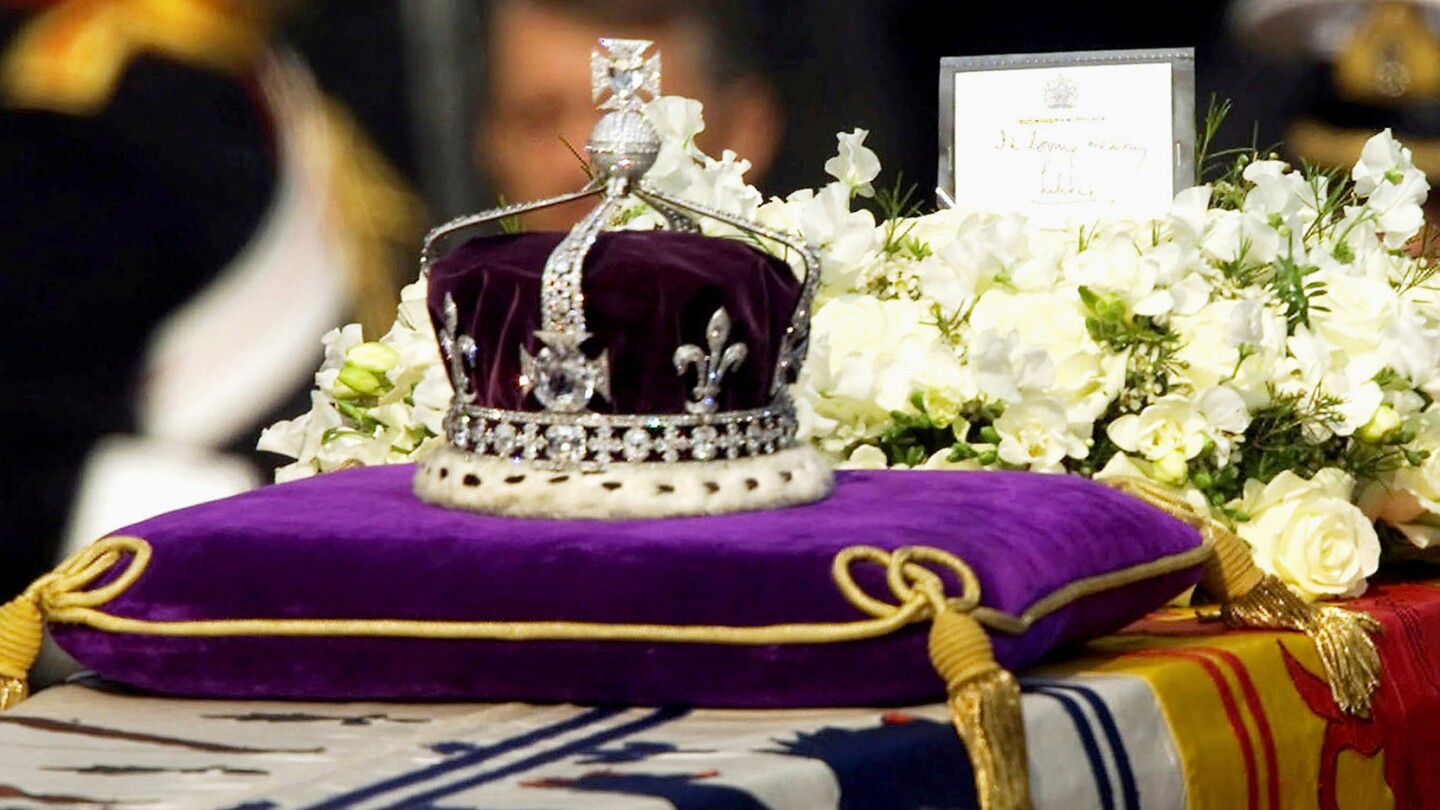
The country has repeatedly requested the U.K. return the 106-carat diamond, now part of the Queen Mother’s crown. It likely originated from India’s Golconda diamond mines, much like the Louvre’s Regent diamond, which remains intact after the October 19 theft.
The Koh-i-Noor, transferred from various courts before reaching British possession, is seen in London as a “lawful” imperial gift, while India views it as a conquest prize. Although a 2017 petition to India’s Supreme Court for its return was dismissed, the debate continues.
While France’s situation differs from Britain’s, and the Koh-i-Noor story is distinct from that of the Louvre, it raises questions applied to 19th-century acquisitions: not only whether items were purchased, but who had the authority to sell them. By this standard, even jewels made in France could be seen as products of colonial extraction.
The Louvre’s case is part of a larger global context, with Greece seeking the return of the Parthenon Marbles, Egypt campaigning for the Rosetta Stone, and the Nefertiti bust in Berlin.
France’s Uneven Progress on Restitution
France has made limited progress. President Emmanuel Macron’s initiative to return African heritage led to a law permitting the return of 26 royal artifacts to Benin and items to Senegal. Madagascar regained Queen Ranavalona III’s crown through a specific process.
Critics argue restitution is hindered by French law, which generally forbids removing state-held objects unless Parliament grants an exception, and by cautious museums keeping artifacts on display.
Under former Louvre director Jean-Luc Martinez, the museum’s strict criteria for defining “looted” items and demand for extensive proof allegedly discouraged restitution claims, despite public commitments to transparency. (The Louvre maintains it complies with legal and academic standards.)
Colonialism’s Complex Legacy in Western Museums
Erin L. Thompson, an art-crime expert in New York, argues that discussing artifacts like the French crown jewels without acknowledging their social history is misleading. A decolonized approach would detail the origins of these stones, the trade systems, and the beneficiaries and victims — sharing narratives with originating communities.
Monica Hanna, an Egyptian archaeologist, highlights the irony of the Louvre theft’s public reaction, calling it central to the restitution debate. She anticipates the heist will catalyze action on restitutions in Western museums and fuel transparency discussions.
Experts like Hanna and others suggest museums should provide clearer labeling and descriptions acknowledging the origins, movements, and costs associated with their collections. This involves publishing known information, admitting gaps, and incorporating contested histories into exhibits, even if it complicates the narrative.
Jos van Beurden, a Dutch restitution expert, suggests a straightforward approach: “Tell the honest and complete story. Open the windows, not for thieves, but for fresh air.”
___
Associated Press writer Danica Kirka in London contributed to this report