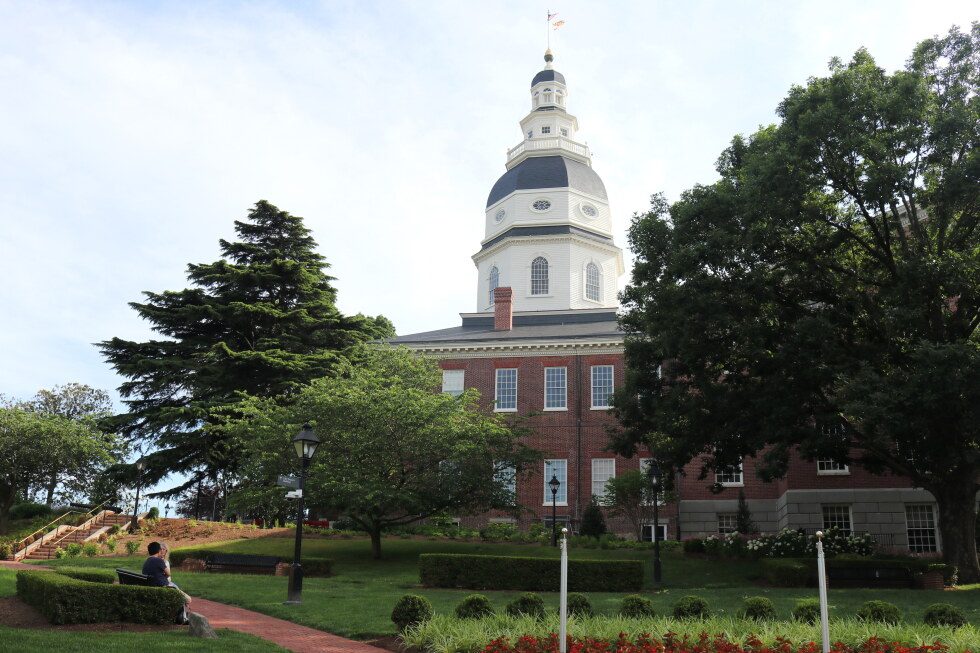
The political landscape in Maryland could be on the brink of significant change as lawmakers convene for a special session focused on redistricting. This initiative could potentially swing another U.S. House seat to the Democrats by 2028.
The Maryland General Assembly is set to discuss a constitutional amendment proposal that would allow Democrats to draw congressional maps more favorable to their party. Currently, Democrats hold seven out of the state’s eight House districts. However, before lawmakers can consider new district lines, this proposal must first gain voter approval.
This move in Maryland, described as a “blatant power grab” by the state’s minority Republicans, is the latest development in the ongoing nationwide redistricting battle, a process that began a year ago and has reshaped the U.S. House map in anticipation of upcoming midterms.
Previously, Democratic state Senate President Bill Ferguson had blocked a similar initiative earlier this year due to concerns over potential judicial challenges. However, his stance shifted following the U.S. Supreme Court’s decision to weaken the Voting Rights Act in late April. This ruling enabled Republicans to alter districts swiftly in Southern states with large minority populations, moves Ferguson described as “painful” to witness.
“It felt like the unwinding of any type of democratic norms in the blink of an eye,” Ferguson expressed in an interview.
Maryland’s Potential Congressional Shift
Maryland’s only Republican representative in Congress, Rep. Andy Harris, who chairs the House Freedom Caucus, represents the 1st District, which encompasses the mostly rural Eastern Shore, separated from the rest of the state by the Chesapeake Bay.
In 2021, there was an attempt to redraw the map to make Harris’ district more competitive for Democrats by incorporating communities across the bay. However, a judge struck down these districts in 2022, citing “extreme partisan gerrymandering.”
To avoid future legal challenges, lawmakers will deliberate on a constitutional amendment clarifying that the judge’s cited parameters only apply to General Assembly districts, not congressional ones. This amendment requires a three-fifths majority in both chambers and voter approval in the Nov. 3 general election. If passed, it would allow revisiting of congressional maps for the 2028 election under new guidelines.
Republican Concerns Over Gerrymandering
In anticipation of the session, Republicans have expressed concerns about the limitations on testimony during the special session.
“We are very concerned with the significant limitations on witnesses, and the reality that any bill hearing is obviously intended to be a brief and meaningless formality,” House Minority Leader Jason Buckel stated.
Harris warned that the proposed “gerrymandering that this constitutional amendment sets up” could fragment areas of common interest, predominantly urbanizing districts and disenfranchising rural voters. He anticipates that such a move would “of course” face court challenges.
Governor Wes Moore, frustrated by previous refusals to redistrict, framed the move as necessary due to Republican actions elsewhere. He emphasized that the decision ultimately lies with voters, not “party bosses.”
“And if the people determine that there’s nothing to do, then there’s nothing to do. But if the people determine that we move, we move,” Governor Moore stated as he assumed the chair of the National Governors Association.
National Implications of Redistricting
Maryland’s session is part of a broader national redistricting battle that began a year ago, following President Donald Trump’s call for Republican-led states to redraw congressional districts to maintain their slim House majority. Republicans anticipate gaining up to 16 additional seats from new maps in eight states, while Democrats, despite setbacks, foresee potential gains of up to six seats from new districts in California and Utah.
States like Maryland and New York are now taking measures to redraw congressional districts ahead of the 2028 elections. New York’s Democratic-led Legislature has already approved a proposed constitutional amendment to permit mid-decade redistricting and ease partisan gerrymandering restrictions, pending further legislative approval.
Associated Press reporters David A. Lieb in Jefferson City, Missouri, and Steven Sloan in Oklahoma City contributed to this report.