A significant development in Maryland’s political arena arrives as voters prepare to decide on a crucial redistricting amendment. This decision, pushed by Democrats, forms part of a broader national strategy aimed at securing control of the U.S. House in upcoming elections.
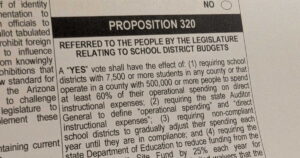
The Maryland Supreme Court has mandated that the proposed constitutional amendment appear on the November ballot, overturning earlier decisions by lower courts that had prevented it from advancing to voters. However, it also instructed that the ballot summary be revised. This ruling represents a significant win for Democrats, who are working to counteract a Republican redistricting initiative led by former President Donald Trump.
“Winning in court was only the first step,” stated Ned Miller, chief strategist for Fight Back MD, an organization that endorses the ballot measure. “We are building the statewide campaign to educate voters, organize supporters and build the coalition necessary to stand up to Donald Trump and pass Question 3 in November.”
While Democrats currently hold seven out of Maryland’s eight U.S. House seats, the amendment, if approved, could enable Democratic lawmakers to redraw congressional districts, potentially allowing for a complete Democratic sweep in the 2028 elections. The amendment would not affect the voting districts for this year’s midterm elections.
State Senate Minority Leader Steve Hershey, a Republican, who was among the lawmakers to file a lawsuit, acknowledged that the court found the original ballot wording unfair. He expressed concern, however, that the judiciary should not be involved in rewriting legislative actions. “The Court ultimately provided political cover for the General Assembly by allowing this misleading constitutional amendment to remain on the ballot,” Hershey stated.
Maryland Amendment Challenges Previous Court Decisions
In August, Democratic Gov. Wes Moore convened a special session to advance the amendment to the November ballot. This amendment seeks to reverse a 2022 court ruling that invalidated a previous Democratic redistricting plan due to extreme partisan gerrymandering. The judge in that case argued that congressional districts should adhere to a constitutional requirement for compact districts respecting “natural boundaries.” The proposed amendment would apply these criteria solely to state legislative districts.
This amendment could allow for congressional districts that span the Chesapeake Bay, potentially altering the district represented by U.S. Rep. Andy Harris, Maryland’s sole Republican in Congress and chair of the conservative House Freedom Caucus.
Supreme Court Decision on Deadline Compliance
Lower courts had concluded that lawmakers did not comply with their own stipulations when referring the amendment to the ballot. A law enacted earlier this year required the secretary of state to certify statewide ballot questions to the Maryland State Board of Elections by July 1 and included a 15-day public comment period. These deadlines were missed by the time lawmakers approved the redistricting amendment on August 4.
Attorneys for Democratic Attorney General Anthony Brown contended that the deadlines were irrelevant, arguing that lawmakers had the authority to draft their own ballot summary for the redistricting amendment. The Supreme Court agreed, determining that the lower court’s ruling was incorrect.
Republican lawmakers who filed the lawsuit also succeeded in lower courts by arguing that the ballot question’s wording was misleading and that the amendment violated the state constitution’s single-issue requirement by including a provision that granted the state Supreme Court original jurisdiction over congressional redistricting lawsuits. While the state Supreme Court rejected the multi-subject argument, it acknowledged the misleading nature of the ballot wording but concluded that this was not sufficient to prevent the amendment from proceeding to voters. Instead, it ordered a revision of the ballot wording.
Maryland’s Role in the National Redistricting Landscape
Redistricting is typically carried out at the start of each decade following the release of new census data. However, a mid-decade redistricting battle emerged last year as Trump urged Republican-majority states to redraw congressional districts to potentially help maintain a slim House majority during this year’s midterm elections.
Republicans had aimed to gain up to 16 additional seats from new U.S. House districts in states such as Alabama, Florida, Louisiana, Missouri, North Carolina, Ohio, Tennessee, and Texas. However, the Missouri Supreme Court recently blocked the use of new congressional districts for the November election, opting instead for a statewide vote on the maps following a citizens’ petition for a referendum.
Meanwhile, Democrats are hopeful of securing up to five new congressional seats from redistricting efforts in California and Utah. In May, the Virginia Supreme Court invalidated a redistricting attempt that could have facilitated Democrats in gaining up to four additional seats, stating that the Democratic-led legislature had failed to adhere to procedural requirements when placing an amendment on the ballot.