Drone Incursions at the Southwest Border: A Growing Challenge
The unexpected closure of airspace around El Paso, Texas, has shed light on the increasing concerns surrounding drone activities by Mexican cartels. Originally attributed to cartel drones, the airspace shutdown was later revealed to be related to the testing of a new laser technology aimed at neutralizing such drone threats. This incident highlighted the broader issue of drone incursions at the U.S.-Mexico border.
Although the airspace restrictions were lifted within eight hours, the temporary disruption underscored the significant threat posed by drones in the region. These unmanned aerial vehicles have been adopted by drug cartels for purposes such as surveillance, attacks, and smuggling operations. According to Henry Ziemer, an associate fellow at the Center for Strategic and International Studies, “Cartels are nothing if not innovative,” emphasizing the strategic use of drones to exploit border vulnerabilities.
Data from U.S. Customs and Border Protection (CBP) revealed that in fiscal year 2025, a staggering 34,682 drone flights were detected within 500 meters of the U.S.-Mexico border, compared to 7,678 along the Canadian border. These figures illustrate the growing scale of drone activities in the Southwest, with cartels increasingly leveraging this technology for illicit purposes.
In Tijuana, Mexico, for instance, three explosive-laden drones recently targeted a government building near the California border. Meanwhile, in Yuma County, Arizona, Sheriff Leon Wilmot reported a rise in drone-related incidents since 2020, with deputies finding evidence of payload drops in residential areas. Wilmot stressed the severe public safety threat posed by these activities, noting the cartels’ disregard for human life.
Despite the challenges, local law enforcement agencies like Wilmot’s lack the resources to effectively counter drone threats, leaving such efforts primarily to federal authorities. The cartels’ use of drones for surveillance and smuggling continues to evolve, with incidents of drones scouting for law enforcement and aiding human smugglers.
Cartels have also taken advantage of global conflicts to enhance their drone capabilities. Reports indicate that members of these criminal organizations have participated in the Ukraine-Russia war, ostensibly to gain advanced drone warfare expertise. This includes the use of first-person view (FPV) drones, known for their speed and maneuverability.
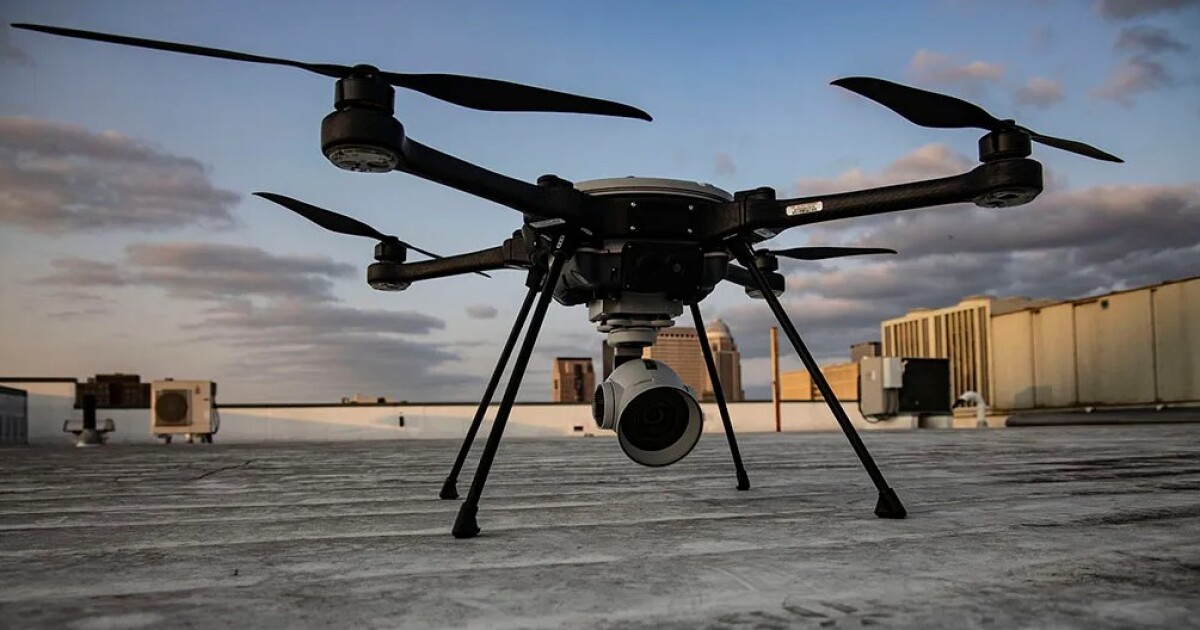
Efforts to mitigate drone threats at the border include various detection and interception technologies, such as radars, radiofrequency sensors, and infrared cameras. However, intercepting drones remains complex, with options ranging from net guns to jamming radio frequencies.
In response to the escalating drone threat, the Department of Homeland Security (DHS) has launched initiatives to procure counter-drone technology. This includes a $115 million plan aimed at enhancing security for upcoming major events like the FIFA World Cup. Homeland Security Secretary Kristi Noem emphasized the importance of securing the border and protecting public safety from drone-related risks.
Legislative measures have also been introduced to address the issue. The SAFER SKIES Act, part of the 2026 National Defense Authorization Act, eases restrictions on disabling drones and authorizes trained state and local law enforcement to protect public gatherings and critical infrastructure.
Despite these efforts, the challenge of managing drone threats at the border persists, with ongoing technological advancements and the cartels’ adaptability continuing to pose significant security concerns.