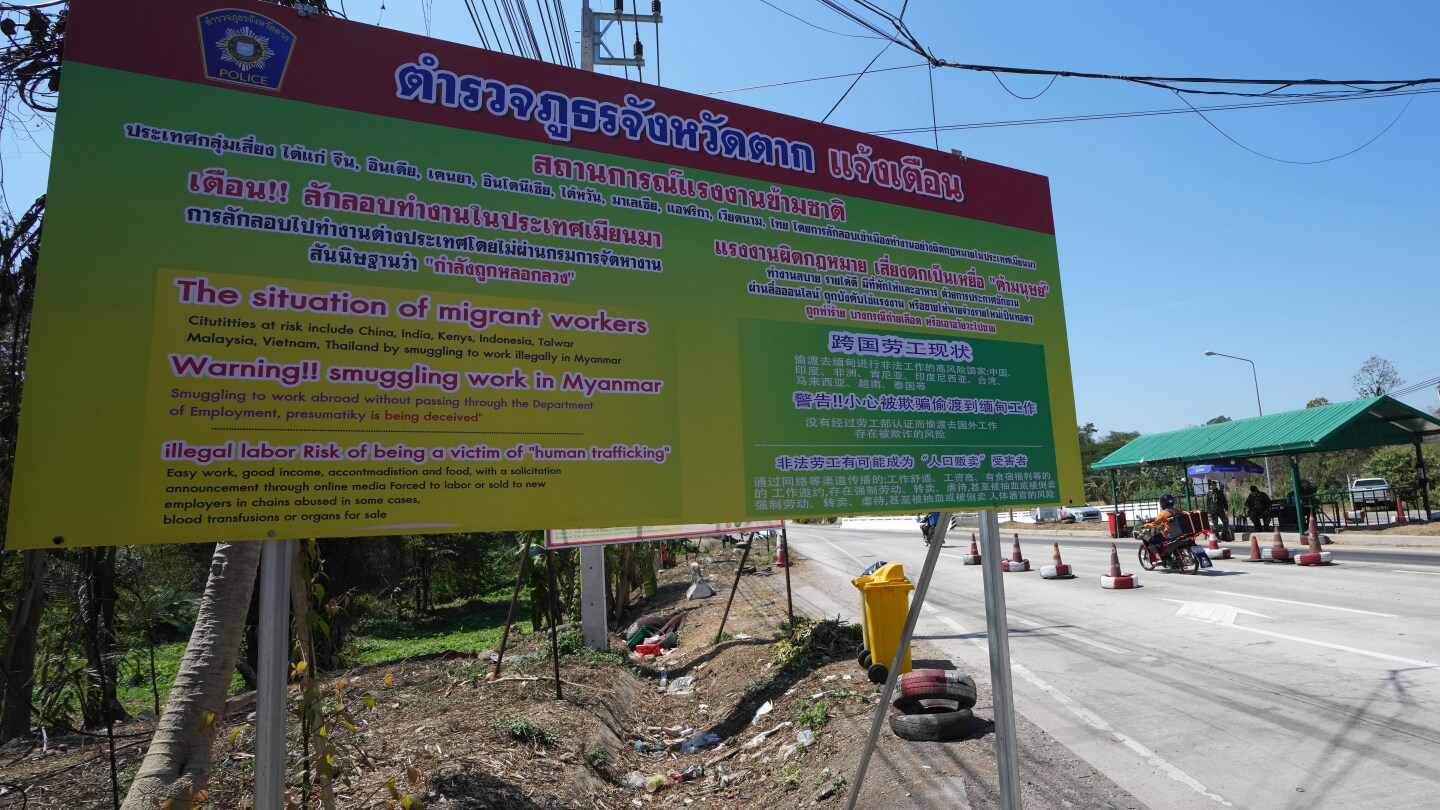
In a groundbreaking legal proceeding, a Moroccan court has handed down a five-year prison sentence and fines amounting to $107,300 to a man convicted of human trafficking. This case marks the first instance in Morocco where an individual has been convicted for enticing people to work under false pretenses in a fraudulent setup in Asia.
The case centered around young Moroccan recruits who were misled by online job advertisements promising lucrative opportunities in Thailand. Instead, they found themselves trafficked to Myanmar, where they were coerced into working in exploitative conditions, engaging in fraudulent online activities over 9,300 miles away from their homeland.
Nabil Moafik, the accused, refuted the allegations, claiming, “Human trafficking is a crime against humanity” and something he would never engage in.
According to the United Nations, approximately 120,000 individuals are ensnared in so-called scam centers, prompting global legal actions to tackle such trafficking networks. Several related cases are ongoing in Moroccan judicial systems.
During the trial in Casablanca, victims recounted to The Associated Press the harrowing ordeals they faced, including torture and other degrading treatments in the Myanmar facilities. Some victims managed to secure their release by paying ransoms through cryptocurrency, as per court documents shared by legal representatives.
Prosecutors revealed that Moafik managed a Facebook group that assisted Moroccan immigrants with adapting to life in Turkey. Within this group, he posted advertisements for call-center positions in Thailand. Youssef Amzouz, one of the respondents to the ad, was introduced to another Moroccan recruiter, who conducted interviews and facilitated the purchase of a plane ticket to Malaysia.
A police report presented in court detailed how Amzouz was later coerced either to pay a ransom or recruit 100 more individuals to secure his release.
Moafik testified in court that upon Amzouz’s exit from the scam operation, he contacted him from a hospital, where he was receiving treatment for injuries resulting from torture. Moafik stated, “I was just a job mediator. I was getting between $21 to $107 for each person I recruited. I did not know that all of this would happen.”
The International Organization for Migration, a U.N. agency, has acknowledged that intermediaries might be unaware of their role in trafficking, complicating the prosecution of such transnational crimes.
In court, the state prosecutor contended that Moafik’s actions were financially motivated, describing him as “an essential element in the crime of human trafficking.”
Earlier this year, Moroccan news source Hespress disclosed that the country’s Foreign Ministry managed to facilitate the release of 34 Moroccan citizens ensnared in online scam operations in Myanmar. The ministry has yet to respond to The Associated Press’s inquiries about the total number of Moroccans affected by such scams.