Protest Erupts in Rio Following Deadly Police Raid
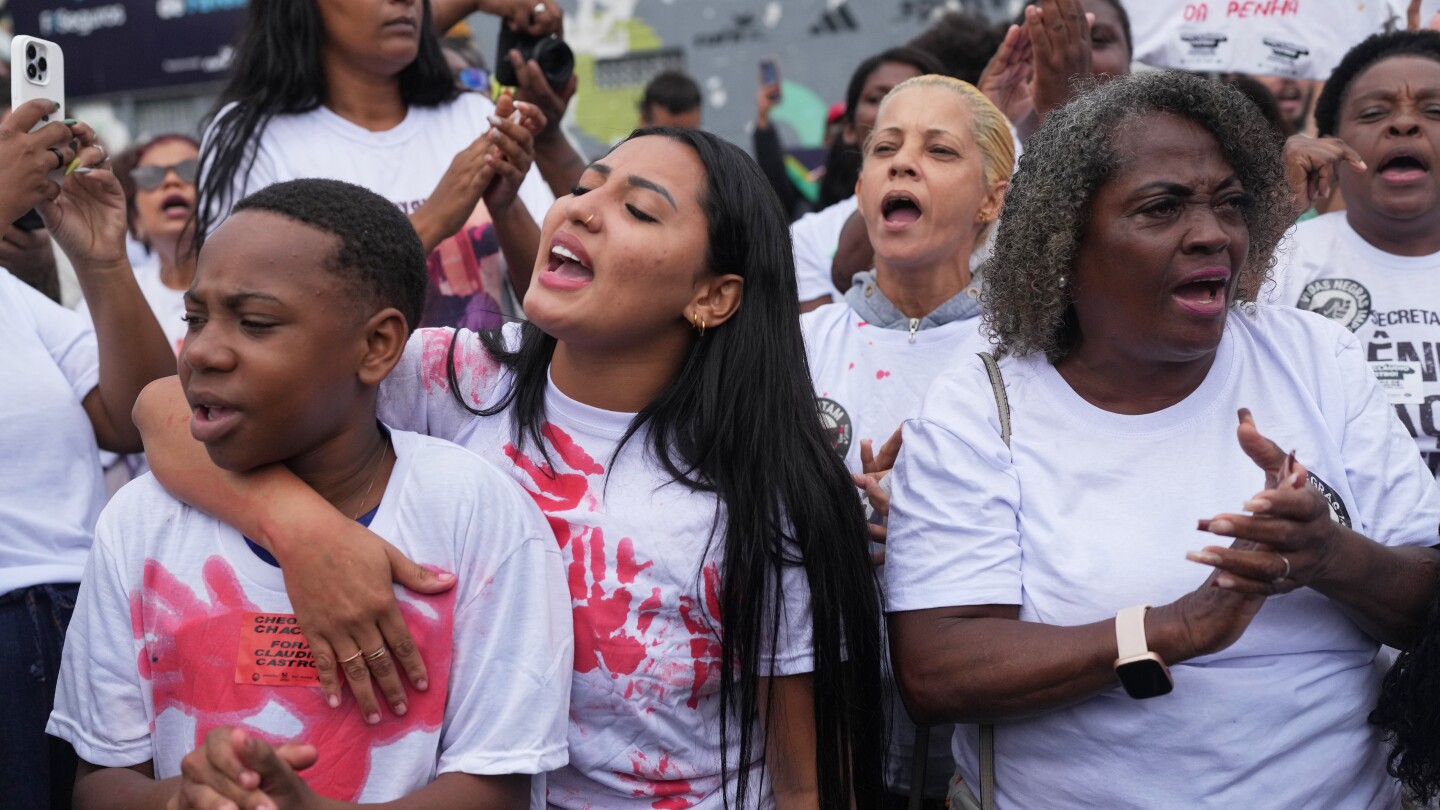
In a powerful display of dissent, hundreds of individuals marched through Vila Cruzeiro, a favela in Rio de Janeiro, demanding the resignation of Rio state Governor Cláudio Castro. This march comes in the wake of a police raid that resulted in over 100 fatalities, marking it as one of Rio’s most lethal operations.
The protest drew a diverse crowd, including locals, activists, politicians, and grieving mothers, united in their anger over the events that unfolded in this community. Earlier in the week, residents of Vila Cruzeiro had laid out numerous bodies in protest after collecting them from a nearby area.
Official reports indicate that at least 121 people, including four police officers, were killed during the operation, although the public defender’s office claims the death toll is 132. The operation aimed at capturing leaders of the Red Command gang, which has been expanding its influence throughout Brazil, including the Amazon rainforest.
Anne Caroline Dos Santos, a protester from Rocinha, expressed her outrage, stating, “Coward, terrorist, assassin! His hands are dirty with blood,” in reference to Governor Castro, a known ally of former President Jair Bolsonaro. Protesters accused the authorities of engaging in torture and extrajudicial killings, with many wearing white for peace and carrying signs pleading to “stop killing us.”
The operation, involving around 2,500 police and soldiers, has been labeled a success by Castro, who described it as a battle against “narco-terrorism.” However, the high death toll has sparked widespread condemnation from human rights organizations and the United Nations. In response, Brazil’s Supreme Court has demanded a detailed account of the operation from the state government.
Leandro Santiago, a resident of Vila Cruzeiro, voiced his frustration over the violence, stating, “This is a disgrace to Brazil. Nothing justifies this.” Meanwhile, local councilwoman Mônica Benício criticized the approach, emphasizing the need to tackle corruption and the financiers of drug trafficking instead of targeting young people in favelas.
While the state government maintains that those killed were criminals resisting arrest, the nature of the deaths has raised questions. Reports from local media indicate that some bodies were found in distressing conditions, with allegations of decapitation and torture.
Adriana Miranda, a lawyer present at the protest, highlighted the importance of due legal process, arguing, “Suspicions need to be investigated. There is a whole procedure established in the Penal Code and the Code of Criminal Procedure that must be followed.” The unrest underscores the deep divisions within Brazil, where opinions on the operation are polarized between those who support the crackdown on crime and those who fear its human cost.