Redistricting Efforts Lead to Unexpected Election Outcomes in Tennessee and North Carolina
The recent redistricting efforts aimed at reinforcing Republican strongholds have yielded mixed results, particularly in Tennessee and North Carolina. While the GOP sought to gain an advantage by altering district boundaries, voter backlash and shifting political dynamics have led to unforeseen challenges.
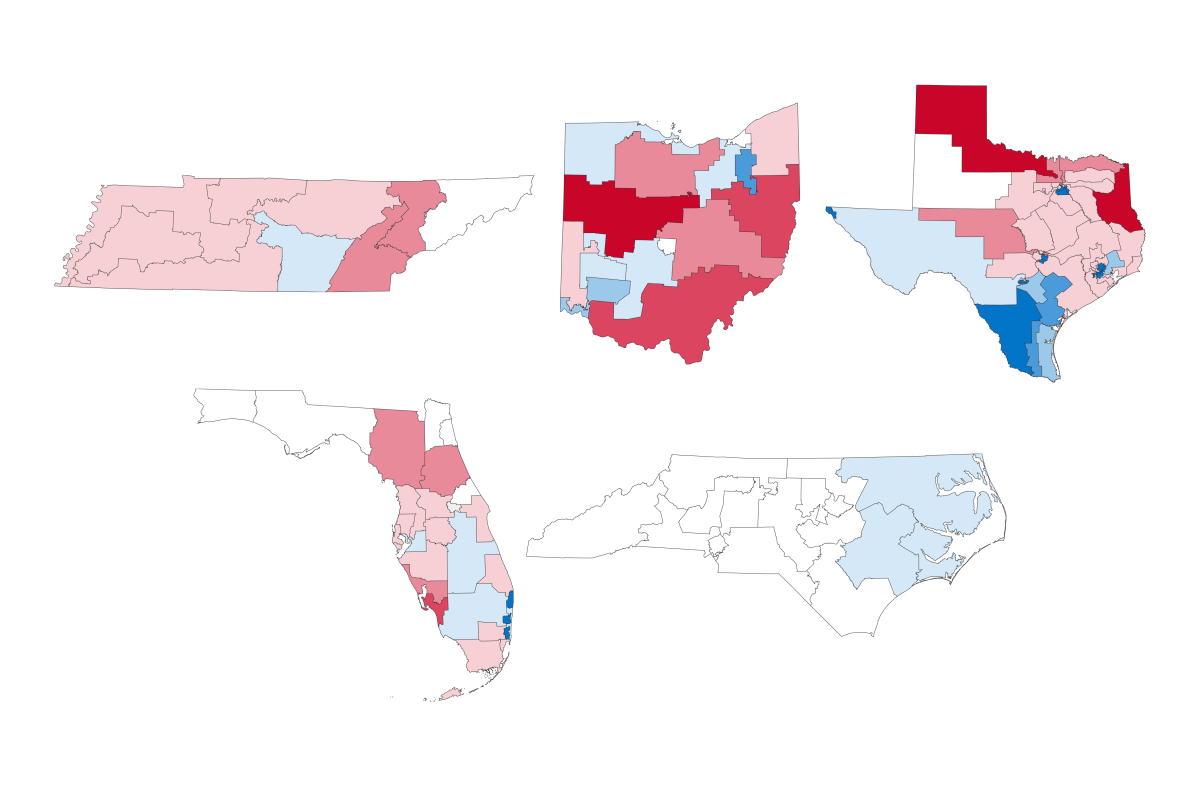
In Tennessee, the Republican strategy involved redistributing voters to adjust the balance in favor of the GOP. This tactic involved moving Republican voters into Memphis’ predominantly Democratic 9th District while shifting Democratic voters to nearby districts. The move was a strategic gamble, as the state Legislature attempted to fortify their control in places previously considered secure.
Despite their efforts, many Republican candidates emerged victorious by narrow margins, leaving them vulnerable in future elections. Although the GOP succeeded in flipping the 9th District, the neighboring 4th District, once a Republican stronghold, now faces the possibility of a Democratic takeover. As reported by AP News, the 4th District race remains one of the tightest in the nation and is still undecided as of Friday.
North Carolina’s Redistricting Challenges
In North Carolina, Republicans faced similar setbacks as they attempted to shift the 1st District in their favor through redistricting. This required making the adjacent 3rd District less Republican, a significant change for what was once the most Trump-friendly district in the state. The effort backfired as motivated Democratic voters, influenced by a significant Senate race, swayed the outcome. Consequently, Republicans lost both targeted seats, and Democrats gained control of the Senate seat, six congressional districts, and the state House. As of Friday, two congressional races remain too close to call.
According to the AP Voter Poll, widespread dissatisfaction with President Trump’s economic and foreign policies contributed to a nationwide leftward shift. Political science expert Chris Cooper commented on the potential for future changes: “What looks like a dummymander in 2026 may look like a well-drawn gerrymander in 2028.”
The future political landscape may depend on whether Democrats can maintain their momentum and voter turnout in upcoming elections. If not, Republicans could potentially regain these districts in North Carolina, highlighting the ongoing volatility in U.S. electoral politics.