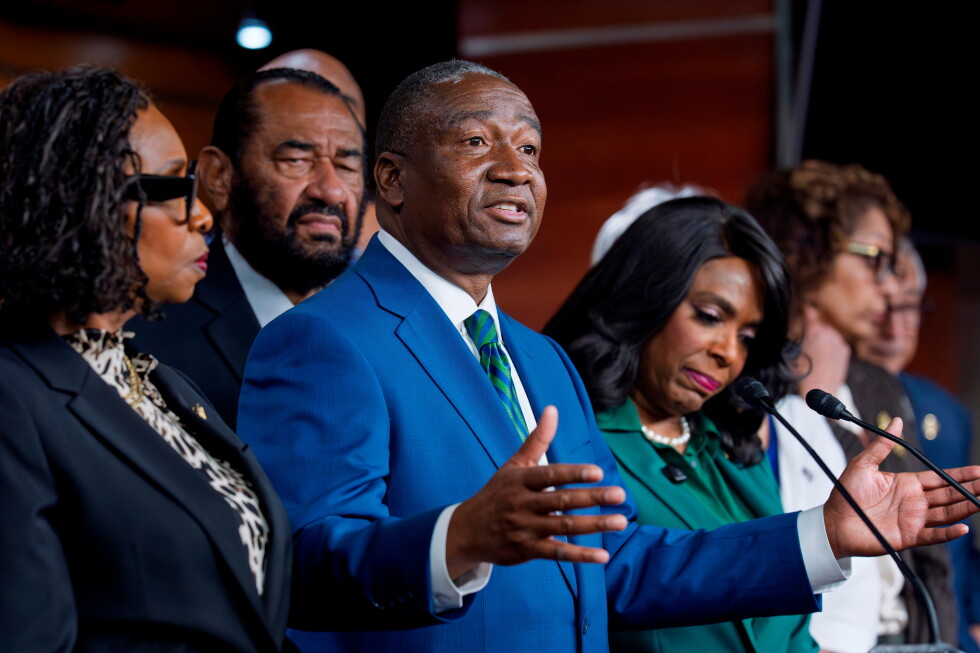
In a surprising political shift, Democratic U.S. Representative Cleo Fields has announced he will not pursue reelection for Louisiana’s congressional district, a focal point in a recent U.S. Supreme Court decision regarding race and redistricting.
The congressional district, predominantly Black, was reconfigured by Louisiana’s state legislature in May to favor Republican candidates in the upcoming midterm elections. This redistricting came on the heels of the Supreme Court’s ruling that the original district’s boundaries were an “unconstitutional gerrymander” due to their heavy reliance on racial demographics. Fields’ district was thus significantly altered.
“After a great deal of prayer and reflection, I have decided not to seek reelection, to Congress, in the 6th District or any other district in Louisiana,” stated Fields. Instead, the veteran political figure aims to pursue a role in the state Senate.
The Supreme Court’s intervention, which invalidated the map that supported Fields’ district, intensified an ongoing national debate over redistricting. This contentious issue has been fueled significantly by efforts from former President Donald Trump to secure Republican advantages in the midterm elections.
Similarly, in June, the Supreme Court sanctioned Alabama’s use of an election map that favored Republicans, reflecting a broader trend in court rulings favoring GOP efforts. More details regarding this decision are available here.
In Louisiana, Republican strategists considered crafting a map that could potentially allow the party to claim all six of the state’s U.S. House seats. However, this plan was abandoned to avoid the risk of inadvertently boosting Democratic numbers in Republican-held districts, which could lead to unexpected GOP losses. Their final redistricting effort reshaped Fields’ district to encompass mainly white areas in the Baton Rouge region and southern Louisiana.
Fields, who initially served two terms in the U.S. House from 1993 to 1997, was only the second Black person to represent Louisiana in Congress. This historical context underscores the significance of his recent decision.
___ Wilder is a corps member for The Associated Press/Report for America Statehouse News Initiative. Report for America is a nonprofit national service program that places journalists in local newsrooms to report on undercovered issues.