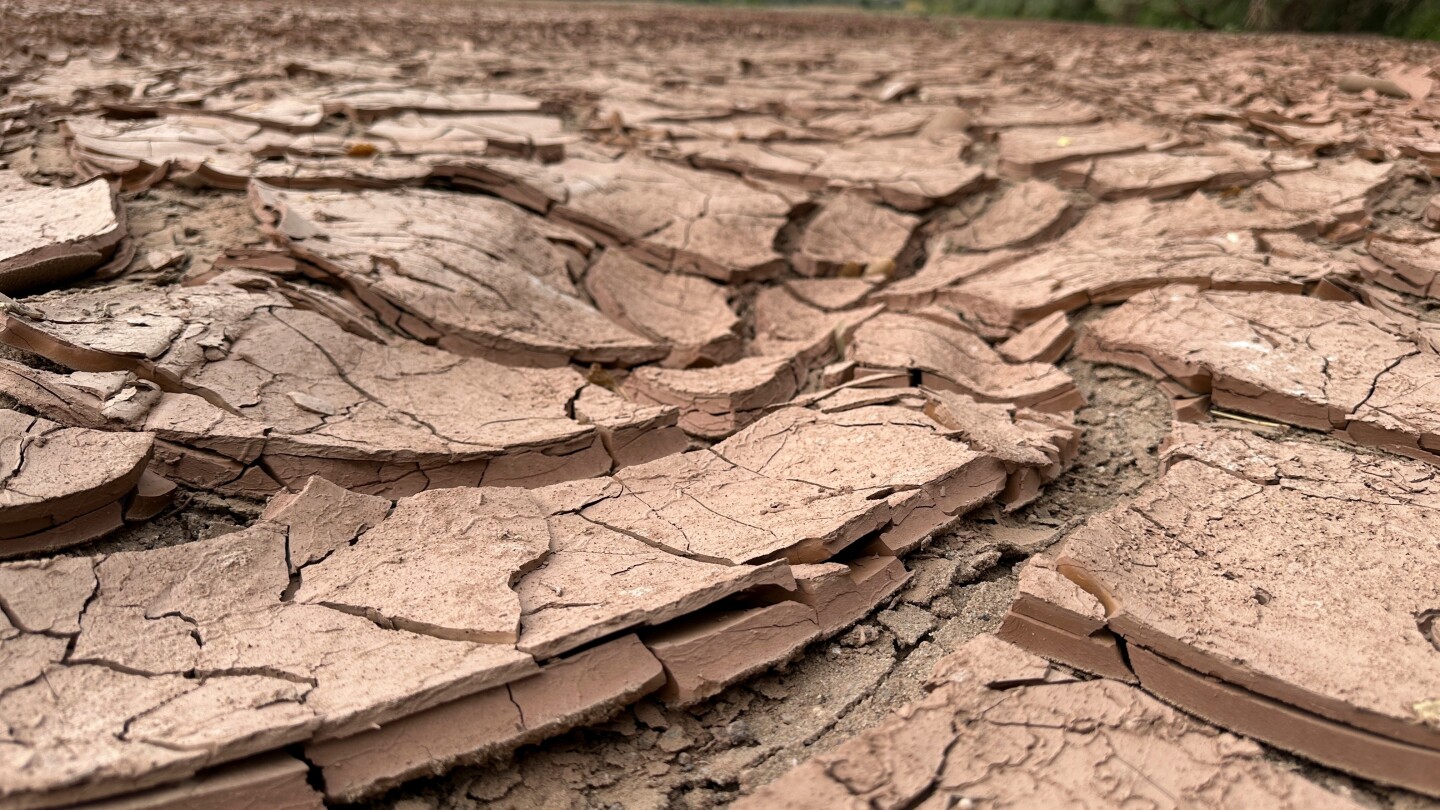
The Rio Grande, known as Rio Bravo in Mexico, is one of North America’s most significant rivers, with a history deeply intertwined with indigenous communities and Spanish explorers. Unfortunately, the river’s future is now under threat as a new study highlights its dire condition, suggesting it could be in an even worse state than the critically stressed Colorado River.
The study, conducted by the World Wildlife Fund, Sustainable Waters, and university researchers, indicates that without swift action, water scarcity could affect millions who depend on the Rio Grande-Bravo basin. The research shows that only 48% of the water consumed in the basin is naturally replenished, leaving a staggering 52% as unsustainable usage.
Critical Water Crisis
This basin serves as a crucial water source for 15 million people across the U.S. and Mexico and supports nearly 2 million acres of agriculture. The unsustainable water consumption poses a significant risk to these populations and activities, as reservoirs and aquifers become increasingly overdrawn.
Brian Richter, president of Sustainable Waters, emphasized the gravity of the situation, stating, “That’s a pretty daunting, challenging reality when half of our water isn’t necessarily going to be reliable for the future.” The study paints a comprehensive picture of the water losses in the basin, offering insights for policymakers to manage resources better.
Historically, warnings about the Rio Grande’s diminishing flow surfaced in the late 19th century, with issues starting in Colorado’s San Luis Valley. Now, some parts of the river remain dry for extended periods, impacting areas like Big Bend and Albuquerque.
Agricultural Impact
Agriculture accounts for 87% of the basin’s direct water use, a significant factor considering the reduced irrigation season. In New Mexico, farmers have benefited from summer rains, but areas in Texas and Mexico have not seen similar relief.
Water shortages have led to a reduction in farmland, with a reported loss of 18% in Colorado, 36% in New Mexico, and 49% in the Pecos River region between 2000 and 2019. The World Wildlife Fund and Sustainable Waters, along with the University of New Mexico, are exploring solutions to this crisis.
Jason Casuga, CEO of the Middle Rio Grande Conservancy District, highlighted the role of invasive species like salt cedar trees in water loss, calling for more stringent consumption regulations in riparian areas.
Exploring Solutions
Efforts to address the overuse of water vary across regions. In Colorado, water managers may close wells if the aquifer doesn’t stabilize, while New Mexico’s voluntary fallowing program could change pending U.S. Supreme Court decisions on water disputes with Texas.
Both New Mexico and Mexico face obligations under interstate compacts and treaties, adding pressure to meet their water delivery commitments. Enrique Prunes of the World Wildlife Fund stressed the importance of incorporating environmental considerations into water management strategies, stating, “Rebalancing the system also means maintaining those basic functions that the river and the aquifers and the groundwater-dependent ecosystems have.”