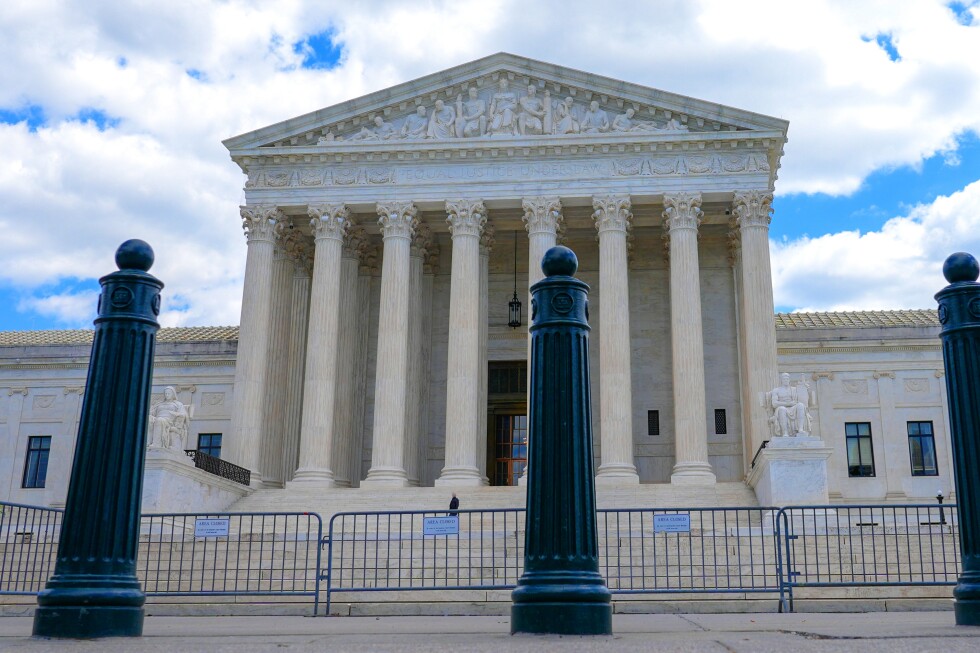
In a landmark decision, the United States Supreme Court has paved the way for increased accountability within the trucking sector by allowing a lawsuit from Shawn Montgomery to proceed against a leading logistics company. This ruling, which could reshape industry standards, stems from a 2017 incident where Montgomery suffered a severe leg injury due to a collision with a semi tractor-trailer.
Montgomery’s vehicle was stationary when it was struck by a truck driver traveling at high speed on an Illinois roadway. The lawsuit targets C.H. Robinson, the nation’s largest freight broker, accusing it of negligence for dispatching the trucker despite apparent “serious red flags” concerning the driver’s history.
More than 24 states rallied behind Montgomery, viewing this case as pivotal for enhancing safety protocols in an industry responsible for transporting vast quantities of goods over extensive distances annually. Conversely, entities such as the Trump administration and major enterprises like Amazon voiced concerns about the potential implications of holding logistics firms liable under varying state laws.
The legal team representing Montgomery highlighted that the trucker had a previous citation for reckless driving and that the carrier he was affiliated with bore a history of multiple accidents over a five-month period. The lawsuit contends that C.H. Robinson bears partial responsibility for employing the carrier despite its problematic record.
C.H. Robinson, headquartered in Eden Prairie, Minnesota, initially succeeded in having the case dismissed, a decision upheld by an appellate court in Chicago. The company defended its position by asserting reliance on federal licensure for carriers and claimed immunity from state law suits due to federal regulation.
However, Montgomery’s appeal to the Supreme Court argued successfully that while federal legislation typically supersedes state laws, there exists a recognized exception concerning safety matters. This argument ultimately convinced the justices to allow the lawsuit to advance, potentially setting a precedent for future litigation in the logistics industry.