Supreme Court to Deliberate on Trump’s Birthright Citizenship Order
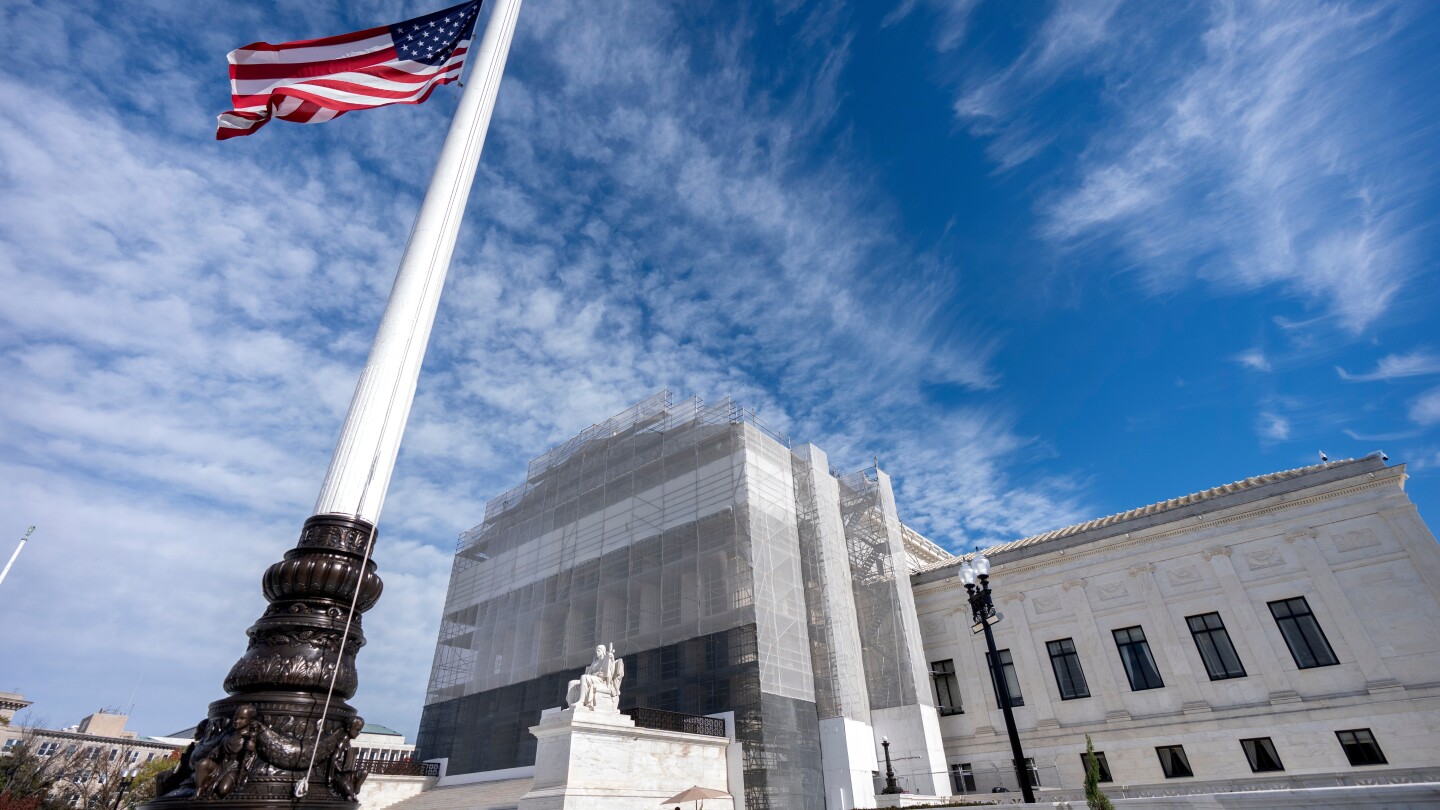
The Supreme Court justices are set to convene privately on Friday to discuss a significant issue — an executive order by President Donald Trump regarding birthright citizenship. This order posits that children born in the U.S. to parents who are in the country illegally or temporarily should not automatically receive American citizenship.
The justices may announce as early as Monday whether they will consider Trump’s appeal against lower court rulings that have consistently invalidated the citizenship restrictions. These restrictions have not yet been enforced anywhere in the United States.
If the Supreme Court opts to intervene, arguments could take place in the spring, with a conclusive decision anticipated by early summer.
Signed on the first day of Trump’s second term, the birthright citizenship order is part of a broader immigration initiative by his administration. This initiative includes intensified immigration enforcement in various cities and an unprecedented use of the Alien Enemies Act dating back to the 18th century.
The administration is embroiled in several legal challenges, and the Supreme Court has issued mixed responses to emergency orders. For instance, the court blocked the expedited deportation of alleged Venezuelan gang members under the Alien Enemies Act, while it permitted the resumption of widespread immigration stops in the Los Angeles area after a lower court halted the practice based on racial, linguistic, occupational, or locational profiling.
The justices are also contemplating the administration’s urgent request to deploy National Guard troops for immigration raids in Chicago, which a lower court has currently banned.
Trump’s birthright citizenship policy is the first immigration-related measure from his administration to reach the Supreme Court for a definitive verdict. The executive order seeks to overturn over 125 years of legal interpretation that the 14th Amendment of the Constitution grants citizenship to anyone born on U.S. soil, with rare exceptions for children of foreign diplomats or occupying forces.
Lower courts have consistently ruled the order unconstitutional or likely so, despite a Supreme Court decision in June limiting the scope of nationwide injunctions. However, the court did not rule out other forms of nationwide court orders, such as those arising from class-action suits or state-led cases.
All lower courts reviewing the issue have found Trump’s order to contravene the 14th Amendment, originally intended to assure citizenship for Black people, including former slaves.
The administration is contesting two cases: one from the U.S. Court of Appeals for the 9th Circuit, which granted a nationwide injunction to prevent inconsistencies in citizenship across states, and another from a federal court in New Hampshire, which halted the order in a class-action suit covering all potentially affected children.
The American Civil Liberties Union (ACLU), leading the legal challenge in the New Hampshire case, has urged the Supreme Court to dismiss the appeal, citing the administration’s “flimsy” arguments. ACLU lawyer Cody Wofsy stated, “But if the court decides to hear the case, we’re more than ready to take Trump on and win.”
Under longstanding rules, birthright citizenship ensures that anyone born in the U.S. becomes an American citizen, including children of illegal immigrants. This principle is enshrined in the opening sentence of the 14th Amendment following the Civil War.
The administration contends that children of noncitizens do not fall “under the jurisdiction” of the U.S. and thus are ineligible for citizenship. Solicitor General D. John Sauer, advocating for Supreme Court review, asserted, “The lower court’s decisions invalidated a policy of prime importance to the president and his administration in a manner that undermines our border security. Those decisions confer, without lawful justification, the privilege of American citizenship on hundreds of thousands of unqualified people.”