The Tohono O’odham Nation Faces Legal Hurdles in Border Wall Dispute
A recent legal ruling has placed the Tohono O’odham Nation in a challenging position as they deliberate over the next steps following a federal judge’s decision against their attempt to halt border wall construction on their land.
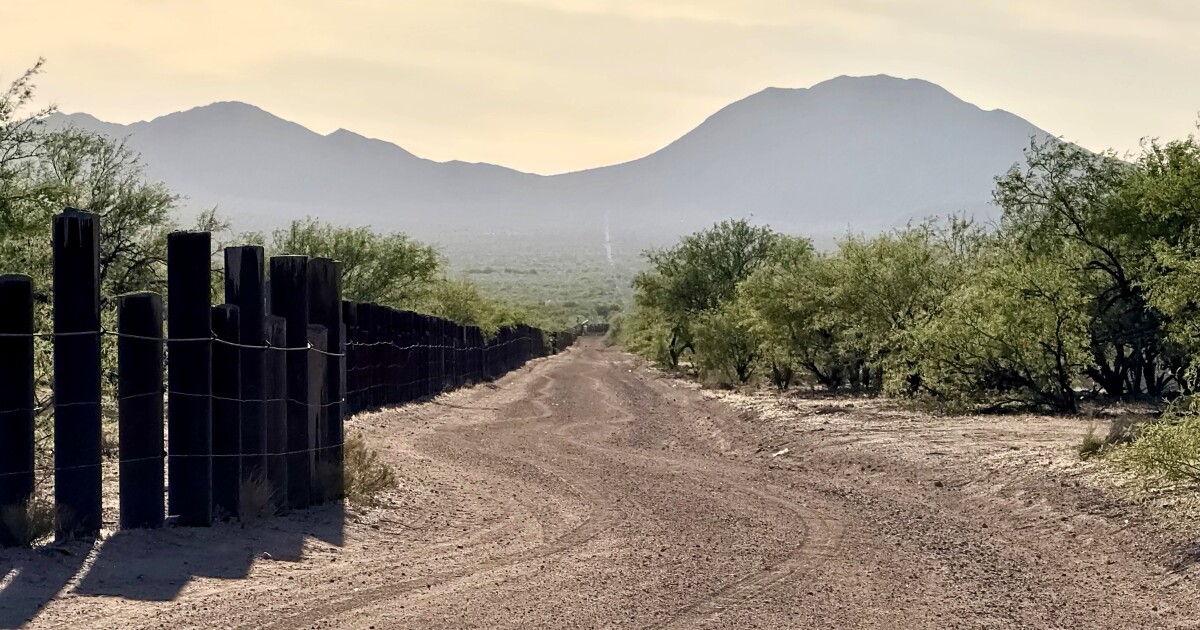
The Tohono O’odham Nation, whose territory spans 2.8 million acres, shares a 62-mile boundary with the Arizona-Mexico border. Until now, the federal government had not attempted to build a wall on this stretch. However, this area is now part of the Trump administration’s Smart Wall initiative, which includes infrastructure like roads, surveillance tools, and in some areas, double-layered steel bollard walls.
The tribe’s lawsuit contends that construction encroaches on their sovereign boundaries, which only Congress has the authority to modify. U.S. District Judge Richard Leon denied their request for a preliminary injunction, stating that the construction would occur within the Roosevelt Reservation, a federally controlled 60-foot wide strip of land along the border.
Robert Miller, a tribal judge and law professor at Arizona State University, notes the difficulty of obtaining preliminary injunctions due to their stringent requirements. He explained that the judge concluded the tribe failed to satisfy any of the necessary conditions. “The court thinks they’re not liable to win, they think it’s not in the public interest to stop the federal government from building this wall … of course they reference the drugs that have crossed the Arizona border, and the illegal immigrants crossing the Arizona border,” said Miller.
Following the ruling, Tohono O’odham Chairman Verlon Jose expressed concerns, stating, “Too many critical issues were not adequately addressed, such as inevitable impacts construction will have on the Nation’s land and the permanent destruction of sacred sites.”
Although the preliminary injunction was denied, the ruling did require federal authorities to engage in consultation with the tribe. Miller points out that historically, such consultations have often been perfunctory, with decisions made in advance. “And so consultation has so often been a letter from the feds going ‘we’re going to do X, what are your thoughts? They write the tribal council two months in advance. They’ve already made their decision, so that’s not true consultation,” he remarked.
The Department of Homeland Security emphasized its commitment to maintaining communication with the Tohono O’odham Nation. In a statement, a DHS spokesperson mentioned the agency’s dedication to minimizing impacts and highlighted that “Secretary Markwayne Mullin is a citizen of the Cherokee Nation and made clear during his confirmation hearing that he respects tribal sovereignty.” Despite this, the agency has not provided updates on the construction status.