Trump Administration Proposes New Tariffs on Brazilian Imports
In a move that could strain international trade relations, the Trump administration has announced plans to impose a 25% tariff on imports from Brazil, citing what it describes as the South American country’s unfair trade practices. According to the Office of the U.S. Trade Representative, Brazil’s actions are “unreasonable” and have a negative impact on U.S. commerce.
The decision has sparked a strong reaction from Brazil’s President Luiz Inácio Lula da Silva, who expressed “indignation” over the proposed tariffs. Lula attributed the move to political maneuvering by his opponent, Sen. Flávio Bolsonaro, who recently visited Washington. Flávio Bolsonaro is the son of former President Jair Bolsonaro, who is often referred to as “the Trump of the Tropics.”
The U.S. Trade Representative’s investigation into Brazil’s trade practices highlighted several concerns, including weak anti-corruption measures and retaliatory tariffs. The United States has maintained a goods trade surplus with Brazil for many years.
Jamieson Greer, the U.S. Trade Representative, acknowledged “constructive” discussions with Lula and Brazilian officials but noted that significant differences remain unresolved. “We continue to have substantial differences in resolving the issues identified in this investigation,” he stated.
Lula, on the other hand, suggested that an American official, Marco Rubio, is impeding progress in U.S.-Brazil relations. “I spoke to President Trump for three hours, and that Marco Rubio guy, the head of the State Department, he is anti-Latin American,” Lula said. “He is a deadly enemy of Cuba, a deadly enemy of many Latin American countries. I already told Trump that he does not like Brazil.”
The Brazilian government expressed concerns that the proposed tariffs are driven by electoral and family issues within the Bolsonaro family, and it hopes the recommendations do not become reality. The government also assured that steps will be taken to mitigate potential economic damage.
Previously, in response to Brazil’s legal actions against Jair Bolsonaro’s attempts to overturn his electoral defeat, Trump had imposed a 50% tariff. The relationship appeared to improve when Lula visited the White House in May. However, tensions resurfaced after the Trump administration labeled two Brazilian gangs as terrorist organizations following Flávio Bolsonaro’s visit to Washington.
A public hearing on the proposed tariffs is scheduled for July 6, according to Greer’s office. Trade lawyer Ryan Majerus noted that the plan excludes more than half of U.S. imports from Brazil, including aircraft and essential minerals.
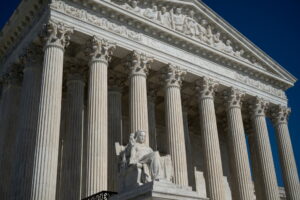
The Trump administration used Section 301 of the Trade Act of 1974 to investigate Brazil’s trade practices, following the U.S. Supreme Court’s decision in February that Trump exceeded his authority using the International Emergency Economic Powers Act (IEEPA) to impose broad tariffs.
During a recent Washington visit, Lula presented documents to Trump showing that the U.S. enjoys a trade surplus with Brazil. Documents from the U.S. Trade Representative reveal that U.S. exports to Brazil increased by nearly 11% last year, reaching $54.4 billion, while Brazilian exports to the U.S. declined by 5.7% to $39.9 billion, resulting in a U.S. trade surplus of over $14 billion. “I am not going to cry about it,” Lula remarked. “If they (the U.S.) don’t want to buy from us, we will sell to someone else.”
For over a decade, China has held the position of Brazil’s largest trading partner.