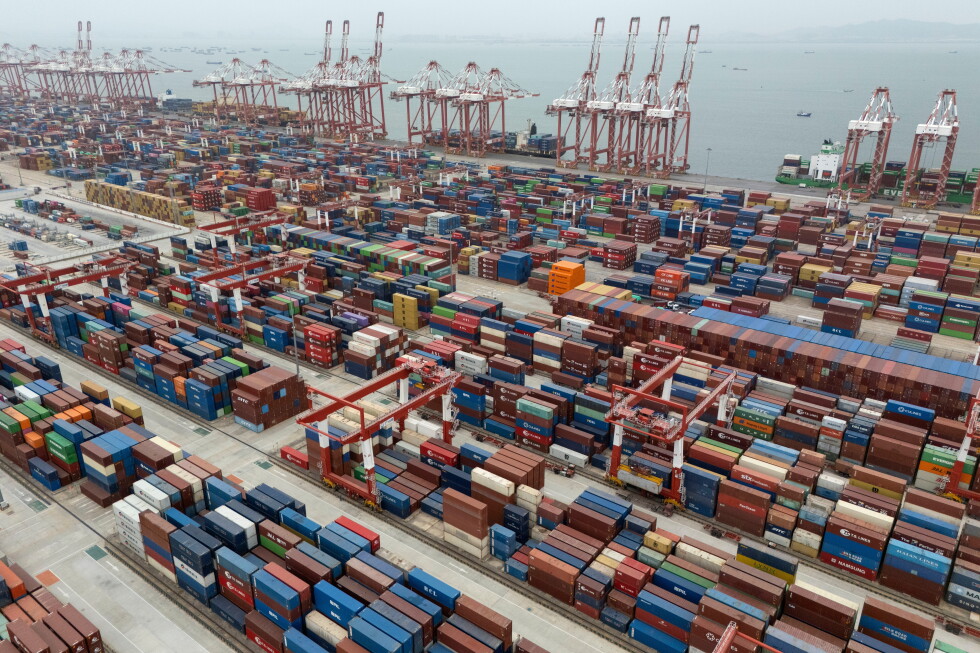
The U.S. Treasury experienced a significant influx of revenue last year due to President Donald Trump’s implementation of comprehensive import tariffs. However, this revenue stream has since diminished following a pivotal decision by the Supreme Court to invalidate one of Trump’s most ambitious tariff initiatives in February.
As the July 24 deadline looms, the administration faces pressure to fulfill its commitment to compensate for the lost revenue. Initially, President Trump utilized Section 122 of the Trade Act of 1974 to impose a 10% global tariff. However, Section 122 is only valid for 150 days, necessitating congressional approval for an extension — a challenging prospect given the electoral climate and rising costs of living.
Looking for more sustainable solutions, the administration is eyeing Section 301 of the same 1974 trade law, which permits the president to enact tariffs against countries engaging in “unjustifiable,” “unreasonable,” or “discriminatory” trade practices. Trump has previously leveraged Section 301 to impose hefty tariffs on China and is now targeting Brazil with a 25% tariff on certain imports, citing unfair trade practices.
Experts in trade law, such as Ryan Majerus from King & Spalding, are optimistic that the administration will transition from Section 122 tariffs to more extensive Section 301 tariffs by the impending deadline. “They’re going to raise the tariff wall again,” Majerus remarked.
Previously, Trump pushed the boundaries of his authority to levy import taxes using the 1977 International Emergency Economic Powers Act (IEEPA), sparking a major shift from decades-long U.S. policies favoring lower tariffs and trade liberalization. Nevertheless, the Supreme Court ruled that these emergency powers were not applicable for tariff imposition, compelling the administration to issue refunds to importers.
This legal setback transformed tariffs from a fiscal boon into a liability for the Treasury. Revenue from import taxes hit a peak of over $31.4 billion last October but declined after the Supreme Court ruling, resulting in a $25.6 billion loss in June.
To counteract this decline, Trump and Treasury Secretary Scott Bessent are exploring other legal means to recoup the lost funds. Section 301 offers a viable path, allowing the president to impose and adjust tariffs in retaliation for unfair trade practices. However, procedural requirements such as public comments and hearings must be satisfied first.
The administration recently initiated two major Section 301 investigations. One targets countries responsible for 99% of U.S. imports, scrutinizing their efforts to combat forced labor, while the other examines whether 16 trading partners are overproducing goods, affecting global prices and disadvantaging American manufacturers.
U.S. Trade Representative Jamieson Greer has already proposed tariffs related to the forced labor issue, with rates at 10% for 16 countries and 12.5% for 44 others. While public comments are ongoing, trade lawyer Nathaniel Halvorson anticipates these tariffs will be implemented swiftly, minimizing any gap with the expiring Section 122 tariffs.
The investigation into alleged overproduction by 16 countries is still underway, with potential new tariffs expected post-midterm elections. Trade attorney Majerus suggests these tariffs could be strategically timed for political reasons.
Trump, known for his “Tariff Man” persona, aims to reinstate the substantial global tariffs from 2025. While new Section 301 investigations could facilitate this, they may be legally challenged, warns Sarah Bianchi of Evercore ISI, noting the potential vulnerability of using Section 301 for universal tariffs.