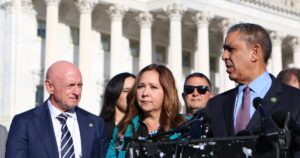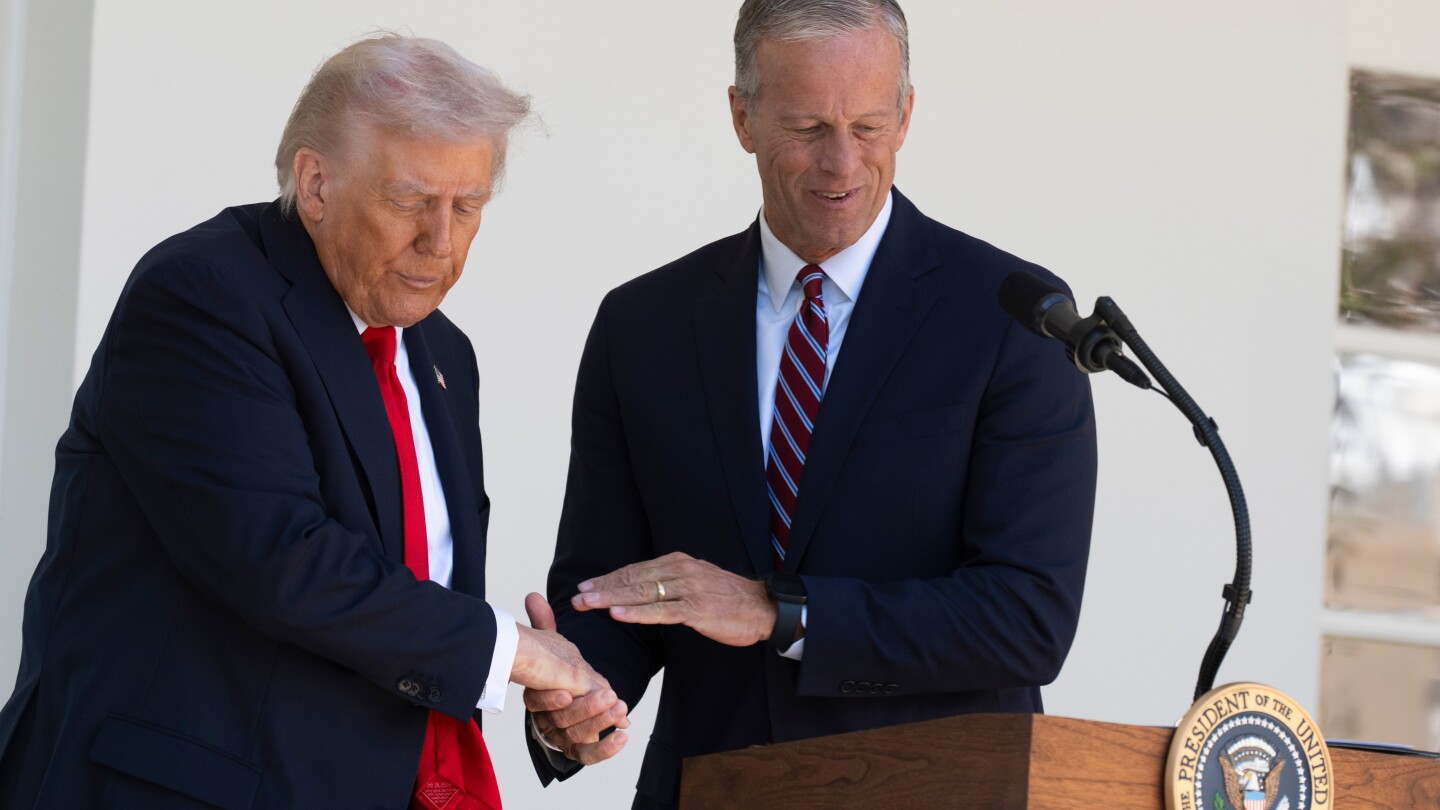
The ongoing government shutdown has reignited debates over the Senate’s filibuster rule, as President Donald Trump urges its elimination to advance a Republican funding bill blocked by Democrats. The filibuster, a procedural tactic requiring 60 votes to advance most legislation, has been a contentious issue for years, impeding both parties’ policy agendas.
President Trump reiterated his stance on social media, advocating for the “Nuclear Option” to remove the filibuster and end the shutdown. “It is now time for the Republicans to play their ‘TRUMP CARD,’ and go for what is called the Nuclear Option — Get rid of the Filibuster, and get rid of it, NOW!” he proclaimed.
However, many Republican senators oppose this move, recognizing that abolishing the filibuster could weaken their position when they are no longer the majority. The filibuster, while often frustrating, encourages bipartisan negotiation and compromise.
Understanding the Filibuster
The filibuster is a Senate mechanism allowing lawmakers to delay or block votes, not mentioned in the Constitution but developed over time. Originating from Vice President Aaron Burr’s suggestion in 1805 to simplify Senate rules, it has evolved from the dramatized speeches popularized by the film “Mr. Smith Goes to Washington” to a simple declaration by senators to stall legislation.
Although the filibuster remains a hurdle for passing bills, it was removed for most nominations in 2013, except Supreme Court nominees, a change driven by Democratic frustration with Republican blockades of President Obama’s judicial picks. In 2017, Republicans extended this to include Supreme Court nominees.
Filibuster’s Role in the Shutdown
The current shutdown stems from a funding impasse, with Republicans needing Democratic support to surpass the 60-vote requirement in the Senate. Democrats demand an extension of Affordable Care Act subsidies in exchange for their votes, which Republicans argue is too costly for a short-term funding bill.
This deadlock has led some Republicans to reconsider the filibuster. Sen. Bernie Moreno, R-Ohio, suggested on Fox News, “Maybe it’s time to think about the filibuster. Let’s just vote with Republicans. We’ve got 52 Republicans. Let’s go, and let’s open the government. It may get to that.” Despite 53 GOP senators, Sen. Rand Paul remains a firm ‘no’ on funding bills.
Republican Stance on the Filibuster
Many Republicans, including Senate Majority Leader John Thune, resist Trump’s call to eliminate the filibuster. Thune, who began his leadership by committing to preserving it, maintains that the filibuster is integral to Senate proceedings and protects the nation. “The 60-vote threshold has protected this country,” Thune affirmed.
Veteran senators, familiar with the cyclical nature of party control, are often the most vocal defenders of the filibuster. Newer members like Sen. John Curtis, R-Utah, also support it, stating, “The filibuster forces us to find common ground in the Senate. Power changes hands, but principles shouldn’t. I’m a firm no on eliminating it.”
House Republicans, despite urging senators to heed Trump’s wishes, have no say in Senate rules. Speaker Mike Johnson mentioned communicating with Trump but refrained from commenting on the filibuster, saying, “It’s not my call.”