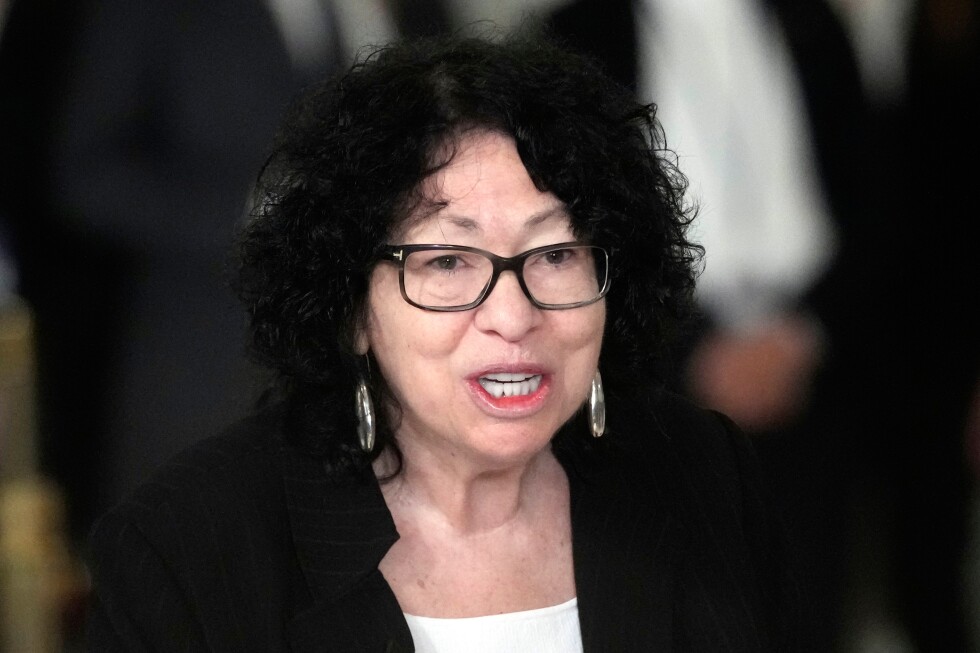
The U.S. Supreme Court’s emergency docket has been a focal point of recent discussions, highlighted by a series of decisions favoring President Donald Trump’s administration. The conservative justices’ approach to these cases, often siding with the executive branch, reflects a belief that halting executive policies can lead to irreversible damage, as Justice Sonia Sotomayor explained in a recent address.
During a speech at the University of Alabama School of Law, Justice Sotomayor remarked on the “unprecedented” rise in emergency appeals from the Trump administration. Last year, the Supreme Court supported the administration in around two dozen decisions, frequently overturning lower court rulings that deemed certain policies likely illegal, ranging from immigration to significant cuts in federal funding.
These emergency orders, although intended to be temporary, have enabled the administration to advance crucial aspects of its agenda. The emergency docket itself has become a contentious issue among the justices, with public disagreements emerging, notably between Justices Ketanji Brown Jackson and Brett Kavanaugh, as seen in a recent exchange.
While Justice Sotomayor frequently opposes decisions favoring Trump, the court’s conservative majority often views blocking these policies as legally damaging and difficult to reverse, a stance that sets a high bar for opponents. This perspective affects plaintiffs such as immigrants at risk of deportation or states facing educational funding challenges.
“If you start with the presumption that there is irreparable harm to one side, then you’re going to have more grants of emergency relief,” Sotomayor stated. “Because the other side is going to have a much harder time. It has changed the paradigm on the court.”
Her insights offer a glimpse into the Supreme Court’s decision-making process, which often remains opaque. Despite many emergency docket decisions favoring Trump, the court did reject his broad tariffs following a comprehensive review with full briefings and oral arguments.