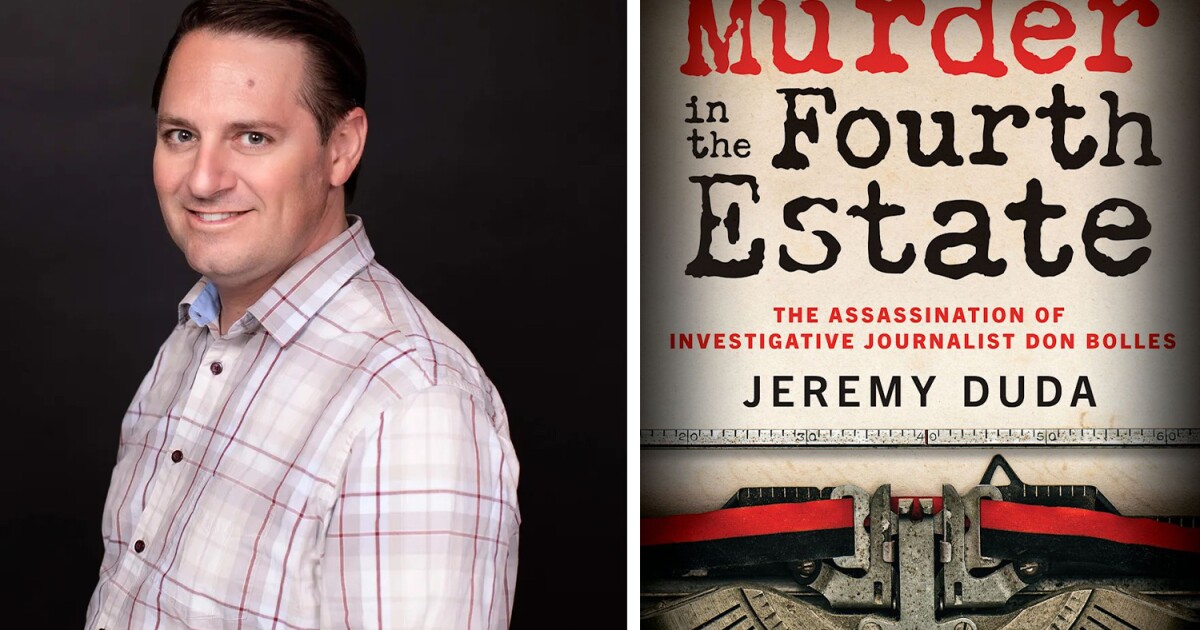
The assassination of Don Bolles, a reporter for the Arizona Republic, marked a significant event in Phoenix’s history. Despite its impact, a thorough historical account of the case has been absent until now. Jeremy Duda, an Axios Phoenix reporter and Arizona native, has addressed this gap with his new book.
“Murder in the Fourth Estate: The Assassination of Investigative Journalist Don Bolles” is set to be released this Thursday. In a recent conversation, Duda shared insights into his extensive research process for the book.
Researching a Landmark Case
JEREMY DUDA: The research was extraordinarily intensive, more so than I anticipated. The case spanned nearly 20 years, from the bombing in 1976 to the final trials in 1993. Numerous related cases branched from the main investigation, leading to a massive collection of documents stored in 150 banker’s boxes at the state archives, excluding some under court seal.
Duda spent years sifting through these documents, copying, and analyzing them to create a cohesive narrative. He also conducted interviews with people involved in the case or who knew Bolles, which took nearly a decade to complete.
MARK BRODIE: Did your perspective on the case change during your research?
DUDA: In some ways, yes. The case remains controversial, with some believing that authorities got it wrong. I approached the project with an open mind, and while I believe they likely charged the right people, there are areas that invite questions. I am skeptical of Kemper Marley’s involvement, a theory long presented in court.
Jean Clare Sarmiento
/
KJZZ
BRODIE: Why is there still debate about who was behind this?
DUDA: Much of the case hinges on the lead suspect, John Harvey Adamson, whose reliability is questionable. The narrative largely depends on his testimony, and while some information can be corroborated, other parts cannot. Bolles made many enemies through his investigative work, which adds layers of complexity to the case.
Bolles, known for investigating organized crime and other sensitive topics, took precautions like taping his car hood to spot tampering. However, by his death, he was focused on political reporting, unaware of the danger still present.
BRODIE: What surprised you during your research?
DUDA: Despite the case’s notoriety, most people know little beyond the basic facts. They are unaware of the various theories and related cases, such as the overturned convictions and additional trials related to different crimes. The complexity of the case is far greater than the public perceives.

Jean Clare Sarmiento
/
KJZZ
BRODIE: What makes this case resonate today?
DUDA: The murder of a reporter by a car bomb is a rare occurrence in the U.S., drawing attention to the case. “There’s an unwritten rule with the mob that reporters and judges and cops are off limits,” according to Bruce Babbitt, the attorney general at the time. The violation of this rule is part of why the case remains compelling.
BRODIE: Do you feel more certain about what happened now?
DUDA: Not necessarily. I can assess alternative theories and suspects more critically, but there are still many unanswered questions. For instance, a Mafia hitman once claimed he was offered the Bolles contract but declined due to the requirement to use a bomb. This aspect of the case remains unresolved, adding to its intrigue.