In a recent development, the Trump administration has voiced concerns over China’s growing influence in Peru, particularly with the construction of a major port that could potentially limit Peru’s sovereignty over its critical infrastructure.
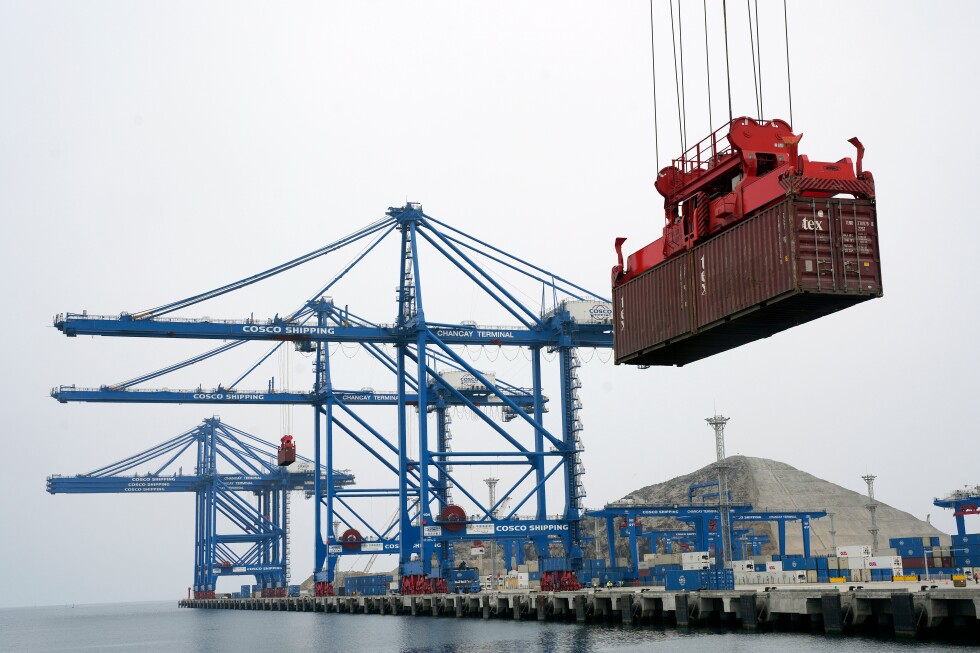
The Chancay port, a $1.3 billion deepwater facility located north of Lima, has become a focal point of international tension. The U.S. Department of State expressed unease on social media, suggesting that Peru might be unable to exercise control over one of its largest ports due to “predatory Chinese owners.”
In a broader geopolitical context, the U.S. is keen to maintain its influence in the Western Hemisphere, where China has already established significant ties through large-scale loans and substantial trade dealings. The statement from the State Department further emphasized support for Peru’s “sovereign right to oversee critical infrastructure,” warning of the potential costs associated with “cheap Chinese money.”
The Chinese government has firmly rejected these allegations. Foreign Ministry spokesperson Lin Jian stated at a briefing in Beijing, “China firmly opposes and strongly deplores the U.S.’s blatant rumor-mongering and smearing of Chancay port.”
The Chancay port, located on the Pacific coast, is part of China’s expansive Belt and Road initiative, aimed at developing infrastructure globally. This initiative has facilitated the creation of numerous seaports, airports, and highways through financial backing from Chinese state-owned banks. As the deepest port in Latin America, Chancay is equipped to handle some of the world’s largest cargo ships, strengthening the trade corridor between Asia and South America. For over a decade, China has been Peru’s leading trading partner.
Cosco, a state-owned Chinese shipping and logistics giant, holds a majority share in the port. Responding to U.S. claims, Cosco argued that the recent court ruling “in no way involves aspects of sovereignty” and insisted that the port is “under the jurisdiction, sovereignty and control of Peruvian authorities, subject to all Peruvian regulations.” Cosco further assured that various Peruvian authorities, including police, environmental regulators, and customs officials, are actively monitoring the port’s operations.
The ruling in question, delivered by a lower court judge on January 29, restricts Peruvian authorities from exercising regulatory, supervisory, and punitive powers over the port. Ositran, the national regulator overseeing major ports, announced plans to appeal the decision, asserting the necessity of its oversight. Verónica Zambrano, president of Ositran, remarked, “(Cosco Shipping) would be the only company providing services to the public that could not be supervised.”
Despite being privately owned, the Chancay Port spans 180 hectares (approximately 445 acres) of Peruvian land, making it subject to government regulations aimed at safeguarding local user standards.
For more updates on Latin America and the Caribbean, visit https://apnews.com/hub/latin-america.