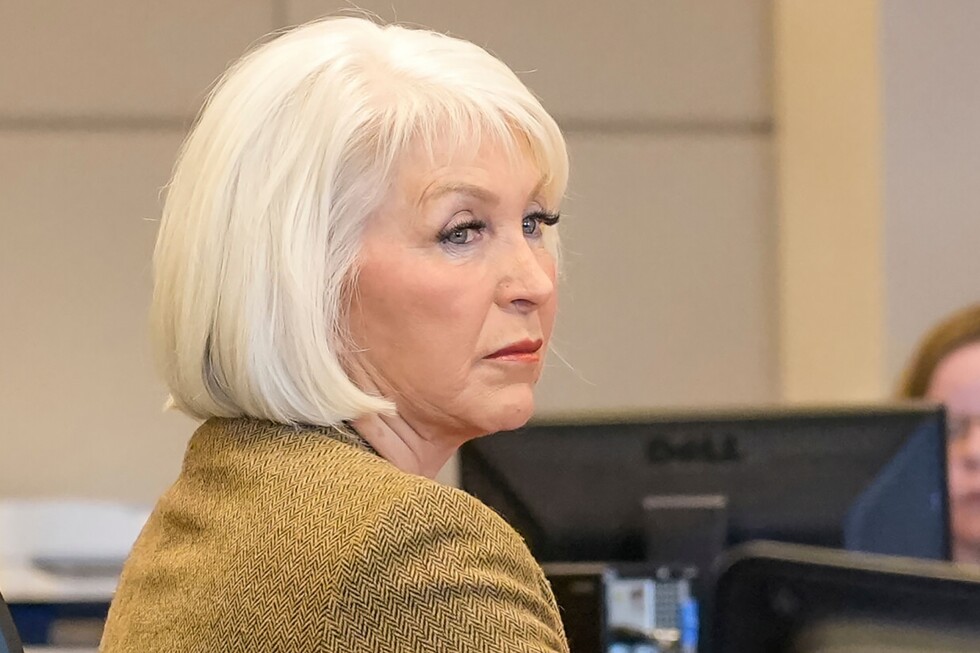
In a significant legal development, a Colorado appeals court has ordered a resentencing for Tina Peters, a former county clerk, who was previously convicted for unauthorized access to election equipment. The court determined that her sentence was unjustly influenced by her statements regarding the 2020 presidential election, which are protected under free speech rights.
Peters, who is currently serving a nine-year sentence, was found guilty of state crimes after covertly bringing in an external computer expert to duplicate her county’s election system during a 2021 software update. This action resulted in the exposure of confidential voting system passwords on social media and a conservative website. Her case has attracted attention from the election conspiracy community, with former President Donald Trump unsuccessfully attempting to secure a pardon for her.
In a detailed 74-page ruling, the Colorado Court of Appeals upheld Peters’ conviction but criticized the sentencing judge for considering her ongoing promotion of election fraud theories. The court emphasized that such considerations infringed upon her right to free speech. “The trial court obviously erred by imposing sentence at least partially based on Peters’ protected speech,” Judge Ted Tow noted in the ruling.
John Case, one of Peters’ attorneys, welcomed the appeals court’s decision, highlighting its affirmation of free speech. “Tina Peters was punished for words that she used to criticize our insecure and illegal voting system,” Case stated. He indicated plans to request that Peters be credited for the approximately 540 days already served, which could lead to her release.
Governor Jared Polis, a Democrat, expressed approval of the court’s decision to protect free speech while rejecting Trump’s pardon efforts. He remarked on the complexity of the case, noting it as a test of the state’s commitment to a fair judicial system. “This case has been very challenging and a true test of our resolve as a state to have a fair judicial system, not just for people we agree with but a fair system for Coloradans that we vehemently disagree with,” Polis stated.
Peters, a former clerk in Mesa County, was sentenced by Judge Matthew Barrett, who sharply criticized her actions. Despite her conviction, Peters remained unapologetic, asserting her belief in exposing fraudulent election activities. The appeals court’s decision acknowledged that Peters no longer holds a position that could facilitate similar conduct, thus warranting a reassessment of her sentence.
Trump has voiced strong opposition to Peters’ incarceration, even threatening Colorado with “harsh measures” if she is not released. Colorado Attorney General Phil Weiser, also a Democrat, has accused the Trump administration of retaliating against the state for not freeing Peters by withdrawing federal support. Despite the appeals court’s ruling, Weiser maintains that Peters’ original sentence was justified, commenting that she “will always be a convicted felon who violated her duty as Mesa County clerk, put other lives at risk, and threatened our democracy.”
The case has drawn federal attention, with the Justice Department and the Bureau of Prisons attempting to intervene on Peters’ behalf during her state appeal. However, the appeals court judges clarified that presidential pardon powers do not extend to state crimes, dismissing any claims that Peters’ actions protected federal interests.
Peters was convicted on multiple charges, including attempting to influence a public servant, conspiracy to commit criminal impersonation, and official misconduct. Her defense argued that her actions were intended solely to safeguard election data and were not meant for public disclosure.