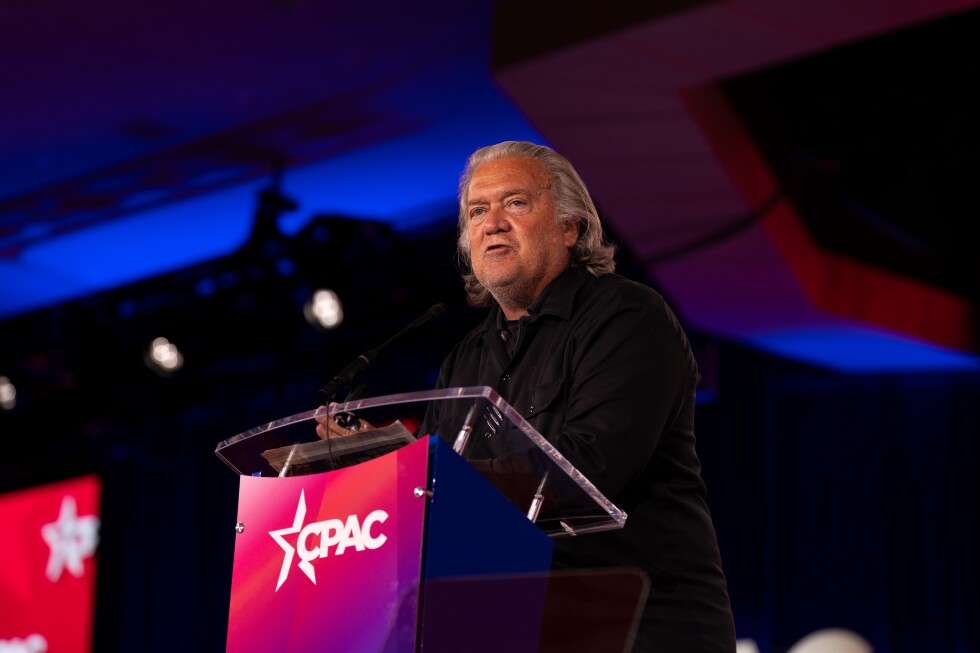
In a recent development, the Supreme Court has issued a decision that is anticipated to nullify Steve Bannon’s criminal conviction, which stemmed from his refusal to testify before Congress. The decision marks a significant legal shift for Bannon, a key associate of former President Donald Trump.
At the urging of Trump’s administration, the Supreme Court overturned a previous appellate court decision that had upheld Bannon’s conviction. This conviction was related to his failure to comply with a subpoena from the House committee investigating the January 6, 2021, insurrection at the U.S. Capitol by Trump supporters. The latest order allows a trial judge to consider the Republican administration’s request to set aside both Bannon’s conviction and indictment on grounds of justice.
Despite the potential dismissal, the move is largely symbolic, as Bannon has already completed a four-month prison sentence. His conviction for contempt of Congress was previously affirmed by a federal appeals court in Washington.
The Supreme Court’s order also addressed the case of P.G. Sittenfeld, a former Cincinnati Councilman pardoned by Trump last year. Sittenfeld had served a 16-month sentence following his conviction for bribery and attempted extortion in 2022. The high court’s decision now enables a lower court to consider dismissing his indictment.
The Justice Department initially prosecuted Bannon during President Joe Biden’s administration but shifted its stance following Trump’s return to power last year. Bannon had argued that his testimony was shielded by Trump’s executive privilege claim. However, both the House panel and the Justice Department questioned this defense, given that Bannon had been dismissed from his White House role in 2017, making him a private citizen during his advisory role to Trump before the Capitol riot.
Aside from the Supreme Court’s recent actions, Bannon has also pleaded guilty in a New York state court to charges of defrauding donors in a private border wall initiative. This conviction, achieved through a plea deal that spared him from imprisonment, remains unaffected by the Supreme Court’s decision.