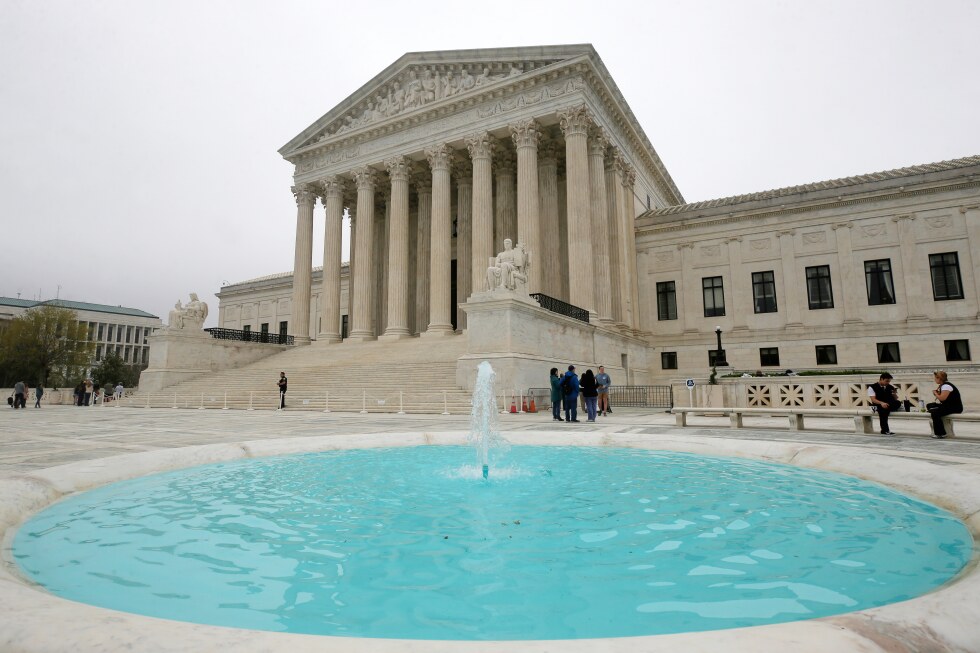
The longstanding legal battle over a contentious pipeline in the Great Lakes region has reached a pivotal moment. On Wednesday, the U.S. Supreme Court ruled in favor of Michigan, allowing the state’s efforts to shut down a part of the aging Line 5 pipeline to proceed in state court.
The Supreme Court’s Decision
In a unanimous decision penned by Justice Sonia Sotomayor, the court determined that Enbridge, the Canadian company operating the pipeline, delayed its attempt to transfer the case to federal jurisdiction. The ruling keeps Michigan’s lawsuit, which seeks to void the easement for a segment of the pipeline under the Straits of Mackinac, in state court. This pipeline, crucial for transporting crude oil and natural gas between Wisconsin and Ontario since 1953, has been under scrutiny due to environmental concerns.
Background of the Legal Dispute
The legal wrangling began when Michigan Attorney General Dana Nessel filed a lawsuit in 2019, aiming to revoke the easement for the pipeline’s 4.5-mile section beneath the Straits of Mackinac. In 2020, Nessel secured a restraining order from Ingham County Judge James Jamo to halt operations, which was later adjusted to allow operations under specific safety conditions.
In 2021, Enbridge sought to shift the lawsuit to a federal court, citing its impact on U.S.-Canada trade. However, the 6th U.S. Circuit Court of Appeals returned the case to state court, citing a missed deadline by Enbridge.
Pipeline Safety Concerns
Line 5’s safety has been a contentious issue, especially after 2017 revelations of protective coating gaps and a 2018 boat anchor incident that heightened fears of a potential spill. In response, Michigan’s Department of Natural Resources, under Governor Gretchen Whitmer, rescinded the pipeline’s easement in 2020. Enbridge’s subsequent federal lawsuit against this revocation led to a federal judge siding with Enbridge, a decision currently under appeal.
Enbridge plans to reinforce the pipeline by encasing it in a protective tunnel under the straits. While the Michigan Public Service Commission approved the necessary permits, environmental groups and tribes are challenging this decision in court. Meanwhile, the U.S. Army Corps of Engineers and the Michigan Department of Environment, Great Lakes, and Energy must also grant approvals for the project.
Related Legal Challenges
The legal landscape is further complicated by separate proceedings in Wisconsin. A federal judge in Madison ordered Enbridge to cease operations on a part of Line 5 crossing the Bad River Band of Lake Superior’s reservation. Enbridge is appealing the order while beginning work to reroute the pipeline. However, environmental concerns about the rerouting are being contested in state court.
For more details, follow the AP’s coverage of the U.S. Supreme Court at https://apnews.com/hub/us-supreme-court.