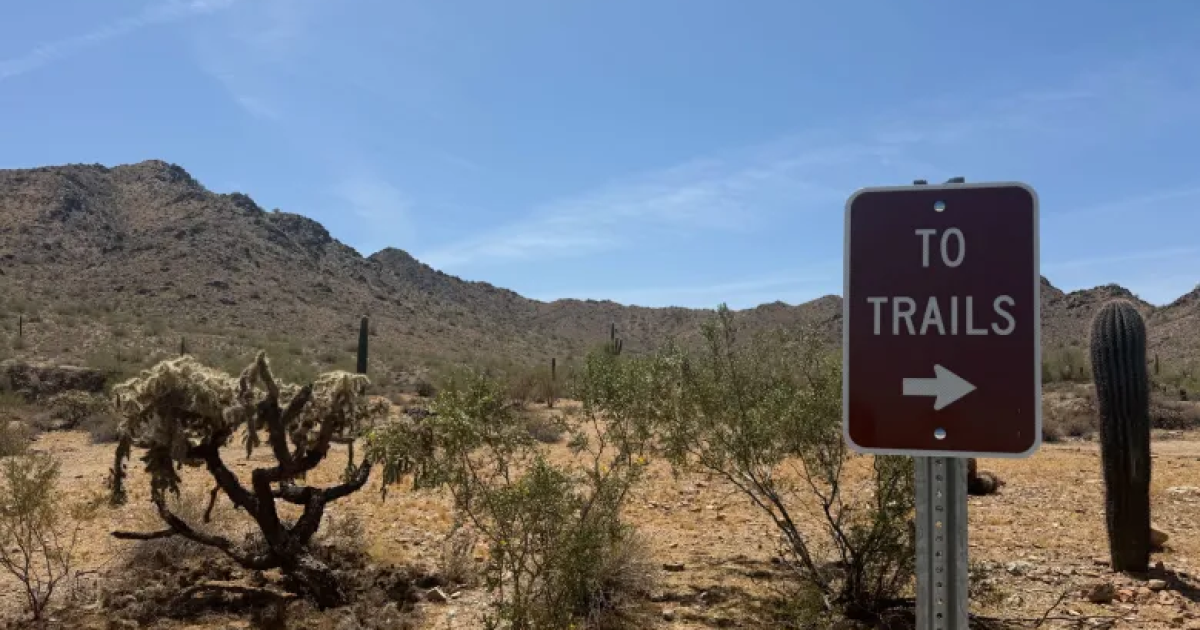
Barriers to Nature Access in Southern Arizona: A Study Highlights Challenges for Immigrants
In southern Arizona, accessing nature is not just about overcoming environmental challenges but also involves navigating immigration enforcement and financial barriers. A recent study sheds light on how these factors limit outdoor opportunities for Mexican immigrants and low-income individuals.
Fiorella Carlos Chavez, a Peruvian immigrant and assistant professor at Arizona State University, encountered unexpected hurdles when trying to celebrate her birthday in a local park. “Then one of my friends told me, ‘You actually have to register and pay,’ and I said, ‘Register? I don’t get it’,” she recalled, surprised by the need for a reservation fee for larger gatherings. “It blew my mind. This is a park, what do you mean you have to make a reservation?”
Rebecca Crocker, an assistant research professor at the University of Arizona and co-author of the study, pointed out that Mexican immigrants and low-income communities face legal, economic, and structural barriers to nature in Tucson, rather than issues of distance. She highlighted that fear, whether from potential encounters with wildlife or worries about immigration enforcement, can diminish the health benefits of outdoor activities.
“Whether that fear comes from the fact that you are worried you are going to see a rattlesnake or, more presently, you are worried about getting perceived by immigration enforcement and get deported,” Crocker explained. She emphasized that the fear of immigration surveillance in Arizona poses significant health risks. “I feel that the localized experience of immigration surveillance in southern Arizona is very detrimental to people’s health in lots of ways. And not being able to feel free to move across the landscape that they now reside in is a huge piece of why it’s so unhealthy for them.”
According to Arizona Luminaria, Immigration and Customs Enforcement arrests in Arizona more than tripled in fiscal year 2025 compared to the previous year. In response, Tucson City Council unanimously passed an ordinance restricting federal immigration enforcement on city property, including parks.
Gary Nabhan, research social scientist emeritus at the University of Arizona, has long studied the human microbiome, which he describes as the “hidden landscape” on our bodies, formed through interactions with nature. He connects insufficient microbiomes and weakened immune systems to chronic diseases and shorter lifespans.
“It’s not just a perk, it’s not just an amenity for the rich,” argued Peter James, an adjunct associate professor of environmental health at Harvard T.H. Chan School of Public Health. “We should really look at nature as just as important as the sewer system, the electricity grid. This is vital infrastructure.”
For Latino communities, this vital infrastructure has historical roots. Generations, especially those of Mexican descent, have been shaped by farming and ranching traditions in the U.S. Southwest. However, in Tucson, even when parks are nearby, Latino residents face barriers akin to walls separating them from these spaces.
Peter James noted that “objective access or availability of a park nearby” does not equate to use by Latino communities. “Proximity does not equal access,” he stated.
Carlos Chavez observed that in Latino communities, “people are overworked. … It’s a part of (their) identity.” She shared her own perspective, viewing time in nature “as a luxury.”
“Yes, I want to go to the park, but I’m too tired, I’m not going to do it, or I have something else to do from work,” she said. “So I think it comes to that decision: Can I give up what I need to do now from work in order to enjoy the outdoors?”
This exhaustion and lack of time are key barriers identified by Crocker in her study. She emphasized that these challenges are both personal and systemic. “There’s always a deeper story there,” she remarked.
“To expect at the end of the day, someone is going to have time and energy and resources to figure this all out on their own is too much to expect of an individual person. We really need to look more structurally at how we can promote access,” Crocker concluded.