Attorney General Seeks Reform on Asset Seizure Laws
Attorney General Kris Mayes is advocating for legislative changes to enable prosecutors to seize assets from individuals accused of crimes even before a trial or conviction takes place. This move aims to undo the 2021 reform that made it more challenging for law enforcement to seize property.
In 2021, the law was amended to require that property, such as cash, homes, vehicles, and cellphones, could only be seized and sold after the owner was convicted of a crime. Mayes argues for a return to the previous standard, where prosecutors could convince a judge in a civil proceeding with “clear and convincing evidence” that the assets are linked to criminal activity. This standard is less stringent than the “beyond a reasonable doubt” requirement for criminal convictions.
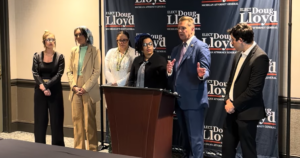
Mayes expressed these views during a press conference highlighting the increase in Medicaid fraud cases prosecuted under her leadership compared to her predecessor, Republican Mark Brnovich. She criticized the legislative changes for limiting prosecutors’ ability to seize assets in crimes, including Medicaid fraud.
“So, in the real world, that means that criminals get to use the money they stole to pay for their legal defense and attorneys’ fees,” Mayes stated.
She specifically targeted Republican Warren Petersen, a co-sponsor of the 2021 legislation, although the bill was crafted by then-Representative Travis Grantham. The legislation passed with broad bipartisan support, facing opposition only from two House Democrats and one Senate Republican.
Mayes’ stance aligns with other prosecutors who have voiced concerns about the impact of the 2021 law. Multiple law enforcement officials urged lawmakers to reject the measure, arguing it would hinder the prosecution of criminals.
Gilbert Police Chief Mike Soelberg testified in 2021 that ending civil forfeiture would invite criminal enterprises to operate freely within Arizona. “Depriving criminals and criminal organizations of their ill-gotten gains is a mechanism to disrupt and dismantle and deter those who prey on individuals for financial gain,” he emphasized.
Despite these concerns, legislators sided with a coalition of advocates from diverse political backgrounds who opposed the previous forfeiture laws. Support came from groups like Arizona Attorneys for Criminal Justice, the American Friends Service Committee, the Goldwater Institute, and the Institute for Justice, who viewed the laws as government overreach.
Mayes also noted that the 2021 restrictions do not affect federal prosecutors, who still have the ability to seize assets before conviction. This distinction was acknowledged by former Governor Doug Ducey when he signed the measure, highlighting Arizona’s specific constitutional right to privacy, unlike the federal constitution.