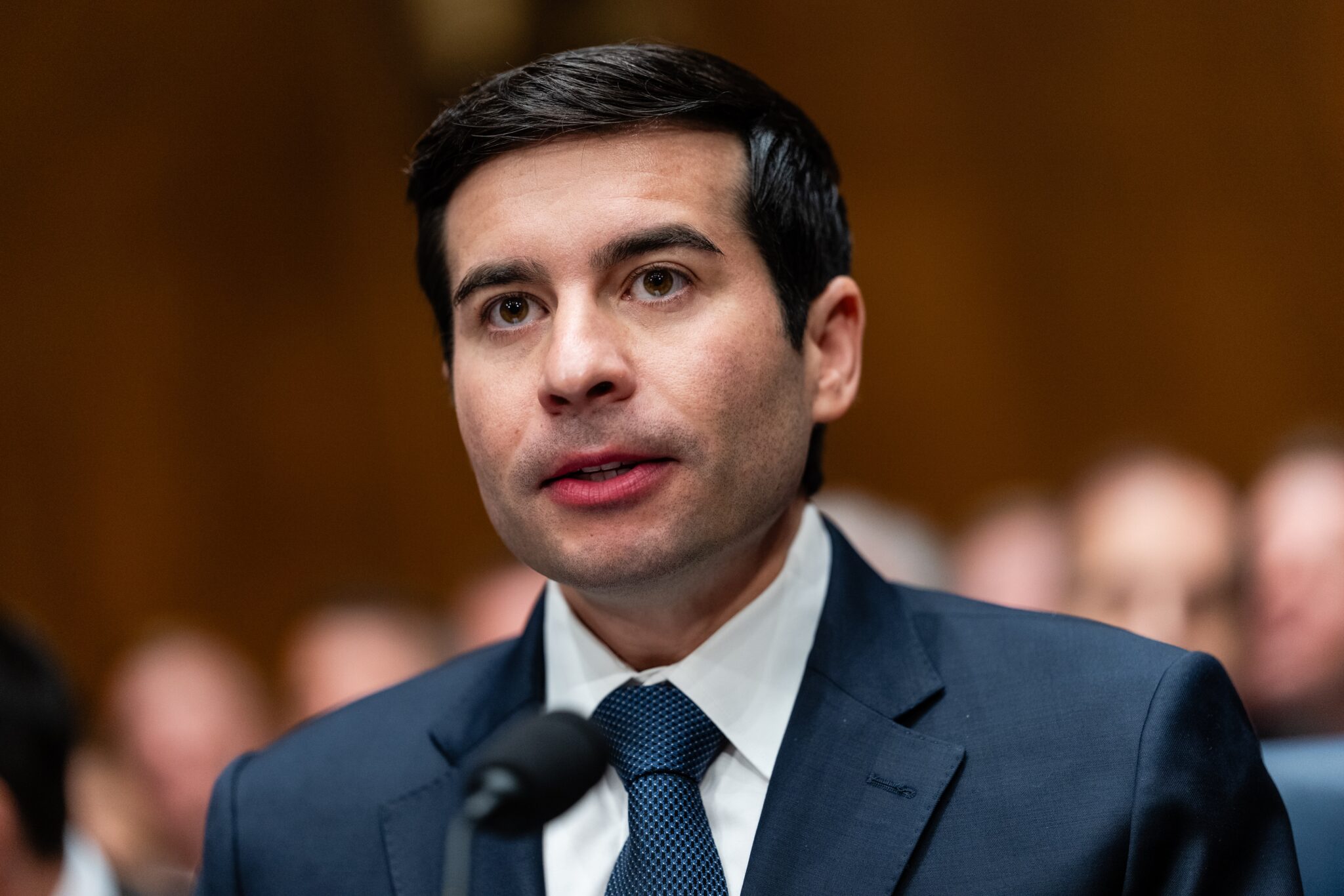
Trump’s Labor Secretary Nominee Defends Role in Restructuring Education Department
The Trump administration’s controversial plans to dismantle the Education Department have come under scrutiny once again as acting Labor Secretary Keith Sonderling faces questions from Senate Democrats. During a committee hearing, Sonderling defended his department’s involvement in transferring responsibilities from Education to Labor, describing the process as akin to a consultancy role.
Sonderling, nominated by President Trump to officially lead the Labor Department, assured the Senate Committee on Health, Education, Labor and Pensions of his extensive experience within the department. He stated, “Few people have had the opportunity to experience the department from so many different perspectives,” highlighting his roles from policy adviser to acting secretary.
The interagency agreements (IAAs) in question, signed between Education and several other departments including Labor, are central to the administration’s strategy to phase out the Education Department. These agreements aim to redistribute various educational functions to other federal entities.
Critics, including Sen. Patty Murray, D-Wash., expressed concerns over Labor’s involvement in educational programs, arguing, “it makes zero sense” for the Department of Labor to handle programs traditionally managed by Education. Murray emphasized Labor’s focus on supporting wage earners and job seekers, questioning its new educational responsibilities.
Labor Assumes New Educational Roles
Under the IAAs, Labor has taken on roles related to elementary and secondary education, as well as postsecondary and career education. Despite the transfer, the Education Department maintains its statutory oversight, as highlighted in their fact sheets.
In the House, a package of 10 bills seeks to permanently shift several educational functions to other departments, mirroring the IAAs’ objectives.
Efficiency and Expertise Debated
Sonderling argued that the restructuring “makes a lot of sense” for Labor to manage more grant responsibilities, asserting that the IAAs provide a service rather than dictate policy. He assured that educational programs remain under the guidance of “career experts” at Education.
However, Sen. Tammy Baldwin, D-Wis., criticized the reform, suggesting it complicates the system for states and school districts. She questioned the efficiency of scattering education programs across federal departments.
Sonderling faced further scrutiny from Sen. Tim Kaine, D-Va., who likened the dismantling process to a “going out of business sale,” cautioning against haphazard transfers to agencies lacking relevant expertise. Sonderling committed to providing data on the reforms’ impacts on students, teachers, and parents.