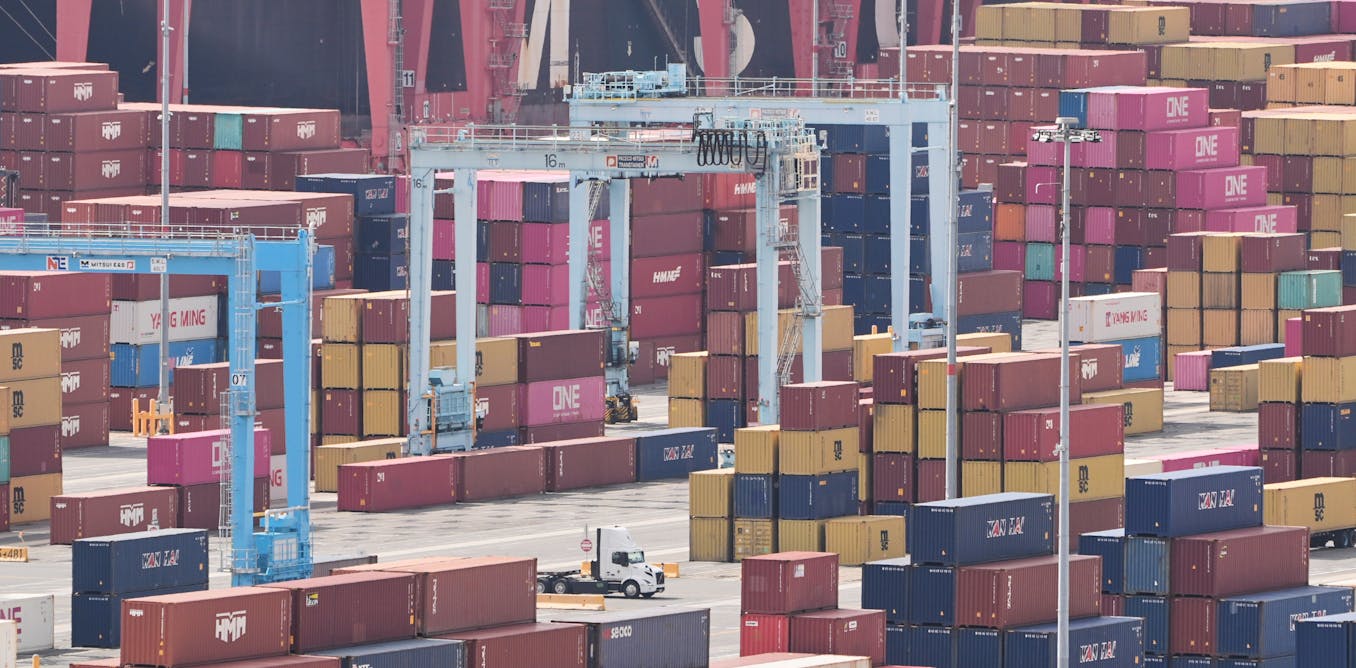
As the U.S. approaches the 2026 midterm elections, economic concerns are mounting, with President Donald Trump’s recent tariff decisions increasingly impacting American consumers. While initial tariff announcements once caused significant market disruptions, their effects are now being felt more acutely in consumer prices.
Hopes that tariff disputes would cease were dashed when the Supreme Court overturned Trump’s emergency tariffs in February. However, the relief was short-lived as the administration introduced a new series of import taxes in July. These new tariffs cover nearly all U.S. imports, designed to adhere more closely to existing trade laws and thus avoiding Supreme Court scrutiny.
According to Trump, these “trade law tariffs” are just beginning, and he intends to enact more. A trade economist warns that the longer these tariffs remain, the more consumers will shoulder the financial burden. Although the Supreme Court struck down the 2025 “Liberation Day” tariffs, the new levies are intended to be permanent, stacking additional costs on top of existing tariffs.
The Cost Squeeze
Trump’s fixation on tariffs seems perplexing, especially given their unpopularity and the timing ahead of midterm elections, where his economic approval ratings are notably low. However, he views tariffs as bargaining tools, recently stating that U.S. tariffs “aren’t high enough.” Trump has also inaccurately claimed that foreigners bear the cost of these tariffs, deflecting criticism about rising consumer prices.
In reality, U.S. businesses that import foreign goods receive tariff invoices, which they may attempt to absorb temporarily. However, the financial pressure eventually leads them to pass these costs onto consumers. Researchers have noted an effect on prices, with the Dallas Federal Reserve estimating that the preferred inflation measure was higher due to tariffs.
Tariffs Upon Tariffs
The July tariff announcements rely on various legal justifications, including a country’s unfair trade practices and national security protection. These tariffs range from 10% to 12.5% globally, with potential increases at the president’s discretion. Specific tariffs target countries like Brazil and Canada at higher rates.
Additional tariffs are planned for various industries, including wind turbines and medical equipment. Many of these tariffs are stacked, compounding the financial burden on consumers. For instance, if a country faces multiple tariffs, each at 10%, combined with a Most Favored Nation rate, the total could reach 23%, a cost borne by U.S. consumers.
Pushback from the States
Trump has utilized Section 301 to impose tariffs, penalizing trading partners for not preventing forced labor imports. These tariffs, set at 12.5% for non-prohibitive countries, have prompted 25 U.S. states to challenge the levies in court, arguing they constitute an unconstitutional tax on consumers.
The lawsuit claims these tariffs exceed Section 301’s original intent, which was to open markets for U.S. exports through policy reforms, rather than imposing global tariffs. The outcome of this legal challenge depends on whether the judiciary continues to defer to the president on these matters.