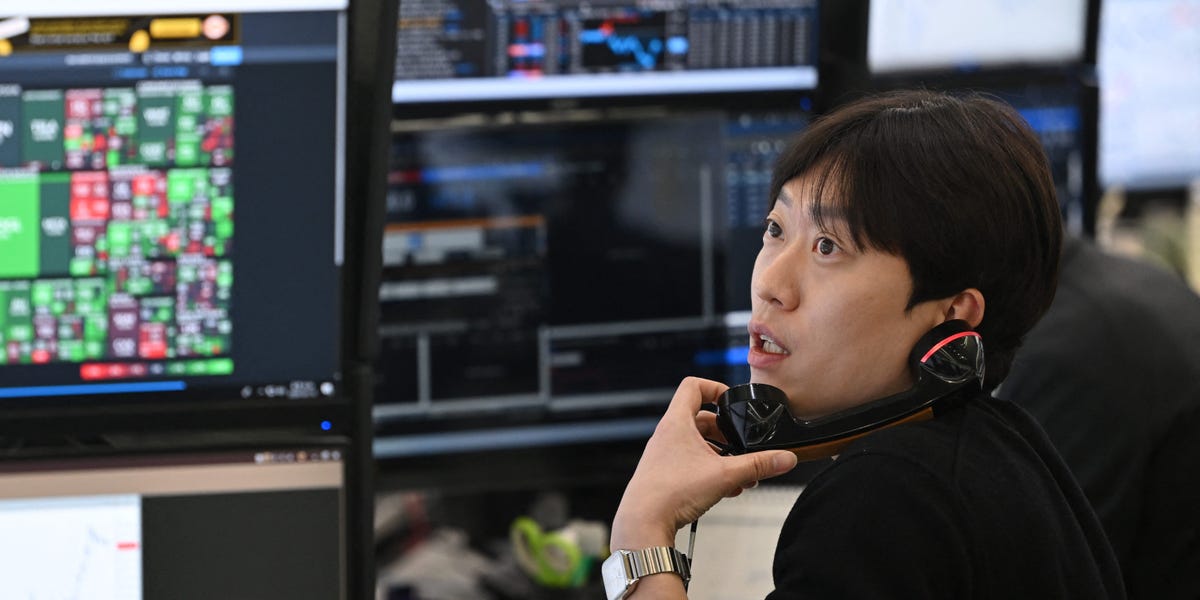
South Korea’s stock market has become a captivating arena where individual investors, often referred to as “ants,” are making their presence felt. Despite being overshadowed by larger institutional investors in the past, these individual players have recently taken center stage.
In 2026, the spotlight was firmly on South Korean stocks, which experienced a significant surge during the first half of the year. This bullish trend was primarily driven by the high demand for AI chips, with major players like Samsung Electronics and SK Hynix leading the charge. The resulting market rally saw a substantial increase in active trading accounts as individuals borrowed heavily to seize investment opportunities. This led many to invest in single-stock leveraged exchange-traded funds that magnify both gains and losses.
However, the market’s upward momentum was short-lived. After reaching a record high in late June, the Kospi index experienced a sharp downturn, plummeting 22% in July and closing the month 30% below its peak.
August brought renewed optimism to South Korea’s stock market as it returned to a technical bull market, buoyed by a resurgence in AI enthusiasm and reduced volatility. Goldman Sachs noted in a report that market positioning had improved following the reduction of borrowed positions by retail investors and the tightening of regulations on leveraged products. Despite the earlier turbulence, the investment bank maintained its positive outlook on Korean stocks.
1. Active Stock-Trading Accounts Surged
The stock market frenzy in South Korea led to a dramatic increase in active trading accounts, which now outnumber the population by more than two to one. According to the Korea Financial Investment Association, the number of active accounts rose from 86.6 million in late 2024 to 110.8 million by July 2026, marking a 28% increase in just 19 months. An account is deemed active if it holds at least 100,000 won in assets and has recorded at least one transaction within the last six months.
2. Cash Piled Up at Securities Firms
Investor deposits in Korean securities firms soared alongside the stock market rally. From the start of the year, deposits increased from approximately 90 trillion won to over 135 trillion won by May and June, before declining sharply amid the market downturn. While these deposits are not limited to retail investors and may not be immediately invested, they provide insight into the additional funds available for trading as enthusiasm for stocks grew.
3. Korean Individuals Bought While Foreign Investors Sold
The stock market saw divergent behaviors from domestic and foreign investors. From January through July, Korean individuals were net buyers of 94.2 trillion won in Kospi stocks, whereas foreign investors were net sellers of about 152.1 trillion won. This indicates that Korean individuals increased their market exposure even as overseas investors reduced theirs.
4. Individuals Borrowed Heavily to Buy Stocks
Borrowing to purchase stocks surged during the rally, with margin-loan balances rising from approximately 27 trillion won in early January to a record 38.6 trillion won by late June, before tapering off as the market weakened. These loans, which allow investors to borrow from brokerages to buy stocks, serve as a measure of the leverage taken on by retail traders.
5. Forced Selling Intensified as Volatility Hit
The volatility in the market brought the consequences of short-term credit into sharp focus. Data from the Korea Financial Investment Association revealed forced sales due to brokerage settlement shortfalls totaling 214 billion won in January, 708 billion won in May, and 1.12 trillion won in June. Forced sales peaked at around 170 billion won on June 9, highlighting the financial pressure on investors who couldn’t cover shortfalls.
Why Are Koreans Willing to Take So Much Risk?
The willingness of South Korean investors, particularly the younger generation, to take on significant risk may stem from more than just enthusiasm for stocks. On social media, young investors often respond to market swings with humor, sharing images of their portfolios and joking about economic survival strategies. However, the underlying motivation may be linked to broader economic pressures, such as the rising cost of housing. The Bank of Korea warned that increasing housing prices disproportionately affect vulnerable groups like the youth, and continued price hikes could exacerbate generational and wealth inequality. A separate Bank of Korea report highlighted that the wealth ladder is becoming increasingly difficult for young Koreans to climb, with a notable increase in households led by individuals in their 20s and 30s at the bottom of the income and wealth spectrum. For many young Koreans, the stock market represents a potential path to financial advancement amidst these challenges.