The latest trade tensions between the United States and Canada have escalated dramatically, with the U.S. imposing steep tariffs on Canadian products. The move has prompted an immediate pledge of retaliation from Canada, further straining the historic ties between the two nations. This development comes amidst failed negotiations aimed at resolving trade issues.
Early Saturday, the U.S. announced a 50% tariff on $20 billion worth of Canadian exports. These tariffs affect a wide range of Canadian goods, including hockey sticks and tongue depressors, and represent about 5% of Canada’s annual exports to the U.S.
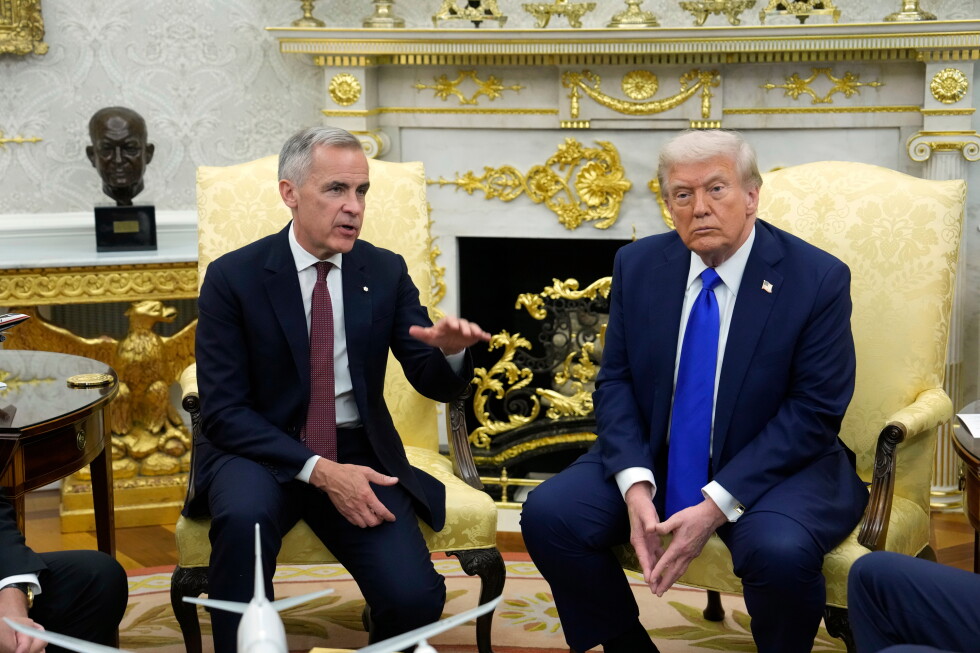
Canadian Prime Minister Mark Carney responded swiftly, stating, “Canada will match those tariffs dollar for dollar to protect our workers and businesses.” The announcement casts uncertainty over the North American trade agreement, which is pivotal for industries across the U.S., Canada, and Mexico.
According to a senior official from the Trump administration, Canada sought concessions on tariffs impacting steel, aluminum, autos, and lumber, which the U.S. was not willing to provide. Jamieson Greer, U.S. Trade Representative, stated, “Tonight, Canada declined to finalize the trade deal under the terms agreed earlier this week,” citing Canada’s additional demands and retractions as disruptive to the negotiations.
Prime Minister Carney blamed the U.S. for the impasse, claiming the last-minute changes proposed by the U.S. were “unfair, uneconomic, and called into question the reliability of any deal.” Consequently, he has halted further negotiations and recalled his team to Ottawa, promising additional support for Canadian businesses and workers soon.
Greer described the U.S. offer as “forward-looking,” emphasizing its aim to establish “a historic economic and national security partnership.” No further negotiations are currently scheduled.
A typically cooperative alliance goes sour
The imposition of tariffs marks a significant shift in U.S.-Canada relations, which have traditionally been friendly and cooperative. The countries engage in substantial trade, exchanging $880 billion in goods and services annually. Despite ongoing trade disputes over issues like lumber and dairy, the two nations have maintained strong ties, including military cooperation post-9/11.
However, President Trump’s tariff strategy, aimed at revitalizing U.S. manufacturing, represents a departure from this cooperative history. His administration even suggested the controversial idea of Canada becoming the 51st U.S. state.
Canadians and Americans are frustrated
Public sentiment in Canada has grown increasingly hostile. A petition urging the removal of U.S. Ambassador Pete Hoekstra, citing his alignment with Trump’s policies, has garnered nearly 248,000 signatures. Both nations have significant incentives to reach a compromise, with 72% of Canada’s exports directed to the U.S., and American consumers already coping with rising costs.
Trade expert Ryan Majerus suggests that Canada likely sought more sector-specific relief than the U.S. could offer. “Either way, I think both sides will be under immense pressure in the coming days to still find an off-ramp,” Majerus noted, acknowledging that the situation could become more challenging if both nations proceed with retaliatory tariffs.
Candace Laing of the Canadian Chamber of Commerce described the tariffs as detrimental to North American competitiveness, warning of their impact on costs, investments, and small businesses in both countries.
Trump has turned to Depression-era trade penalties
Reviving old trade laws, Trump has cited the Tariff Act of 1930, specifically Section 338, to justify these tariffs. This section allows for tariffs of up to 50% on imports from countries perceived as discriminatory towards U.S. businesses, without needing an investigation or a specified duration for the tariffs.
The trade rift arises as the U.S., Mexico, and Canada aim to renew the US-Mexico-Canada Agreement. While talks with Mexico have begun, those with Canada remain uncertain amid escalating tensions. Barry Appleton of the Center for International Law highlighted the entrenched positions of both countries, noting that public commitments make de-escalation more challenging.