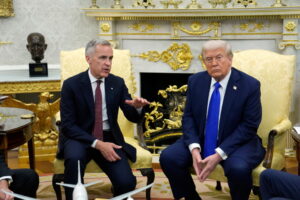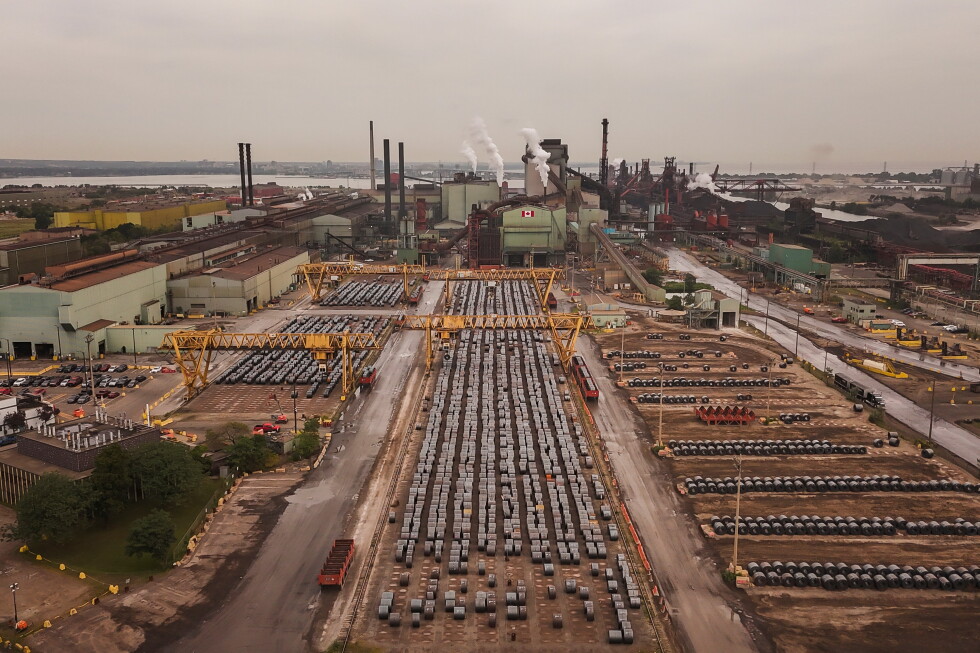
The relationship between the United States and Canada has been rocked by a series of tariffs and trade threats, leading to heightened tensions and economic uncertainties. President Donald Trump has aggressively pursued a tariff strategy that has provoked strong reactions from Canada, creating a volatile trade environment.
In a significant move, Trump’s administration recently implemented 50% tariffs on $20 billion worth of Canadian imports. This action followed unsuccessful negotiations, prompting a swift retaliatory response from Canadian Prime Minister Mark Carney.
Early 2025: Tensions and Tariffs
Upon returning to office, Trump immediately signaled his intent to impose 25% tariffs on Canadian imports, citing a national emergency related to undocumented immigration and drug trafficking. Although initially delayed, these tariffs were later reduced in scope, with exemptions for certain sectors like the auto industry.
Mid-2025: Expanding Tariffs
April saw Trump extend his tariff strategy globally, though Canada was initially spared from additional levies. Legal challenges ensued, questioning Trump’s use of emergency powers, but a temporary halt by a federal court allowed the tariffs to continue.
In June, Trump enforced 50% tariffs on foreign steel and aluminum, to which Canada responded by threatening similar measures on U.S. goods. Negotiations faced further challenges due to disputes over Canada’s tech taxes.
Late 2025: Trade Negotiations
Trade discussions took a hit as Trump imposed a 35% tariff on Canadian products in August. Canada agreed to drop some retaliatory tariffs, aiming to ease tensions, a move criticized by some as capitulation.
By October, Trump’s displeasure over a Canadian ad critical of U.S. tariffs led to a suspension of trade talks, though efforts to resume discussions continue.
Early 2026: Legal Challenges and New Tariff Threats
The legality of Trump’s tariffs reached the Supreme Court, resulting in a 6-3 decision striking down the tariffs. In response, Trump enacted a temporary 10% global levy under a different law.
Frustrations continued as Canada strengthened ties with China, reducing tariffs on Chinese goods, which Trump opposed. While some threats, like a 100% tariff on Canadian goods, did not materialize, trade tensions remained high.
Present Day: USMCA and Ongoing Tariffs
Efforts to renew the US-Mexico-Canada Agreement (USMCA) are underway, yet the future of the pact remains uncertain. Trump’s recent 50% tariff threat on Canadian goods, citing discrimination against U.S. products, underscores the ongoing trade friction between the two nations.
The new tariffs affect a range of Canadian exports to the U.S., with retaliation from Canada expected in early September, intensifying the trade conflict.