Arizona’s New Strategy to Address Colorado River Shortages
In response to severe water shortages affecting the Colorado River, Arizona is set to implement a novel approach to water conservation. This strategy involves utilizing an underground water savings account to support reduced water usage, as the state grapples with federally mandated cutbacks.
Amid record-low levels in the Colorado River’s reservoirs, the federal government has imposed water restrictions on Arizona, California, and Nevada. These states are also voluntarily reducing their water usage, with contributions from various water users such as urban areas and agricultural entities, increasing the overall conservation efforts.
While many water users receive financial incentives from the federal government to decrease consumption, officials from the Central Arizona Project recently introduced an additional method to meet this conservation goal. This plan would allow certain cities and utilities in the Phoenix area to commit to water conservation in exchange for access to a backup water supply maintained by the Arizona Water Banking Authority.
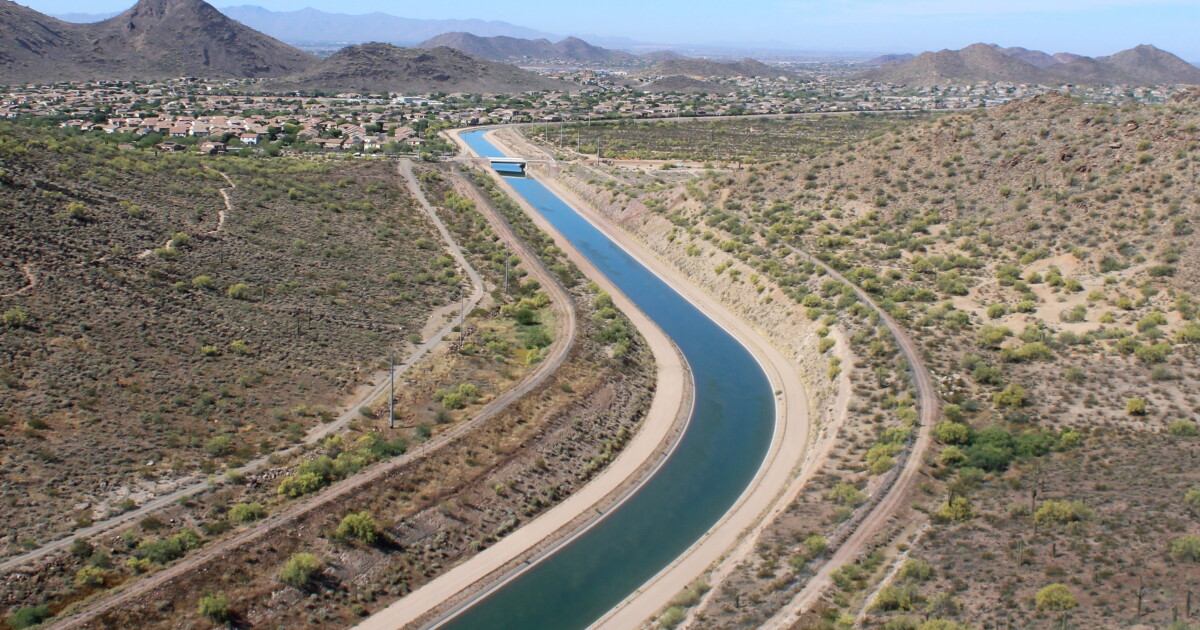
Established in the late 1990s, the Water Bank was designed to store surplus Colorado River water. Cities benefiting from the Central Arizona Project, a vast canal system delivering river water to Phoenix and Tucson, have stored water in this bank, intending to withdraw it during shortages. Now, with water scarcity becoming a pressing issue, these stored reserves are being tapped.
Earlier this year, discussions arose between the Water Bank’s leaders and municipal utility managers regarding the level of water access utilities should receive amid Colorado River reductions. Eventually, the Water Bank agreed to ensure utilities would not suffer losses for one year, effectively replacing lost water due to mandatory cutbacks.
The latest proposal from the Central Arizona Project, discussed during a recent board meeting, suggests a separate initiative from these cutback compensations. This plan permits municipalities to volunteer for water reductions in return for access to the Water Bank’s reserves.
Greg Adams, a senior attorney with the Central Arizona Project, acknowledged that the anticipated water savings from this strategy might be limited. The goal for Arizona, California, and Nevada is to conserve at least 700,000 acre-feet of water by 2028, with one acre-foot providing enough water for approximately three homes in Phoenix for a year.
During the meeting, Adams presented preliminary water savings figures under the new strategy, which could reach up to 12,308 acre-feet this year and potentially 56,179 acre-feet by 2027.
“We’re looking at the couch cushions here,” Adams commented, “But I think this does show broad commitment from water users within the state.”
The range of potential water savings varies among cities and utilities. For instance, Surprise might conserve up to 12,081 acre-feet of water in 2027, while the Tonto Hills Domestic Water Improvement District in Cave Creek, which serves a small number of homes and businesses, could save 25 acre-feet in the same year.
According to Adams, Arizona aims to contribute 300,000 acre-feet of water conservation through 2028. The voluntary cutbacks from this new strategy form part of a larger statewide effort, which includes financial incentives for users to reduce water consumption and conservation measures in western Arizona, close to the Colorado River.
“This goes a long way to getting us to that and surpassing that commitment,” he added.