U.S. Boosts Tungsten Supply Chain with Major Investment
The U.S. Department of Defense has announced a significant $450 million investment in The Elmet Group to bolster the nation’s tungsten supply chain. This move is part of a broader effort to enhance domestic production of the critical mineral, which is vital for manufacturing military equipment from bullets to missiles.
The investment coincides with the upcoming implementation of a federal procurement rule that prohibits the use of tungsten mined, refined, or processed in China, Russia, Iran, and North Korea in defense applications, set to take effect on January 1. According to the Defense Department’s statement, Elmet was selected for this investment because it stands as “the only U.S.-owned, fully integrated producer of tungsten and molybdenum materials and components.”
Michael Cadenazzi, the Defense Department’s assistant secretary for industrial base policy, emphasized that the investment reflects a commitment to rebuilding crucial industrial capacities within the United States. “This investment reflects the Department’s commitment to rebuilding critical industrial capacity in the United States,” he stated, highlighting its role in strengthening supply chain resilience and supporting high-quality manufacturing jobs.
In a discussion on his podcast, Chris Berry, a critical-minerals analyst, pointed out that China’s dominance over the global tungsten supply chain presents challenges for the U.S., which has not mined tungsten since 2015. He attributed the rising tungsten prices not only to geopolitical tensions but also to policy decisions in Beijing and Washington. “The free flow of tungsten material is for now a thing of the past,” Berry noted, mentioning the formation of “two distinct markets” and the subsequent price surge.
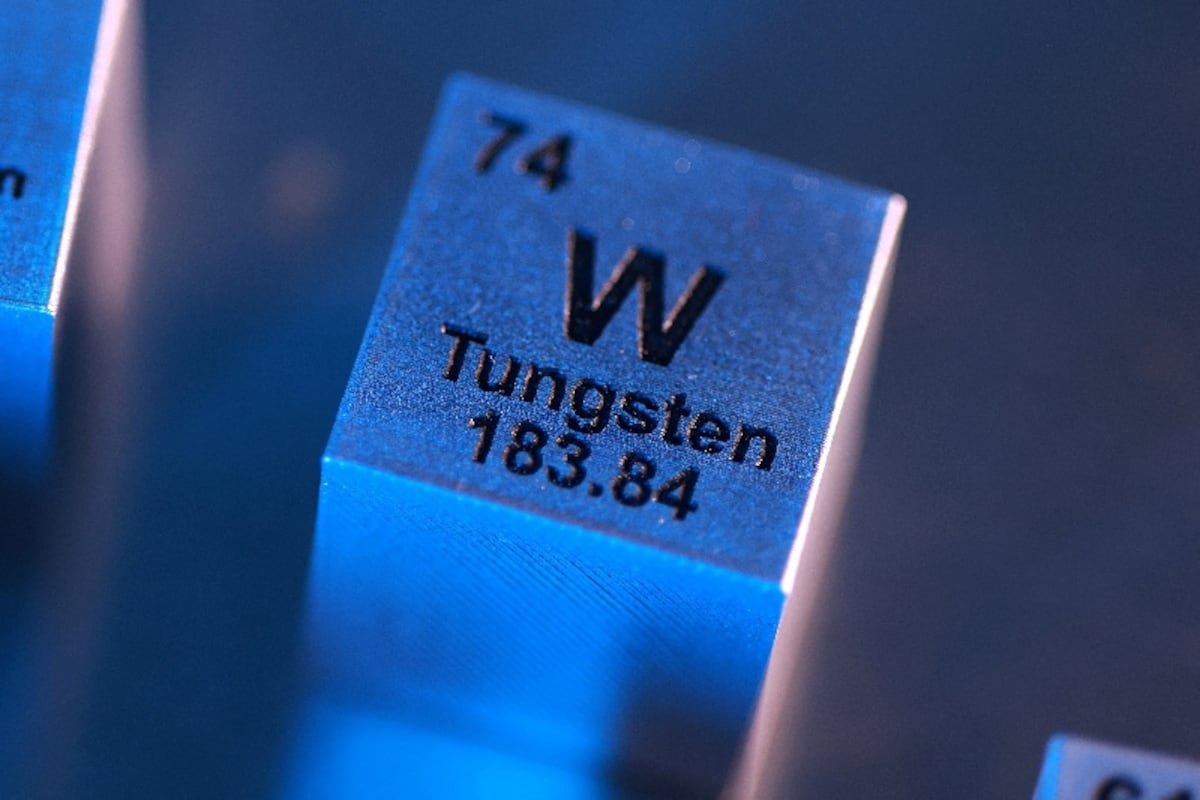
Government data reveals that China controls approximately 85% of the global tungsten supply, as well as 40% of molybdenum, a similar material often mined alongside tungsten. While tungsten is essential for manufacturing tools and semiconductors, Berry emphasized its critical role in the defense industry due to its unique properties, such as the highest melting point of any metal and significant density.
Berry asserted that there are no large-scale substitutes for tungsten in its key applications, although he acknowledged that the challenge extends beyond mining. The U.S. must also develop refining and processing capacities to transform tungsten into usable materials. “Every mined dollar should be paired with a processing dollar,” Berry suggested, proposing additional strategies like price protection and defense stockpiling.
Elmet, a company with a history dating back to 1929 and based in Portland, Maine, supports over 100 defense programs. The company plans to allocate $165 million of the investment to upgrade its manufacturing operations in Maine, Michigan, and Ohio. Elmet also intends to restart tungsten mining in Imlay, Nevada, with a $150 million allocation and establish a refining and trading division with $100 million to foster international partnerships.
The company has already secured agreements with Tungsten West in England and the Vietnam-based Masan High-Tech Materials Corporation, indicating its proactive steps toward stabilizing the tungsten supply chain.