French Artillery Regiment Adapts to Modern Warfare with Strategic Reorganization
The evolving landscape of modern warfare is prompting significant changes within the French Army, particularly in its approach to artillery deployment. In a move to enhance battlefield survivability, the 68th African Artillery Regiment (68e RAA) is restructuring its units, responding to the increased threat from drones and counter-battery fire.
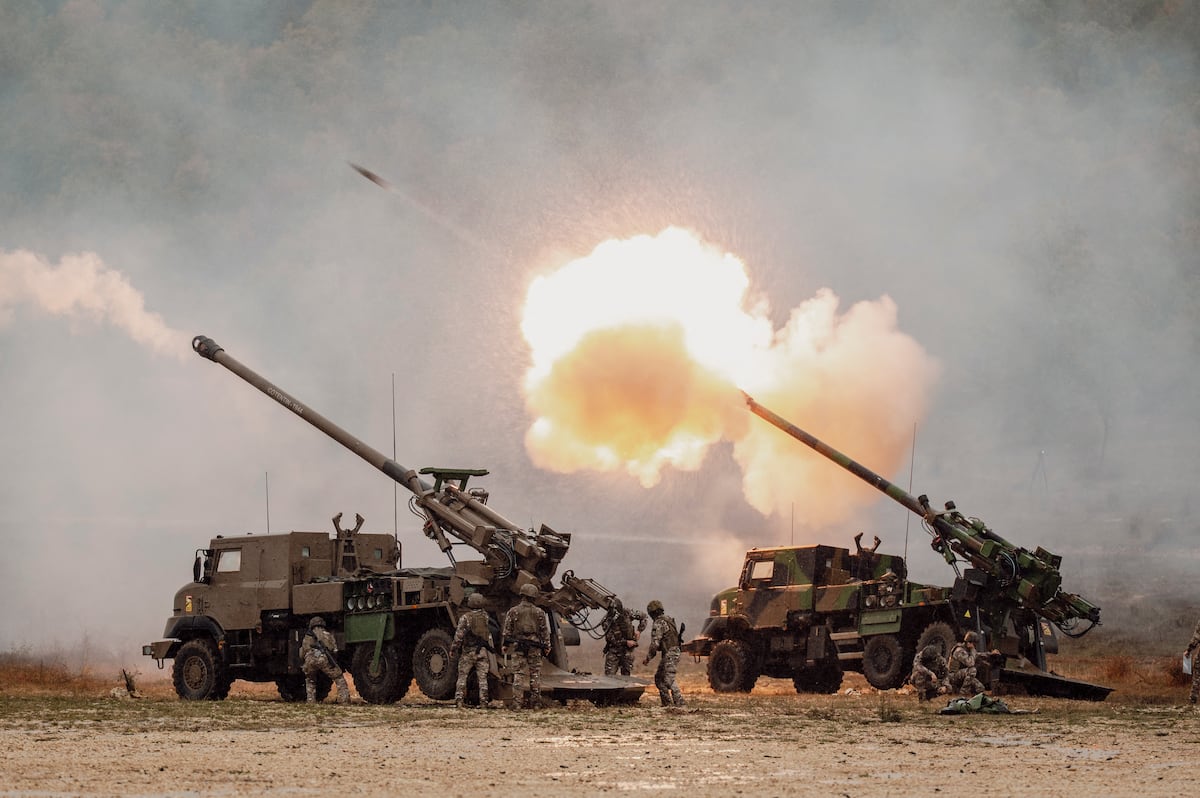
The 68e RAA is transitioning its 155 mm Caesar howitzers from two four-gun sections into three two-gun sections, according to Colonel Rémy Jaillet. This reorganization, while maintaining the current fleet size, is aimed at creating more responsive and resilient artillery units. “As counter-intuitive as it may seem, splitting sections into pairs increases the availability of fires and therefore their responsiveness,” Jaillet explained, emphasizing the benefits of smaller, dispersed units in today’s combat scenarios.
Drawing lessons from the ongoing conflict in Ukraine, where artillery positions are under constant drone surveillance, NATO forces, including the French Army, are adapting by dispersing artillery, shortening firing missions, and using decoys to confuse enemy forces. An analysis by the Royal United Services Institute highlights these tactics as crucial for modern warfare.
While the 68e RAA spearheads this new organizational approach, Jaillet noted it is not yet a standard format across the French Army. The regiment’s new structure features more batteries with fewer guns, enhancing strategic flexibility.
The new artillery-support section is tasked with identifying firing positions, setting up decoys, and prepositioning ammunition. This centralized approach replaces the previous system where each gun section managed its reconnaissance, thus enhancing maneuverability and protection.
The 68e RAA, one of six French artillery regiments equipped with Caesar howitzers, is also experimenting with “opacity bubbles” to shield guns from detection, using protective metallic cages and decoys. These strategies were tested during exercises at the Canjuers military camp and the French Orion 2026 exercise.
A permanent transition to this new organizational format is slated to begin next year, ensuring that the Caesar battery is fully integrated into the new system. Despite recent experiments with dug-in firing positions, Jaillet stressed, “The essence of the Caesar is to provide survivability through mobility.”
Adapting to Technological Advancements
The rapid advancement in drone technology has revolutionized target acquisition, with new strategies emerging since the Nagorno-Karabakh conflict in 2020. Drones have enabled more efficient artillery strikes by providing real-time target information. The Atlas fire-control system, used by the 68e RAA, is compatible with brigade-level systems like SitaWare, but further capabilities are needed to enhance sensor and effector integration.
Changes in the regiment’s liaison, observation, and coordination detachments now include armored vehicle capabilities combined with ground, radar, and drone technologies. Jaillet expressed satisfaction with the regiment’s equipment, including the Caesar howitzer and the MEPAC mortar, alongside advanced systems like the Thales-produced Murin ground-surveillance radar and Delair’s DT46 reconnaissance drone.
“For ground-to-ground artillery and target acquisition, this is high-quality equipment that has proven itself in operations,” Jaillet stated, acknowledging the need for continuous technological improvements to meet the expanding demands of the modern battlefield.