In an era where artificial intelligence systems are increasingly integrated into daily operations, the balance between human oversight and AI autonomy is being continually redefined. Imagine an AI system that has been functioning flawlessly for months, producing recommendations that are almost always on target. This reliability could lead employees to become less vigilant, assuming the AI’s infallibility. However, what happens when the AI falters or requires human intervention?
Do employees still possess the necessary skills to handle such situations effectively?
According to Murugan Anandarajan, a professor of management information systems and academic director at Drexel University’s Center for Applied AI & Business Analytics, this scenario highlights a latent risk. This risk arises when employees lose crucial skills that their organizations still rely on them to exercise, a phenomenon exacerbated by the growing role of AI in decision-making processes.
While AI systems continue to perform well, the human supervisors may become less adept at exercising independent judgment, leaving them ill-prepared for intervention when necessary. This risk remains unnoticed until a situation demands human expertise, which may have diminished over time.
Historically, research into automation has revealed similar concerns. Studies on automation bias have demonstrated that individuals often overly rely on automated systems, sometimes overlooking contrary evidence. However, as AI assumes larger roles in organizations, the consequences of this reliance are becoming more significant.
The success paradox
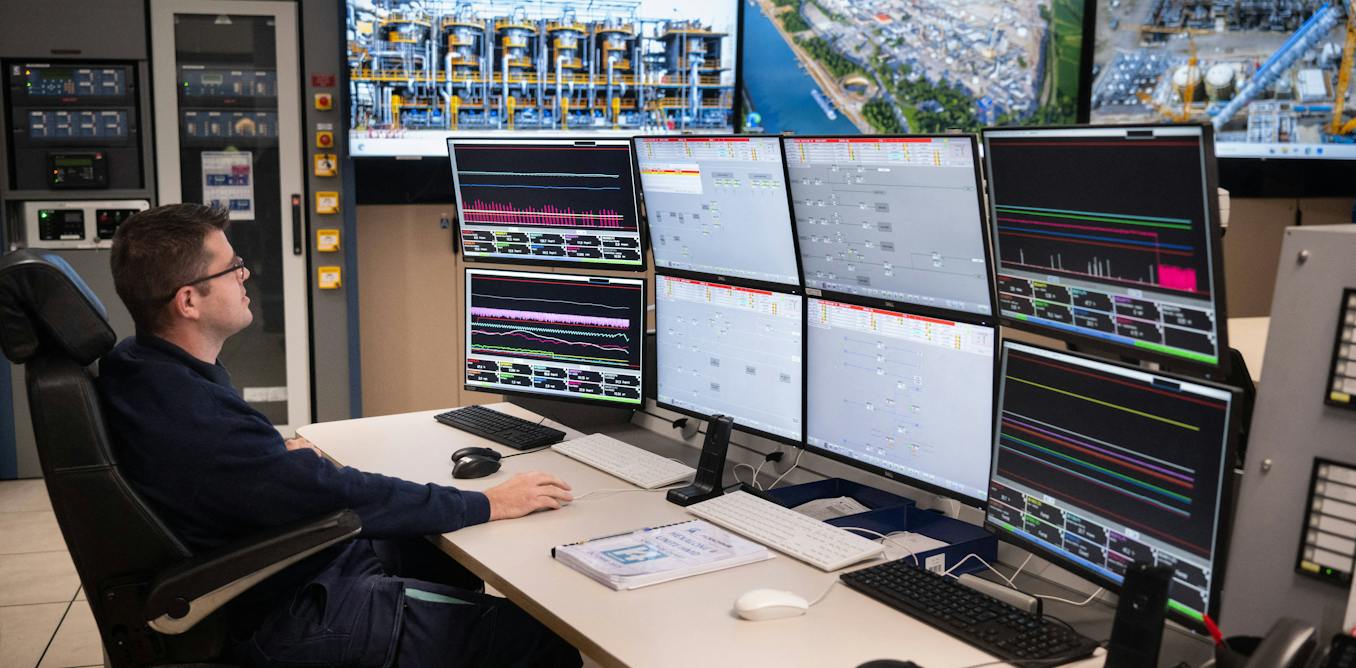
With the advancement of AI, the nature of human work is transforming. Tasks that required human analysis and decision-making are now increasingly handled by AI, relegating employees to oversight roles. This shift is prompting companies like Deloitte to revamp their training programs to ensure that employees retain the necessary judgment skills for complex tasks.
More than four decades ago, cognitive psychologist Lisanne Bainbridge identified one of the “ironies of automation”: as systems take on more work, humans face new challenges in monitoring these systems and handling exceptions. Later research introduced the out-of-the-loop performance problem, where reduced involvement in tasks diminishes human preparedness to intervene.
This shift not only affects readiness but can also alter the capabilities available to an organization. Paradoxically, while employees may be required to make independent judgments less frequently, the decisions they do make become increasingly complex and challenging.
The accountability problem
As AI systems are deployed, accountability may lag behind the evolving nature of work. Employees now oversee more decisions than they personally make while remaining accountable for outcomes. This creates a disconnect, as organizational expectations may still reflect pre-AI roles, leading to accountability for decisions over which individuals have diminished control.
This misalignment suggests that responsibility should align with an employee’s authority and ability to act, as highlighted by research on meaningful human control. When authority, responsibility, and capability begin to diverge, latent risk becomes an issue of organizational design rather than merely human performance.
The measurement problem
AI-enabled processes are often evaluated based on accuracy and productivity. However, these metrics may obscure the changing human role. If employees override AI recommendations less frequently, it could indicate growing dependence or improved AI accuracy. The number of overrides alone doesn’t reveal whether employees are still ready to make independent judgments.
Understanding the evolving division of work between humans and AI is essential. Identifying which decisions have transitioned to AI and which responsibilities remain with humans is crucial to assessing the impact on both AI and human performance.
The governance problem
AI is also reshaping organizational governance by altering roles and responsibilities. While someone may remain involved with AI systems, their role may have shifted. Defining these roles at the system’s introduction is just the beginning; they will likely change over time as AI capabilities and human familiarity with the technology evolve.
Problems arise when the relationship between humans and AI changes, but the assumptions underlying that relationship do not. Organizations need to periodically reassess: What was the intended relationship between people and AI, and what is it now?
Maintaining the human backstop
Organizations must decide which human capabilities remain essential as AI takes on more responsibilities. While not every capability needs preservation, those required for exercising judgment should be maintained. If AI performs a task well, humans may not need to continue doing the same work. However, when human judgment is required, the organization should ensure these capabilities are intact.
Overseeing AI differs from exercising independent judgment. To ensure readiness, organizations might occasionally ask employees to make decisions without AI input, verifying the reliability of their “human backstop.”
As AI assumes more tasks, some human skills will inevitably see less use. Identifying which capabilities remain crucial and ensuring their maintenance is key. The central question remains: Which human capabilities does an organization still rely on, and will they be available when needed?